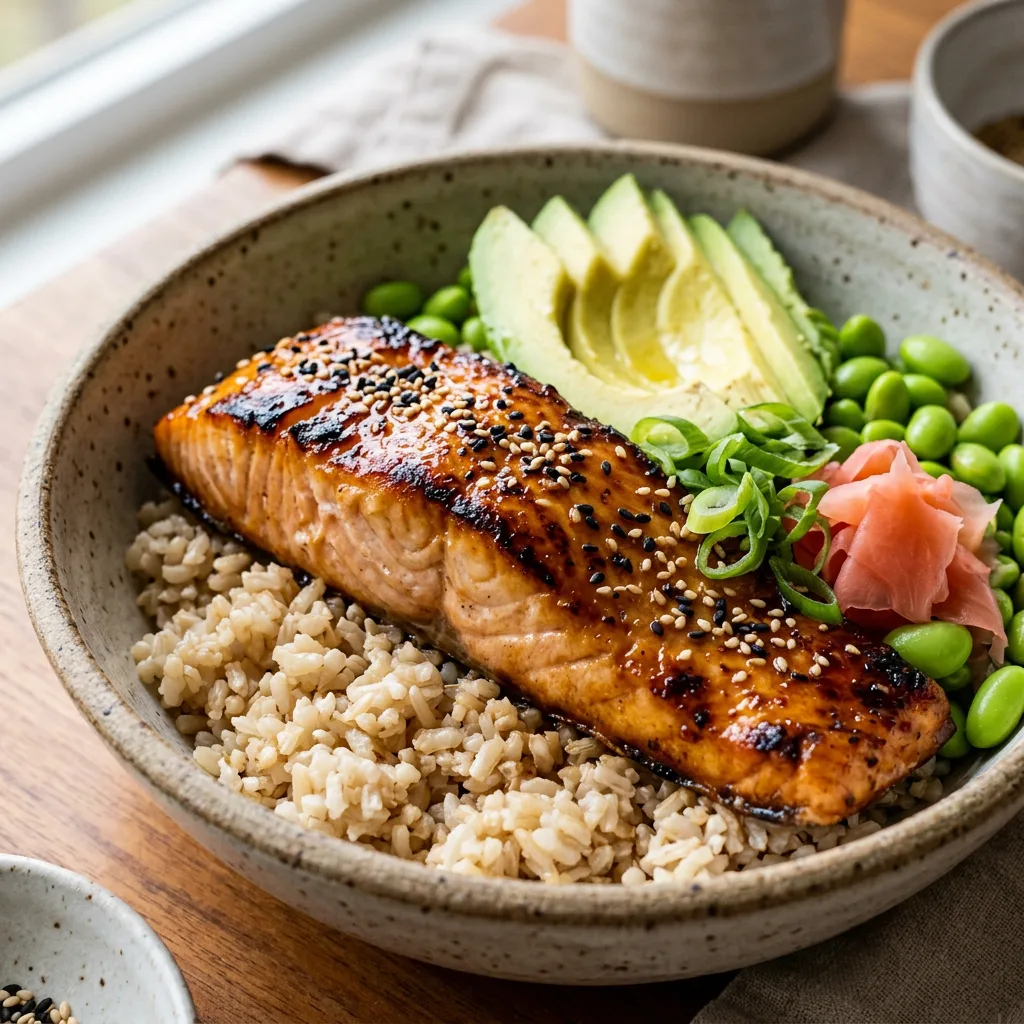
The honey miso glazed salmon bowl is an elegant, restaurant-quality dinner that combines sweet umami flavors with nutritious whole grains and fresh toppings. This dish delivers impressive taste and health benefits in under 35 minutes, making it perfect for celebrating dad with a meal he’ll actually crave. The combination of broiled salmon, brown rice, and vibrant vegetables creates a complete, satisfying dinner that feels special without requiring culinary expertise.
| Attribute | Details |
|---|---|
| Prep Time | 15 minutes |
| Cook Time | 20 minutes |
| Total Time | 35 minutes |
| Servings | 4 |
| Difficulty | Easy |
| Cuisine | Asian Fusion |
Why This Recipe Works
I created this honey miso glazed salmon bowl because I wanted a Father’s Day dinner that balanced impressive presentation with genuine simplicity. The white miso paste provides deep umami depth that most home cooks overlook, while honey adds caramelization and natural sweetness. When combined with soy sauce and rice vinegar, these four ingredients create a glaze so complex that guests always ask for the recipe.
The beauty of this salmon bowl lies in its flexibility and nutritional integrity. Each component serves a purpose: broiled salmon fillets deliver omega-3 fatty acids and high-quality protein, brown rice provides sustained energy, and edamame plus avocado contribute fiber and healthy fats. According to 5 A Day guidelines, this bowl easily meets daily vegetable recommendations through the edamame, pickled ginger, and avocado. The low-sodium soy sauce keeps sodium levels reasonable, supporting heart health without sacrificing authentic flavor.
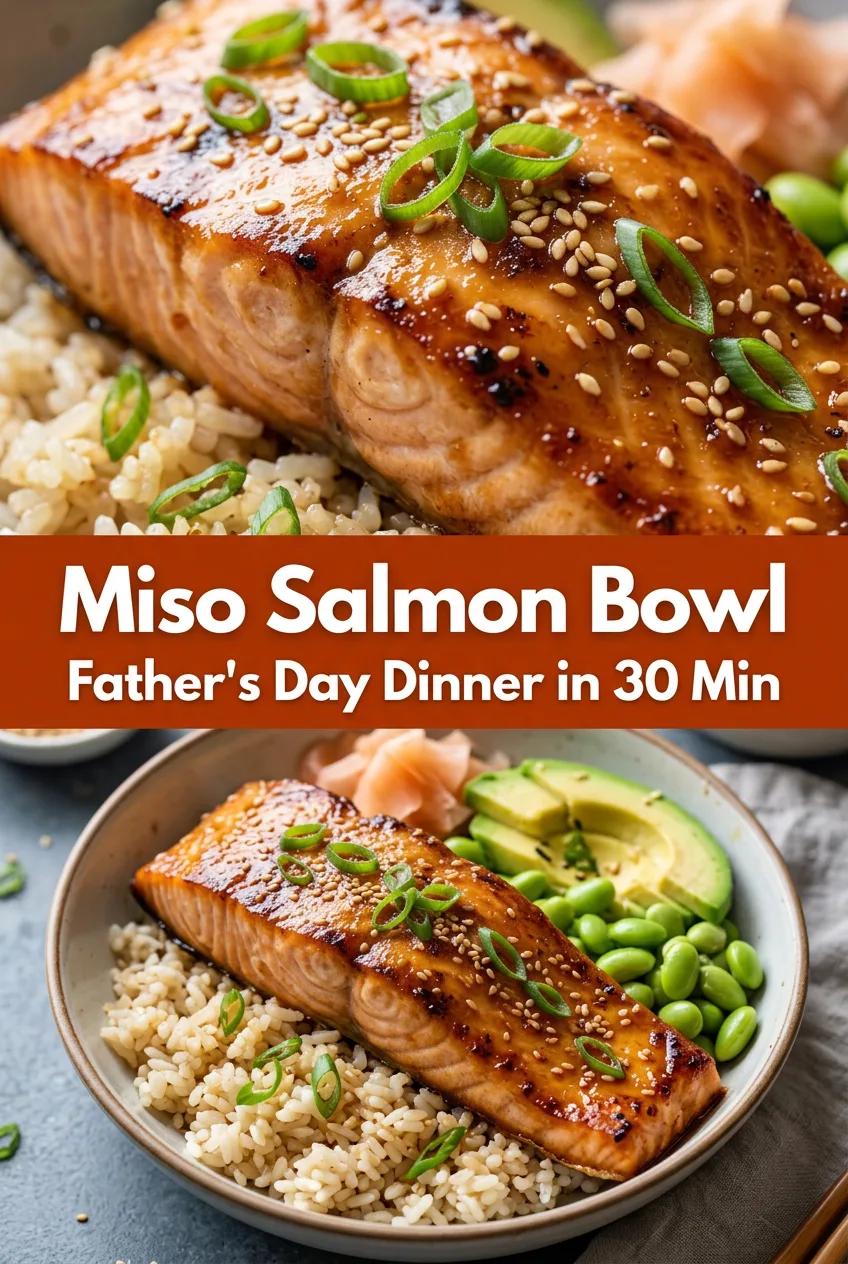
What makes this recipe truly special is the marinading step. By allowing the salmon to rest in the glaze for at least 20 minutes, the flavors penetrate the protein while the miso’s enzymes begin breaking down muscle fibers, resulting in incredibly tender, flavorful fillets. The sesame oil contributes subtle nuttiness that rounds out the savory profile, creating depth impossible to achieve with simpler preparations.
Ingredients
| Ingredient | Quantity | Notes and Alternatives |
|---|---|---|
| Salmon fillets | 4 fillets (6 oz each) | Use skin-on for easier cooking; substitute halibut or cod for milder flavor |
| White miso paste | 3 tbsp | Mild and slightly sweet; red miso can substitute but will darken color and increase saltiness |
| Honey | 2 tbsp | Raw or pasteurized both work; maple syrup adds earthiness instead |
| Low-sodium soy sauce | 1 tbsp | Reduces sodium intake; tamari works for gluten-free requirements |
| Sesame oil | 1 tsp | Toasted sesame oil provides stronger nuttiness; use sparingly as it’s potent |
| Rice vinegar | 1 tbsp | Mild and slightly sweet; white vinegar works but tastes sharper |
| Brown rice, cooked | 2 cups | Use jasmine, white, or sushi rice for different textures; quinoa for grain-free variation |
| Shelled edamame, thawed | 1 cup | Fresh or frozen both work; snap peas offer similar crunch with lighter flavor |
| Ripe avocado | 1 avocado, sliced | Slice just before serving; substitute cashew cream for dairy-free richness |
| Green onions | 2 onions, thinly sliced | Use white and light green parts; regular onions work but lack subtle onion flavor |
| Sesame seeds | 1 tbsp | Mix black and white for visual contrast; sunflower seeds add similar nutrition |
| Pickled ginger | 2 tbsp | Adds brightness and aids digestion; fresh ginger thinly sliced offers more bite |
Step-by-Step Instructions
Prepare the Glaze
- Whisk together white miso paste, honey, low-sodium soy sauce, sesame oil, and rice vinegar in a small bowl until completely smooth with no lumps remaining.
- Reserve 2 tablespoons of glaze in a separate container for brushing during cooking.
- Taste the glaze and adjust sweetness or saltiness if desired before marinating salmon.
Marinate the Salmon
- Place salmon fillets skin-side up in a shallow dish or resealable container large enough to hold all four fillets.
- Pour remaining glaze over salmon fillets, ensuring each one is evenly coated on both sides.
- Cover and refrigerate for at least 20 minutes, though up to 4 hours will deepen the miso flavor further.
Cook the Salmon
- Preheat broiler to high heat and position oven rack 4 to 5 inches from heating element.
- Line a broiler pan or baking sheet with aluminum foil for easy cleanup and even heat distribution.
- Place marinated salmon fillets skin-side down on prepared pan, spacing them 2 inches apart.
- Broil for 3 to 4 minutes until glaze begins browning and edges start caramelizing slightly.
- Brush exposed salmon tops with reserved glaze using a pastry brush or spoon.
- Continue broiling for 3 to 4 minutes more until salmon flakes easily with a fork and reaches 145°F internal temperature.
- Remove from oven and let rest for 2 minutes to allow carryover cooking to complete.
Assemble the Bowls
- Divide cooked brown rice evenly among four serving bowls, creating a base for toppings.
- Top each rice portion with one salmon fillet, positioning skin-side up for visual appeal.
- Distribute shelled edamame around the salmon on each bowl.
- Arrange avocado slices in a fan pattern on each bowl near the salmon fillet.
- Sprinkle sesame seeds over all four bowls for nutty flavor and visual texture.
- Garnish each bowl with thinly sliced green onions and 2 tablespoons pickled ginger.
- Drizzle any pan juices remaining on the broiler pan over the assembled bowls if desired.
Chef Tips for Perfect Results
- Ensure salmon fillets are uniform thickness by gently pressing thicker portions with your hand or using a meat mallet wrapped in plastic wrap. Even thickness guarantees that all fillets finish cooking simultaneously, preventing dry edges and raw centers.
- Use skin-on salmon fillets whenever possible because the skin acts as a natural shield, protecting delicate flesh from direct heat and preventing sticking to the pan. The skin will crisp beautifully if you place fillets skin-side down first.
- Whisk the miso paste thoroughly with a small amount of glaze before adding remaining ingredients to prevent lumps from ruining the smooth, glossy texture that makes this dish visually stunning.
- Don’t skip the 20-minute minimum marinating time because miso’s umami compounds need time to penetrate the salmon’s muscle fibers, creating flavor that reaches the very center of each fillet.
- Broil instead of baking at lower temperatures if possible because the intense dry heat caramelizes the glaze’s honey and miso, creating a restaurant-quality golden crust that standard ovens cannot achieve.
- Brush the glaze halfway through cooking rather than at the beginning because applying it early allows the top to burn while salmon interiors remain undercooked. Timing the glaze application ensures even caramelization across all fillets.
Common Mistakes to Avoid
Many home cooks marinate salmon in the full glaze from start to finish, which causes uneven cooking because the glaze burns before salmon interior reaches safe temperature. Fix this by reserving half the glaze before marinating, applying it only during the final cooking minutes. This technique gives you the flavor benefit of extended marinating without charred, bitter surfaces.
Overcooking salmon ranks as the most common error, resulting in dry, flaky flesh that lacks the buttery texture that makes this dish special. Use a meat thermometer to check for 145°F internal temperature, removing salmon from heat immediately when the target is reached. Remember that carryover cooking continues for 2 to 3 minutes after removing from the broiler.
Slicing avocado too early causes oxidation and browning that detracts from the bowl’s fresh appearance. Always slice avocado within 10 minutes of serving, or store the pit in the remaining avocado half to significantly slow browning if preparing multiple servings.
Using regular soy sauce instead of low-sodium versions adds excessive salt that overpowers the delicate miso and honey balance. The Sodium Reduction guidelines suggest keeping daily intake below 2,300 milligrams, making low-sodium soy sauce a health-conscious choice that doesn’t compromise flavor in this recipe.
Forgetting to whisk the glaze thoroughly leaves miso lumps that won’t dissolve during cooking, creating unpleasant texture and uneven seasoning across salmon fillets. Always whisk for at least 30 seconds until the mixture is completely homogeneous and glossy before using.
Variations and Substitutions
| Ingredient | Substitution | Impact on Flavor Profile |
|---|---|---|
| White miso paste | Red miso paste | Increases saltiness and adds deeper, earthier umami; glaze will be darker |
| Honey | Maple syrup | Adds woody sweetness and slight bitterness; creates more sophisticated flavor |
| Brown rice | Cauliflower rice | Reduces carbohydrates significantly while maintaining creamy texture from avocado |
| Salmon | Halibut or black cod | Produces milder flavor profile; black cod adds richness while halibut stays light |
| Edamame | Snap peas or broccoli | Offers lighter, crisper texture; slightly less protein content |
| Sesame oil | Walnut oil | Delivers earthier richness with less Asian character but similar depth |
| Rice vinegar | Apple cider vinegar | Adds fruity sweetness and slightly more complex acidity |
| Avocado | Cashew cream | Creates dairy-free richness; less fresh flavor but maintains creamy texture |
Serving Suggestions and Pairings
Serve this honey miso glazed salmon bowl as the centerpiece of an elevated Father’s Day dinner that requires minimal additional sides. The bowl contains all necessary food groups, but consider adding a simple cucumber salad dressed with rice vinegar and sesame seeds for extra brightness and crunch. For occasions when you want to build around this main course, similar dinner-party worthy salmon dishes include the Father’s Day Dinner Ideas: Cedar Plank Honey Dijon Salmon, which offers a different preparation method with complementary flavors.
Pair this bowl with beverages that won’t overpower the delicate miso flavors. Sauvignon Blanc offers crisp acidity that cuts through the glaze’s richness, while Riesling adds slight sweetness that complements the honey notes. For non-alcoholic options, sparkling water with fresh lime wedges cleanses the palate between bites, allowing diners to fully appreciate each component.
If planning a dessert to follow, the Juneteenth Party Desserts: Healthy Sweet Potato Spice Cake provides a wholesome, spiced finish that won’t feel heavy after a satisfying dinner. For summer celebrations extending beyond Father’s Day, the 4th of July Desserts: No-Bake Frozen Berry Coconut Bark offers a refreshing, no-bake option that complements Asian fusion flavors beautifully.
This bowl works excellently for meal prep occasions when served at room temperature or chilled. Pack components separately to prevent the avocado from browning and the rice from becoming soggy. For office lunches, transport the glaze separately and brush it on cold salmon just before eating for maximum flavor impact.
Storage and Reheating
| Method | Duration | Instructions |
|---|---|---|
| Refrigerator (whole bowl) | 1 day | Store in airtight glass container; cover rice and salmon to prevent drying. Consume within 24 hours for best quality and food safety. |
| Refrigerator (components separate) | 3-4 days | Store salmon, rice, edamame, and pickled ginger in separate airtight containers. Add fresh avocado and green onions when assembling. |
| Freezer (salmon only) | 2 months | Wrap cooked salmon fillets individually in plastic wrap, then place in freezer bag. Thaw in refrigerator overnight before reheating at 350°F for 8 minutes. |
| Freezer (rice only) | 3 months | Portion cooked rice into ice cube trays, then transfer frozen portions to freezer bags. Reheat by adding water and microwaving for 2-3 minutes. |
| Microwave reheating | 2-3 minutes | Place individual components on a microwave-safe plate, cover loosely with paper towel. Heat at 50% power to gently warm without overdrying salmon. |
| Oven reheating | 8-10 minutes | Assemble bowl, cover loosely with foil, reheat at 350°F. Removes from microwave about 5 minutes before serving for revived texture. |
Nutritional Information
| Nutrient | Amount per Serving |
|---|---|
| Calories | 520 |
| Protein (grams) | 38 |
| Fat (grams) | 18 |
| Carbohydrates (grams) | 50 |
| Dietary Fiber (grams) | 8 |
| Sugars (grams) | 7 |
| Sodium (milligrams) | 680 |
Approximate values based on USDA nutrition database and recipe ingredients. Individual values may vary depending on specific brands and preparation methods. This meal delivers substantial protein from salmon, supporting muscle recovery and satiety. The brown rice contributes complex carbohydrates and B vitamins, while edamame adds plant-based protein and fiber. Healthy fats from avocado and sesame oil support nutrient absorption and cardiovascular health.
Frequently Asked Questions
Can I use red miso instead of white miso for this salmon bowl?
Yes, red miso works as a direct substitution, though it will produce noticeably different results. Red miso is saltier, more pungent, and creates a deeper, earthier flavor profile compared to white miso’s mild sweetness. Reduce the low-sodium soy sauce by half a tablespoon when using red miso to prevent excessive saltiness, and expect the glaze to brown faster during broiling due to higher salt content affecting caramelization.
How do I know when the salmon is perfectly cooked and not overcooked?
Insert an instant-read thermometer into the thickest part of the salmon, checking for 145°F as the target internal temperature recommended by food safety guidelines. Perfectly cooked salmon will flake easily with a fork while still retaining a barely translucent center, producing buttery texture rather than dry, chalky flesh. Remember that carryover cooking continues for 2 to 3 minutes after removing salmon from the broiler, so remove it 1 to 2 degrees before reaching exactly 145°F.
What causes the miso glaze to become bitter, and how can I prevent this?
Applying the glaze too early in the cooking process or using excessive heat causes bitter, burnt flavors because miso’s amino acids undergo uncontrolled browning. Prevent bitterness by reserving half the glaze before marinating and applying it only during the final 3 to 4 minutes of cooking when salmon is nearly finished. Using a broiler rather than a regular oven provides controlled, dry heat that caramelizes rather than burns the glaze.
Can I prepare this salmon bowl completely ahead of time for a Father’s Day gathering?
Cook all components separately and store them in individual airtight containers for up to 4 days, assembling the final bowl just before serving. Prepare the glaze and marinate salmon up to 4 hours in advance, then broil it within 2 hours of serving. Add fresh avocado and green onions only at serving time to maintain color and texture, as these components deteriorate quickly once exposed to air or warm rice.
What is the best way to serve this bowl for a large Father’s Day party with multiple guests?
Prepare all components in advance and set up a serve-yourself bowl bar where guests add brown rice, salmon, edamame, and toppings in their preferred portions and order. Keep salmon fillets warm on a serving platter under foil, place rice in a heated bowl, and arrange edamame, avocado slices, pickled ginger, green onions, and sesame seeds in separate small bowls. This approach allows customization while minimizing last-minute cooking pressure and keeping components at proper temperatures throughout the meal.
Conclusion
The honey miso glazed salmon bowl delivers restaurant-quality flavors and impressive presentation that elevates any Father’s Day celebration beyond typical dinner fare. This complete, balanced meal combines broiled salmon with wholesome toppings in a format that feels modern and intentional. With simple technique and straightforward ingredients, you’ll create a memorable dish that perfectly balances umami richness, sweet honey notes, and fresh, bright accents that dad will genuinely appreciate and request again.

Father's Day Dinner Ideas: Honey Miso Glazed Salmon Bowl
Ingredients
Method
- Whisk together white miso paste, honey, low-sodium soy sauce, sesame oil, and rice vinegar in a small bowl until completely smooth with no lumps remaining.
- Reserve 2 tablespoons of glaze in a separate container for brushing during cooking.
- Taste the glaze and adjust sweetness or saltiness if desired before marinating salmon.
- Place salmon fillets skin-side up in a shallow dish or resealable container large enough to hold all four fillets.
- Pour remaining glaze over salmon fillets, ensuring each one is evenly coated on both sides.
- Cover and refrigerate for at least 20 minutes, though up to 4 hours will deepen the miso flavor further.
- Preheat broiler to high heat and position oven rack 4 to 5 inches from heating element.
- Line a broiler pan or baking sheet with aluminum foil for easy cleanup and even heat distribution.
- Place marinated salmon fillets skin-side down on prepared pan, spacing them 2 inches apart.
- Broil for 3 to 4 minutes until glaze begins browning and edges start caramelizing slightly.
- Brush exposed salmon tops with reserved glaze using a pastry brush or spoon.
- Continue broiling for 3 to 4 minutes more until salmon flakes easily with a fork and reaches 145°F internal temperature.
- Remove from oven and let rest for 2 minutes to allow carryover cooking to complete.
- Divide cooked brown rice evenly among four serving bowls, creating a base for toppings.
- Top each rice portion with one salmon fillet, positioning skin-side up for visual appeal.
- Distribute shelled edamame around the salmon on each bowl.
- Arrange avocado slices in a fan pattern on each bowl near the salmon fillet.
- Sprinkle sesame seeds over all four bowls for nutty flavor and visual texture.
- Garnish each bowl with thinly sliced green onions and 2 tablespoons pickled ginger.
- Drizzle any pan juices remaining on the broiler pan over the assembled bowls if desired.