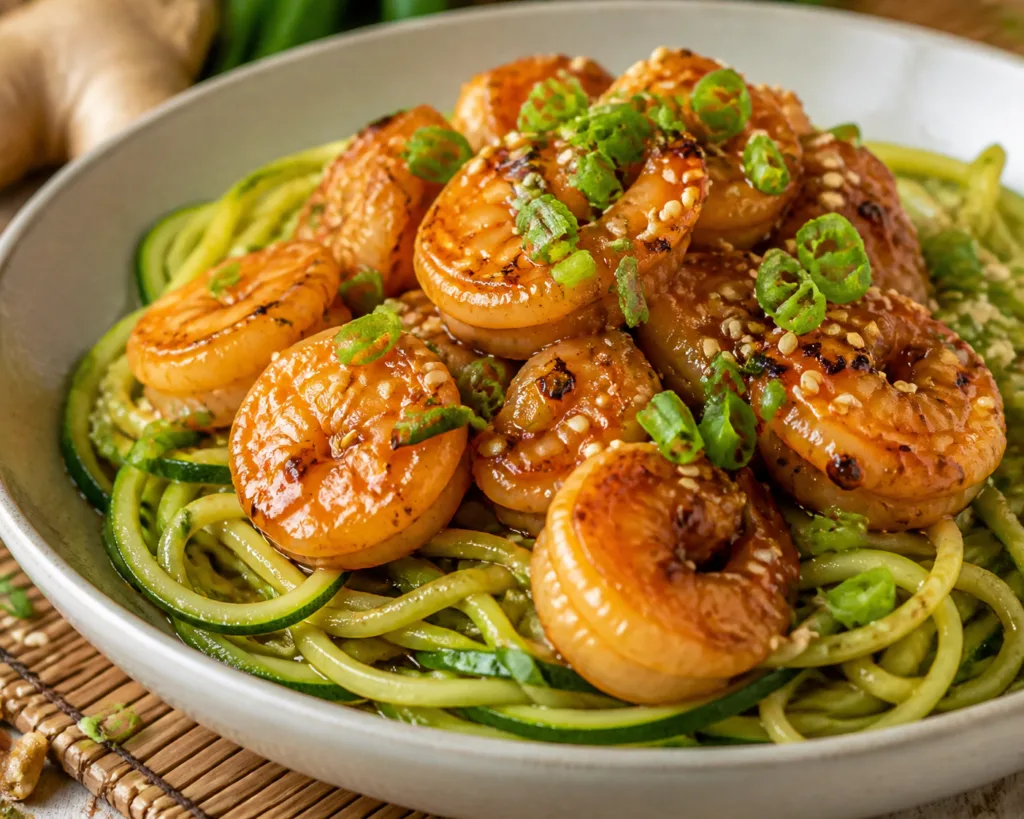
High protein dinner featuring honey garlic shrimp with zucchini noodles is a quick, nutrient-dense meal combining succulent shrimp with fresh vegetable spirals. This 15-minute dish delivers lean protein, minimal carbohydrates, and bold Asian-inspired flavors in a single skillet. Perfect for weeknight dinners or meal prep, this recipe satisfies hunger while supporting fitness goals and healthy eating habits.
| Metric | Value |
|---|---|
| Prep Time | 10 minutes |
| Cook Time | 5 minutes |
| Total Time | 15 minutes |
| Servings | 4 |
| Difficulty | Easy |
| Cuisine | Asian-Fusion |
Why This Recipe Works
I developed this high protein dinner because I needed meals that balanced nutrition with authentic flavor. The combination of honey and garlic creates caramelized edges on shrimp while keeping the meat tender and juicy inside. Zucchini noodles replace traditional pasta, slashing carbohydrates while maintaining satisfying texture and volume on your plate.
Sesame oil and ginger infuse the dish with warming, aromatic qualities that make it feel restaurant-quality despite taking just 15 minutes. The sauce glazes beautifully when shrimp release their natural moisture, creating a silky coating without heavy cream or thickeners. Each ingredient serves a nutritional purpose: shrimp delivers selenium and B vitamins, while zucchini provides fiber and potassium for sustained energy.
This recipe works because it respects ingredient quality and proper technique over unnecessary complexity. High heat sears shrimp perfectly, preventing rubbery texture that ruins so many home-cooked versions. According to Protein Info, shrimp contains complete amino acids essential for muscle recovery and metabolic function. The minimal cooking time preserves nutrients while developing complex flavors through the Maillard reaction.
Ingredients
| Ingredient | Quantity | Notes with Alternatives |
|---|---|---|
| Large shrimp, peeled and deveined | 1.5 lbs | Use wild-caught if possible; frozen thawed works equally well. Substitute with scallops or firm white fish like halibut. |
| Medium zucchini, spiralized | 4 | Choose firm zucchini without soft spots. Substitute with yellow squash, cucumber noodles, or shirataki noodles for lower carbs. |
| Honey | 3 tbsp | Use raw honey for maximum enzymes. Substitute with maple syrup or coconut sugar at 1:1 ratio. |
| Low-sodium soy sauce | 3 tbsp | Reduces sodium content significantly. Substitute with tamari for gluten-free, or coconut aminos for paleo-friendly option. |
| Garlic, minced | 4 cloves | Fresh garlic only; avoid jarred for superior flavor. Use 1/4 tsp garlic powder if fresh unavailable. |
| Fresh ginger, grated | 1 tbsp | Peel before grating using microplane for finest texture. Substitute with 1/4 tsp ground ginger, though fresh is preferable. |
| Sesame oil | 2 tbsp | Use toasted sesame oil for deeper flavor. Never substitute with regular vegetable oil; the taste profile changes completely. |
| Rice vinegar | 1 tbsp | Provides acidity and brightness. Substitute with rice wine vinegar or white vinegar at equal ratio. |
| Red pepper flakes | 1 tsp | Adjustable based on heat preference; start with 1/2 tsp if sensitive to spice. Substitute with sriracha or cayenne. |
| Sesame seeds | 2 tbsp | Toast lightly in dry pan before serving for enhanced nutty flavor. Use black sesame seeds for visual contrast. |
| Green onions, sliced | 3 | Use white and light green parts for garnish. Substitute with fresh chives or cilantro for different flavor profile. |
| Coconut oil | 1 tbsp | High smoke point ideal for searing. Substitute with avocado oil or ghee at equal ratio. |
| Salt | To taste | Add gradually; soy sauce already contains significant sodium. Kosher salt recommended for better control. |
Step-by-Step Instructions
Prepare the Sauce
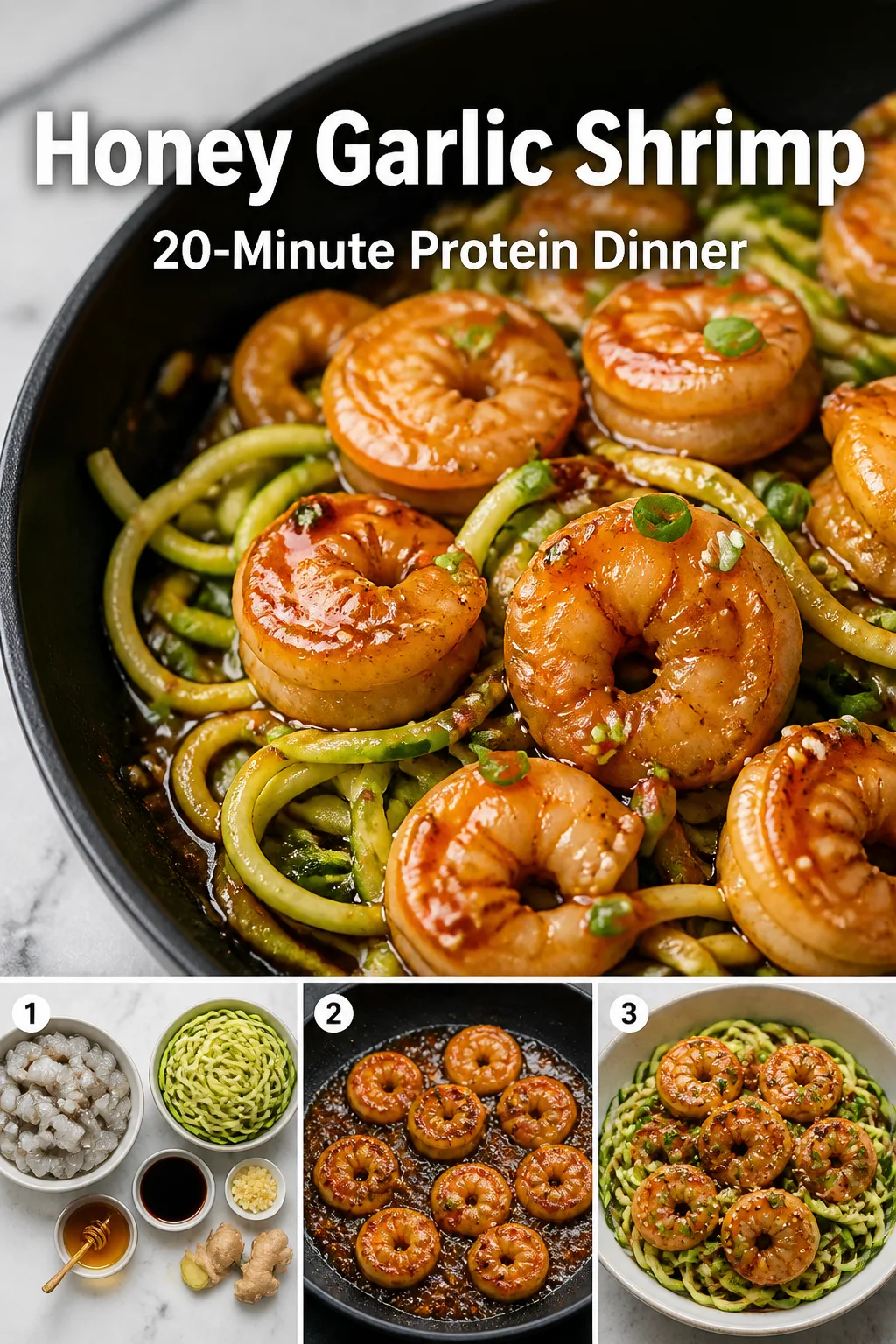
- Whisk together honey, low-sodium soy sauce, minced garlic, grated ginger, rice vinegar, and red pepper flakes in a small bowl until fully combined.
- Set the sauce mixture aside at room temperature while preparing remaining ingredients.
Sear the Shrimp
- Heat coconut oil in a large skillet over high heat for 1-2 minutes until the oil shimmers and moves freely.
- Add shrimp in a single layer and cook for exactly 2 minutes on the first side without moving them.
- Flip each shrimp individually and cook for 2 minutes on the second side until they turn pink and appear just opaque in the center.
- Pour the prepared sauce directly over the cooked shrimp in the skillet.
- Toss the shrimp constantly for 60 seconds, coating all pieces thoroughly until the sauce caramelizes and darkens slightly on the shrimp surface.
Add Vegetables and Finish
- Add the spiralized zucchini noodles directly to the skillet with the glazed shrimp.
- Toss everything together gently for 1-2 minutes, just until zucchini noodles soften slightly but retain al dente texture.
- Transfer to serving plates immediately and garnish with sesame seeds and sliced green onions.
- Serve right away while the dish is hot and the zucchini noodles maintain their firmness.
Chef Tips for Perfect Results
- Pat shrimp completely dry with paper towels before cooking; excess moisture prevents proper caramelization and creates steam that toughens the meat.
- Don’t move shrimp during the first 2 minutes of cooking; undisturbed contact with hot oil develops the golden crust essential for this dish’s texture.
- Use a microplane zester for ginger rather than a box grater to eliminate fibrous strands and distribute ginger more evenly throughout the sauce.
- Keep zucchini noodles separate from the skillet until the final step; this prevents them from releasing water that dilutes the sauce prematurely.
- Taste the sauce before adding shrimp and adjust sweetness with honey or saltiness with soy sauce; once glazed, adjustments become difficult.
- Serve immediately after combining; zucchini noodles continue releasing water as they sit, making the dish watery after five minutes.
Common Mistakes to Avoid
Overcooking the shrimp: Shrimp cook in seconds and transform from tender to rubber-like with just 30 additional seconds. The reason this happens is that shrimp protein denatures rapidly at high temperatures, squeezing out moisture. Fix this by setting a timer for exactly 2 minutes per side and removing shrimp immediately, even if they appear slightly translucent in the very center; residual heat continues cooking them for another 30 seconds.
Skipping the dry-pat step: Wet shrimp create steam rather than sear, resulting in pale, soft meat instead of caramelized exterior. This prevents the Maillard reaction that creates complex flavors and appealing texture. Always pat shrimp dry immediately before the skillet hits the heat, using fresh paper towels to eliminate all surface moisture.
Adding zucchini noodles too early: Zucchini releases water within 60 seconds of heating, diluting your carefully balanced sauce into a thin, watery puddle. The vegetables should only cook for 1-2 minutes maximum, entering the pan only after shrimp are fully glazed. This maintains sauce concentration and prevents mushiness that ruins the dish’s texture profile.
Using low-heat cooking: High heat is essential for searing shrimp properly and caramelizing the sauce. Low or medium heat results in pale, steamed shrimp and thin, unglazed sauce that lacks depth. Wait for the coconut oil to shimmer visibly before adding shrimp, indicating the pan has reached proper temperature.
Omitting or substituting sesame oil: Sesame oil provides the distinctive Asian flavor that makes this dish special; regular oils cannot replicate this taste. Skipping it or using vegetable oil creates a completely different, less aromatic result. The 2 tablespoons of sesame oil is non-negotiable for authentic flavor development.
Variations and Substitutions
| Ingredient | Substitution | Impact on Flavor |
|---|---|---|
| Shrimp | Scallops or halibut | Creates milder, sweeter profiles; cooking time remains 2 minutes per side for similar results. |
| Zucchini noodles | Shirataki noodles or cucumber | Reduces carbohydrate content further; shirataki requires rinsing; cucumber remains crunchier and lighter. |
| Honey | Maple syrup or agave nectar | Creates slightly different caramelization profile; maple adds earthy sweetness, agave yields neutral sweetness. |
| Soy sauce | Tamari or coconut aminos | Tamari offers gluten-free option with similar saltiness; coconut aminos provide paleo-friendly alternative with milder taste. |
| Sesame oil | Avocado oil plus extra sesame seeds | Compromises authentic Asian flavor but maintains cooking functionality; increasing sesame seeds helps recover some lost taste. |
| Red pepper flakes | Sriracha sauce or gochujang paste | Adds depth and complexity; sriracha brings garlic notes, gochujang introduces fermented umami quality. |
| Rice vinegar | White vinegar or lemon juice | White vinegar provides sharper acidity; fresh lemon juice adds brightness and citrus notes. |
Serving Suggestions and Pairings
Serve honey garlic shrimp with zucchini noodles as a standalone high-protein dinner for fitness enthusiasts pursuing lean muscle development. Pair with steamed bok choy or sautéed snap peas for additional vegetables that complement the Asian flavors beautifully. The dish works perfectly for meal prep containers, though consume within two days for optimal texture and freshness.
Complement this main course with light appetizers like cucumber slices with sesame dressing or edamame sprinkled with sea salt. For special occasions, precede with a simple miso soup or serve alongside a crisp white wine like Sauvignon Blanc or Pinot Grigio. Cold Asian-inspired beverages such as Herbal Sun Tea Recipe for Hormone Balance pair wonderfully with the warm, spiced flavors of this dish.
This recipe suits weeknight family dinners, date-night cooking, fitness meal prep, and entertaining health-conscious guests. The minimal active cooking time makes it ideal for busy professionals who prioritize nutrition without sacrificing flavor. Serve family-style in a shared skillet for casual dining, or plate individually for a restaurant-quality presentation that impresses at dinner parties.
Storage and Reheating
| Method | Duration | Instructions |
|---|---|---|
| Refrigerator Storage | 2 days maximum | Transfer cooled shrimp and noodles to an airtight glass container. Store sauce separately if possible to prevent noodles from absorbing excess liquid. Keep at 40°F or below. |
| Freezer Storage | 2 months | Cool completely before transferring to freezer-safe containers. Zucchini texture deteriorates upon thawing; freeze shrimp and sauce separately if planning long-term storage. Thaw in refrigerator overnight before reheating. |
| Stovetop Reheating | 3-4 minutes | Place shrimp, noodles, and sauce in a skillet over medium heat, stirring gently until warmed through. Avoid high heat which toughens shrimp further. Add 1-2 tablespoons water if sauce appears too concentrated. |
| Microwave Reheating | 2-3 minutes | Transfer to a microwave-safe container and heat at 50% power in 30-second intervals, stirring between each. Microwave tends to toughen shrimp slightly; stovetop reheating preferred for better texture. |
| Best Practice | Consume within 2 days | Store shrimp and zucchini noodles separately from sauce when possible. Consume fresh when optimal; reheated versions never match the original crisp-tender texture of freshly prepared dish. |
Nutritional Information
Approximate values per serving based on four servings total:
| Nutrient | Amount per Serving |
|---|---|
| Calories | 285 |
| Protein | 32g |
| Fat | 11g |
| Carbohydrates | 12g |
| Fiber | 2g |
| Sugar | 9g |
| Sodium | 620mg |
This high protein dinner provides over 32 grams of lean protein per serving, supporting muscle maintenance and satiety for extended periods. The low carbohydrate content of just 12 grams makes this ideal for keto, paleo, or low-carb dietary approaches. Sesame oil contributes heart-healthy polyunsaturated fats; according to Olive Oil Benefits, healthy fats enhance nutrient absorption and support cardiovascular health. Zucchini noodles provide fiber and essential micronutrients while keeping calories moderate at 285 per serving, making this dish compatible with most weight management goals.
Frequently Asked Questions
Can I Make This Recipe with Frozen Shrimp?
Yes, frozen shrimp work excellently for this recipe when thawed properly. Thaw shrimp in the refrigerator overnight or use the cold-water method by placing them in a sealed bag submerged in ice water for 30 minutes. Pat thawed shrimp completely dry before cooking to ensure proper searing and caramelization; frozen shrimp contain additional surface moisture compared to fresh varieties.
How Do I Know When Shrimp Are Perfectly Cooked?
Shrimp are perfectly cooked when they turn opaque pink throughout the body with firm, springy texture when pressed. The internal color should change from gray-translucent to white-opaque; avoid deep pink or curled shapes which indicate overcooking. Set a timer for exactly 2 minutes per side for consistent results every time you prepare this dish.
What If My Zucchini Noodles Are Too Watery?
Salt zucchini noodles 5-10 minutes before cooking and let them sit on paper towels to release excess moisture naturally. Alternatively, pat them dry with paper towels immediately before adding to the skillet, or reduce cooking time to just 60 seconds instead of the full 1-2 minutes. Some water release is normal and contributes to the silky sauce texture, so don’t worry about minor moisture.
Can I Prepare This Dish in Advance?
Prepare the sauce completely and store it in the refrigerator for up to three days before cooking. Spiralize zucchini and store in paper-towel-lined containers for up to one day; longer storage results in excessive moisture and mushiness. Cook shrimp fresh when ready to serve, as pre-cooked shrimp become tough even in the short time before eating.
Is This Recipe Suitable for a Low-Carb Diet?
This high protein dinner is perfect for low-carb and keto diets, containing only 12 grams of carbohydrates per serving. The carbs come entirely from natural sources: honey (9g sugar) and zucchini noodles (2g fiber, 3g net carbs). Reduce honey to 2 tablespoons if restricting sugar further, or substitute with erythritol or monk fruit sweetener at two-thirds ratio for zero-carb sweetness.
Conclusion
High protein dinner featuring honey garlic shrimp with zucchini noodles delivers restaurant-quality Asian flavors in just 15 minutes. This nutrient-dense meal combines succulent, perfectly-seared shrimp with fresh vegetable noodles and balanced, caramelized sauce. Whether you’re pursuing fitness goals, managing carbohydrate intake, or simply seeking delicious weeknight dinners, this recipe satisfies completely. The bold garlic and ginger notes, paired with sweet honey caramelization and spicy red pepper finish, create an unforgettable flavor profile that rivals takeout. Prepare this dish tonight and experience how simple ingredients and proper technique transform a quick meal into something truly exceptional.
“`

High Protein Dinner: Honey Garlic Shrimp with Zucchini Noodles
Ingredients
Method
- Whisk honey, low-sodium soy sauce, minced garlic, grated ginger, rice vinegar, and red pepper flakes together in a small bowl until fully combined. Set the sauce aside.
- Heat coconut oil in a large skillet over high heat for 1-2 minutes until the oil shimmers.
- Add shrimp in a single layer and cook for 2 minutes on the first side without moving them.
- Flip shrimp and cook for 2 minutes on the second side until pink and just opaque.
- Pour the sauce over the cooked shrimp and toss constantly for 60 seconds until glazed and caramelized.
- Add spiralized zucchini noodles to the skillet.
- Toss everything gently for 1-2 minutes until zucchini noodles soften slightly but remain al dente.
- Transfer to serving plates immediately.
- Garnish with sesame seeds and sliced green onions.
- Serve right away while hot.