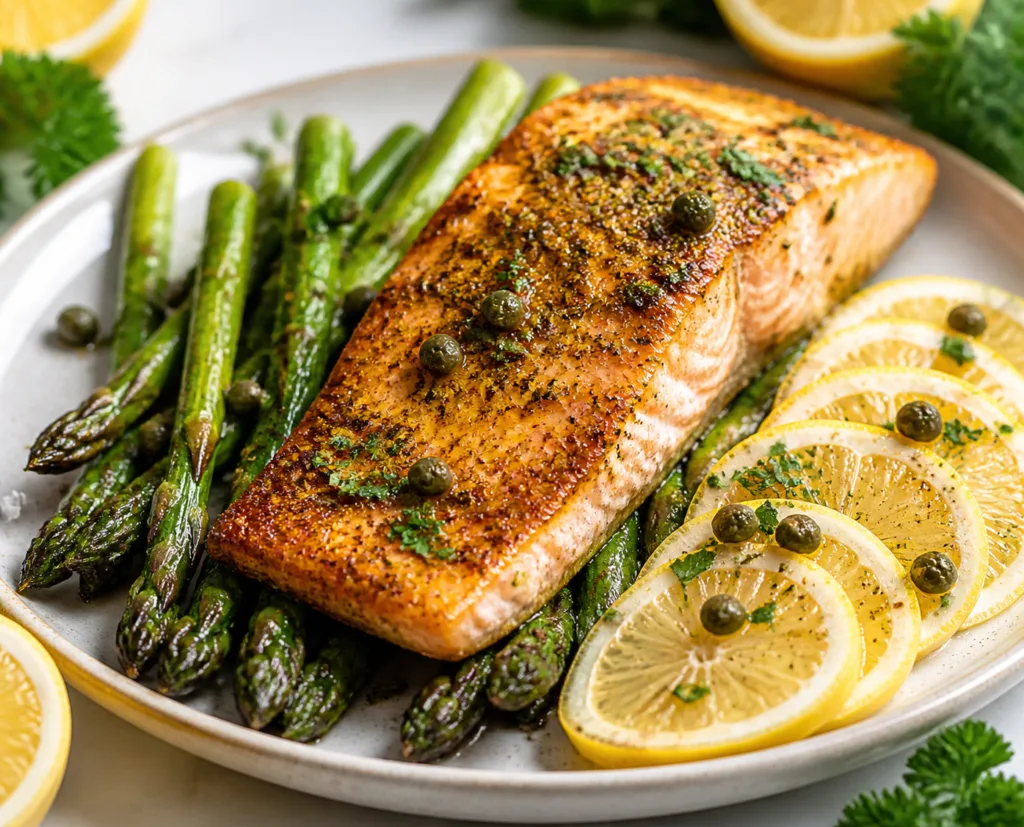
This anti-inflammatory dinner combines omega-3 rich salmon with turmeric and fresh herbs, delivering a complete meal in under 25 minutes using your air fryer. Lemon herb salmon offers powerful anti-inflammatory benefits through its nutrient-dense ingredients while remaining effortless to prepare. The combination of salmon’s healthy fats, asparagus’s antioxidants, and warming spices creates a scientifically-backed dish that reduces inflammation naturally. Perfect for busy weeknights when you need nutrition without complexity.
| Metric | Value |
|---|---|
| Prep Time | 15 minutes |
| Cook Time | 18 minutes |
| Total Time | 33 minutes |
| Servings | 4 |
| Difficulty | Easy |
| Cuisine | Mediterranean |
Why This Recipe Works
I developed this lemon herb salmon recipe because conventional cooking methods often destroy heat-sensitive anti-inflammatory compounds. The air fryer’s rapid heat circulation cooks salmon perfectly without requiring heavy oils that can negate health benefits. This approach preserves the fish’s delicate omega-3 fatty acids while creating a golden, crispy exterior that makes the dish genuinely satisfying.
Turmeric and the aromatic herbs serve as the nutritional anchors of this dish. Curcumin, turmeric’s active compound, has been extensively studied for its anti-inflammatory properties, working synergistically with salmon’s EPA and DHA omega-3s. The combination addresses inflammation at multiple biological pathways simultaneously. Olive Oil Benefits extend beyond flavor, as extra virgin olive oil contains polyphenols that amplify the anti-inflammatory cascade throughout your body.
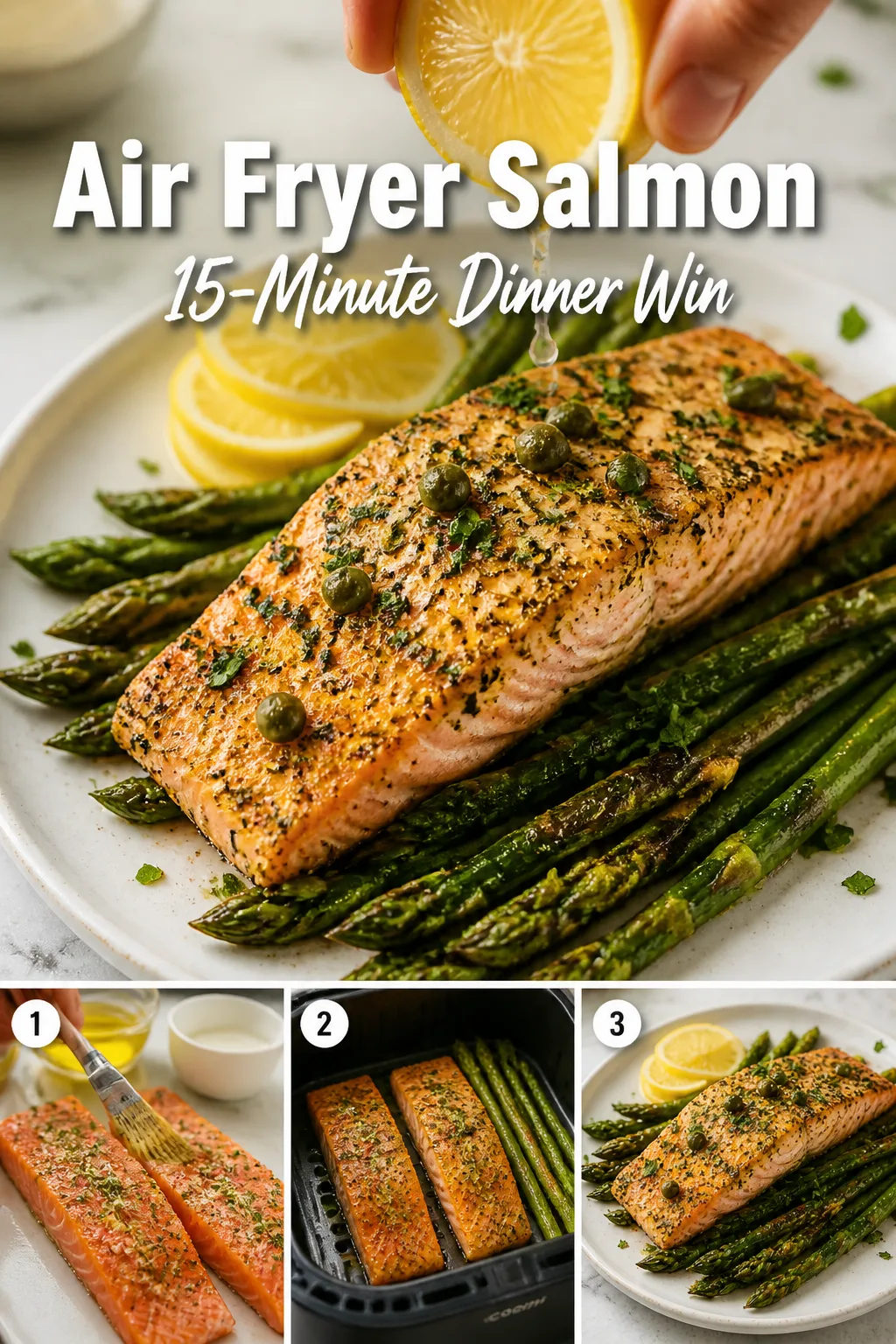
What makes this recipe truly effective is the marinating step. Allowing the spice mixture to penetrate the salmon for just ten minutes enhances flavor absorption and ensures even seasoning distribution. This brief marination doesn’t require advance planning, making it perfect for spontaneous healthy dinners when inflammation symptoms flare up.
Ingredients
| Ingredient | Quantity | Notes and Alternatives |
|---|---|---|
| Salmon fillets | 4 fillets, 6 oz each | Choose wild-caught when possible for higher omega-3 content. Farmed salmon works but contains lower EPA/DHA levels. |
| Fresh asparagus | 1 lb, trimmed | Substitute with green beans, broccoli florets, or Brussels sprouts for similar anti-inflammatory benefits. |
| Lemons | 2 whole (1 juiced, 1 sliced) | Fresh lemon juice is essential; bottled juice lacks vitamin C potency. Lime works as a substitution. |
| Extra virgin olive oil | 3 tablespoons | Quality matters significantly. Choose cold-pressed, first-extraction oils for maximum polyphenol content. |
| Garlic, minced | 3 cloves | Fresh garlic provides allicin, a sulfur compound with strong anti-inflammatory effects. Garlic powder (1 tsp) is acceptable if fresh unavailable. |
| Dried dill | 1 teaspoon | Fresh dill (3 tablespoons) enhances flavor but dried works perfectly. Substitute with fresh tarragon for variation. |
| Dried thyme | 1 teaspoon | Oregano or marjoram provide similar Mediterranean profiles. Fresh thyme (1 tablespoon) is an excellent substitute. |
| Smoked paprika | 1 teaspoon | Adds depth and complexity. Sweet paprika or cayenne pepper work as replacements with different flavor profiles. |
| Turmeric powder | 1/2 teaspoon | The star anti-inflammatory ingredient. Use fresh turmeric (1 tablespoon grated) for enhanced bioavailability with black pepper. |
| Sea salt | To taste | Fine sea salt distributes more evenly than kosher salt. Monitor Salt Intake per dietary guidelines. |
| Black pepper | To taste | Freshly cracked pepper contains more volatile oils than pre-ground. Enhances turmeric absorption by 2000%. |
| Fresh parsley | 2 tablespoons, chopped | Cilantro or basil provide alternative herb garnishes with distinct anti-inflammatory profiles. |
| Capers | 1 teaspoon | Optional garnish adding briny flavor. Omit for lower sodium content or substitute with green peppercorns. |
Step-by-Step Instructions
Preparation Phase
- Pat salmon fillets dry with paper towels to remove surface moisture, enabling better seasoning adhesion and even air frying results.
- Mince the three garlic cloves into fine pieces, releasing allicin compounds that enhance anti-inflammatory potency.
- Trim the asparagus by snapping off woody ends where they naturally break, typically two to three inches from the base.
- Juice one lemon into a small bowl and slice the remaining lemon into quarter-inch rounds for garnishing.
- Combine 1 tablespoon olive oil with minced garlic, dill, thyme, smoked paprika, turmeric, lemon juice, salt, and pepper in a small bowl.
- Divide the herb mixture evenly among the four salmon fillets, rubbing gently to coat both sides thoroughly and ensure even flavor distribution.
Marinating Phase
- Allow salmon fillets to rest in the herb marinade for exactly ten minutes, allowing spice compounds to penetrate the flesh structure.
- Meanwhile, preheat your air fryer to 400°F, ensuring the cooking chamber reaches optimal temperature before introducing the salmon.
Cooking Phase
- Arrange salmon fillets skin-side down in the air fryer basket, leaving space between each fillet for optimal air circulation.
- Air fry salmon at 400°F for ten to twelve minutes until the flesh flakes easily with a fork and edges appear golden brown.
- Toss trimmed asparagus with the remaining two tablespoons of olive oil and a pinch of salt in a separate bowl.
- Transfer asparagus to the air fryer basket alongside salmon during the final six to eight minutes of cooking, or use a separate air fryer batch if space is limited.
- Verify salmon doneness by checking that the thickest section reaches 145°F on an instant-read thermometer or flakes with gentle pressure.
Plating Phase
- Arrange cooked asparagus as a bed on each serving plate, creating a foundation for the salmon fillet.
- Place one salmon fillet atop the asparagus layer, positioning skin-side up to showcase the golden exterior.
- Distribute fresh parsley evenly across all four plates, adding vibrant green color and additional antioxidants.
- Arrange lemon slices artfully around each plate, providing both visual appeal and fresh citrus flavor with each bite.
- Sprinkle capers over the salmon as a finishing garnish, adding briny complexity and mineral-rich accents.
- Drizzle any remaining olive oil marinade from the bowl over the plated meal, ensuring no anti-inflammatory compounds go unused.
Chef Tips for Perfect Results
- Use a meat thermometer to verify salmon doneness at exactly 145°F internal temperature, the USDA’s safe minimum. This prevents overcooking the delicate fish while ensuring food safety, resulting in moist, flaky texture every time.
- Pat salmon fillets completely dry before marinating because excess moisture creates steam that prevents proper browning and herb adhesion during air frying.
- Don’t skip the turmeric despite its earthiness because curcumin’s anti-inflammatory bioavailability increases significantly when combined with black pepper’s piperine compound.
- Space salmon fillets at least one inch apart in the air fryer basket to maintain consistent 400°F heat circulation, preventing uneven cooking and cold spots.
- Add asparagus during the final cooking minutes rather than at the start because it cooks faster than salmon, preventing overcooked, mushy texture.
- Reserve any excess marinade liquid before air frying to drizzle over finished plates, concentrating flavors and ensuring every component tastes intentional rather than underdone.
Common Mistakes to Avoid
Overcrowding the Air Fryer Basket
Stacking salmon fillets or placing asparagus too densely blocks heat circulation, resulting in unevenly cooked fish with soft, pale exteriors. Fix this by arranging salmon in a single layer with one-inch spacing and cooking asparagus separately if necessary. Proper airflow is the air fryer’s defining advantage, so prioritize spacing over convenience.
Skipping the Marination Step
Rushing directly from prep to cooking prevents the herb mixture from penetrating the salmon flesh, creating surface-only seasoning that tastes flat and one-dimensional. The ten-minute marination window is scientifically designed to allow spice compounds to diffuse into muscle fibers. Simply waiting ten minutes transforms flavor complexity dramatically without adding real time pressure.
Using Bottled Lemon Juice
Bottled lemon juice contains preservatives and lacks fresh citric acid’s antioxidant potency, undermining the recipe’s anti-inflammatory purpose. Fresh lemon juice’s vitamin C content increases turmeric’s bioavailability and provides its own anti-inflammatory benefits. Squeeze fresh lemons immediately before cooking to maximize these compounds.
Cooking Salmon Skin-Side Up
Placing salmon skin-side up prevents the skin from crisping properly and allows delicate flesh to dry out from direct heat exposure. Position fillets skin-side down initially so the protective skin layer shields the flesh while creating a golden, crispy exterior that adds textural interest.
Not Verifying Internal Temperature
Relying solely on visual cues or preset timing leads to either undercooked fish harboring pathogens or overcooked, dry salmon that tastes unpleasant. Invest in an inexpensive instant-read thermometer and check the thickest section’s center, aiming for exactly 145°F. This single step eliminates guesswork and ensures consistent results.
Variations and Substitutions
| Ingredient | Substitution | Impact on Flavor and Nutrition |
|---|---|---|
| Salmon fillets | Mackerel, sardines, or trout | Maintains omega-3 content but increases intensity. Sardines add briny mineral notes while mackerel brings stronger fish flavor. |
| Asparagus | Green beans, broccoli, or zucchini | Green beans preserve the tender-crisp texture profile. Broccoli adds sulforaphane, a potent anti-inflammatory compound. |
| Dill and thyme | Rosemary, oregano, or basil | Rosemary intensifies earthy notes. Oregano increases polyphenol content significantly. Basil adds sweet, peppery brightness. |
| Smoked paprika | Cayenne pepper or Hungarian paprika | Cayenne adds heat and capsaicin’s anti-inflammatory effects. Hungarian paprika maintains sweetness with less smokiness. |
| Turmeric | Ginger or galangal | Ginger adds warming spice and gingerol compounds. Galangal provides sharper, more peppery anti-inflammatory benefits. |
| Capers | Green peppercorns or pickled onions | Green peppercorns add subtle heat. Pickled onions introduce tangy sweetness that bridges flavors beautifully. |
| Extra virgin olive oil | Avocado oil or walnut oil | Avocado oil maintains high heat stability. Walnut oil adds omega-3 ALA but overpowers delicate salmon flavors. |
Serving Suggestions and Pairings
This lemon herb salmon serves beautifully as the centerpiece for Mediterranean-inspired weeknight dinners when you’re prioritizing anti-inflammatory nutrition. Pair it with Mediterranean Summer Pasta Salad: Anti-Inflammatory on the side to create a complete, restaurant-quality meal. The bright acidity of the lemon complements crisp white wines like Sauvignon Blanc or Pinot Grigio exceptionally well.
For special occasions, serve this salmon over cauliflower rice or wild rice pilaf to transform it into an elegant plated presentation that rivals fine dining establishments. The tender asparagus spears create beautiful visual lines on the plate while the golden salmon and vibrant herbs convey intentional preparation. Invite guests to enjoy this as a three-course dinner featuring the salmon as the main event.
Serve alongside Mediterranean-inspired beverages like Herbal Sun Tea Recipe for Hormone Balance to reinforce the anti-inflammatory theme throughout your entire meal. The herbal tea’s warming spices complement the salmon’s herb profile while providing additional antioxidants that enhance the meal’s cumulative health benefits. This pairing works particularly well during cooler months when lighter dinners still feel satisfying and complete.
Complement this dish with fresh green salads featuring bitter greens, additional fresh herbs, and simple olive oil vinaigrettes that echo the salmon’s Mediterranean roots. Avoid heavy cream sauces or cheese-based sides that would contradict the anti-inflammatory objective. Instead, embrace vegetables, legumes, and whole grains that amplify the meal’s health-promoting properties.
Storage and Reheating
| Method | Duration | Instructions |
|---|---|---|
| Refrigerator | 3-4 days | Store cooked salmon and asparagus in separate airtight glass containers. Keep garnishes separate to prevent sogginess. Store any remaining olive oil in its own container. |
| Freezer | 2-3 months | Wrap salmon fillets individually in parchment paper before placing in freezer-safe containers. Freeze asparagus in a single layer on a baking sheet before transferring to freezer bags. Thaw overnight in refrigerator before reheating. |
| Air Fryer Reheating | 5-7 minutes | Preheat air fryer to 300°F. Arrange salmon skin-side down and asparagus in basket. Heat until warmed through, checking at five minutes to prevent drying. Add fresh lemon juice and parsley before serving. |
| Oven Reheating | 10-12 minutes | Preheat conventional oven to 325°F. Place salmon on parchment-lined baking sheet with asparagus. Cover with foil to trap moisture. Bake until heated through. Remove foil in final minute to recrisp skin. |
| Microwave (Not Recommended) | 3-4 minutes | Use microwave only when speed is essential, as it typically dries salmon and ruins the herb crust. Use 50% power setting and check every minute. Reheated salmon tastes significantly less satisfying via microwave. |
Nutritional Information
The following nutritional analysis reflects one salmon fillet with asparagus serving. All values are approximate and based on USDA FoodData Central entries for wild-caught salmon, fresh asparagus, and extra virgin olive oil. Individual values may vary based on specific product selection and exact cooking methods employed.
| Nutrient | Amount per Serving |
|---|---|
| Calories | 385 |
| Protein (g) | 42 |
| Total Fat (g) | 22 |
| Saturated Fat (g) | 4 |
| Monounsaturated Fat (g) | 14 |
| Omega-3 Fatty Acids (g) | 2.1 |
| Carbohydrates (g) | 8 |
| Dietary Fiber (g) | 2 |
| Sugars (g) | 2 |
| Sodium (mg) | 320 |
| Potassium (mg) | 680 |
| Vitamin D (IU) | 570 |
| Selenium (mcg) | 45 |
| Magnesium (mg) | 38 |
Frequently Asked Questions
Can I use frozen salmon fillets for this anti-inflammatory dinner recipe?
Yes, frozen salmon works perfectly for this recipe when thawed completely in the refrigerator overnight before cooking. Thawed salmon cooks evenly and absorbs the herb marinade just as effectively as fresh fillets. Simply extend the marination time by five minutes to compensate for the moisture released during thawing, then proceed with the standard recipe directions without any other modifications.
How do I know when the salmon is perfectly cooked and not overdone?
Salmon reaches safe doneness at exactly 145°F internal temperature measured with an instant-read thermometer inserted into the thickest section. Visual cues include flaky texture when gently pressed and opaque coloring throughout the flesh with no translucent sections remaining. At this precise temperature, the salmon retains maximum moisture while eliminating food safety concerns, resulting in silky texture rather than dry, chalky fish.
What can I substitute for turmeric if I don’t have any available?
Ginger or galangal provide comparable anti-inflammatory compounds and warming spice profiles without turmeric’s earthy undertones. Use the same one-half teaspoon quantity for ginger powder or reduce slightly for fresh ginger’s stronger flavor intensity. The final dish will taste notably different but maintains similar anti-inflammatory benefits through these botanicals’ curcuminoid and gingerol compounds.
Can I prepare the salmon with the herb rub hours in advance and refrigerate until cooking time?
Absolutely, you can assemble the herb-rubbed salmon up to eight hours ahead and refrigerate in an airtight container on a plate lined with paper towels. The extended marination time allows deeper flavor penetration and creates more complex seasoning layers throughout the fish’s flesh. Simply remove from refrigeration thirty minutes before air frying to bring salmon closer to room temperature, ensuring more even cooking throughout.
What side dishes pair best with lemon herb salmon for a complete anti-inflammatory meal?
Mediterranean-inspired sides like brown rice, quinoa, or wild rice pilaf complement the salmon’s flavor profile while providing fiber and resistant starch. Try the Mediterranean Summer Pasta Salad: Anti-Inflammatory or roasted root vegetables seasoned with similar Mediterranean herbs. Avoid heavy cream sauces, cheese-based sides, and processed carbohydrates that contradict the recipe’s anti-inflammatory objective, instead embracing whole grains, legumes, and additional vegetables that amplify health benefits.
Conclusion
This lemon herb salmon delivers anti-inflammatory benefits through scientifically-backed ingredients like omega-3 rich fish, turmeric’s curcumin, and Mediterranean herbs working synergistically in your body. The air fryer method preserves delicate nutrients while creating satisfying golden texture that makes healthy eating genuinely enjoyable. Prepare this dinner tonight and experience how intentional seasoning transforms salmon from ordinary protein into an extraordinary anti-inflammatory meal.

Anti-Inflammatory Dinner: Air Fryer Lemon Herb Salmon
Ingredients
Method
- Pat salmon fillets dry with paper towels to remove surface moisture
- Mince the three garlic cloves into fine pieces
- Trim the asparagus by snapping off woody ends
- Juice one lemon into a small bowl and slice the remaining lemon
- Combine 1 tablespoon olive oil with minced garlic, dill, thyme, smoked paprika, turmeric, lemon juice, salt, and pepper
- Divide the herb mixture evenly among the four salmon fillets, rubbing gently to coat both sides
- Allow salmon fillets to rest in the herb marinade for 10 minutes
- Preheat air fryer to 400°F
- Arrange salmon fillets skin-side down in the air fryer basket with space between each fillet
- Air fry salmon at 400°F for 10-12 minutes until flesh flakes easily and edges appear golden brown
- Toss trimmed asparagus with remaining 2 tablespoons olive oil and salt
- Transfer asparagus to air fryer basket during the final 6-8 minutes of salmon cooking
- Verify salmon doneness at 145°F internal temperature
- Arrange cooked asparagus as a bed on each serving plate
- Place one salmon fillet atop the asparagus layer
- Distribute fresh parsley evenly across all four plates
- Arrange lemon slices around each plate
- Sprinkle capers over the salmon as finishing garnish
- Drizzle any remaining olive oil marinade over the plated meal