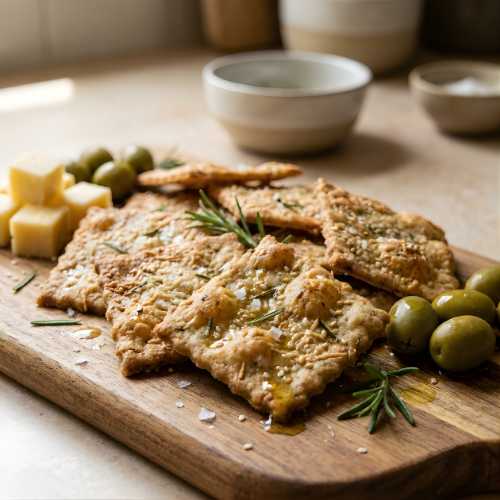
Sourdough discard crackers are crispy, homemade snacks made from fermented starter combined with wholesome flours and savory seasonings. These gut-healthy crackers deliver the tangy complexity of sourdough in convenient cracker form. The fermentation process creates beneficial probiotics that support digestive wellness. Unlike store-bought alternatives loaded with preservatives, homemade versions let you control every ingredient. This recipe transforms your excess sourdough starter into nutrient-dense crackers that taste restaurant-quality.
| Detail | Duration |
|---|---|
| Prep Time | 15 minutes |
| Cook Time | 20 minutes |
| Total Time | 35 minutes |
| Servings | 24 crackers |
| Difficulty | Easy |
| Cuisine | Mediterranean |
Why This Recipe Works
I created this sourdough discard crackers recipe because I needed an effective way to use excess starter without wasting it. Most bakers face this challenge weekly, discovering their sourdough culture overflows faster than recipes require. These crackers solve that problem while delivering genuine nutritional benefits beyond ordinary crackers.
The magic happens through fermentation and ingredient selection. Sourdough discard contains live cultures that survived the feeding process, maintaining probiotic activity through baking. The combination of all-purpose and whole wheat flours provides balanced texture and nutritional density. Olive Oil Benefits extend beyond flavor, contributing heart-healthy monounsaturated fats and anti-inflammatory compounds. Rosemary adds aromatic depth while contributing antioxidants, making these crackers simultaneously indulgent and health-conscious.
Rolling the dough thin and scoring before baking ensures maximum crispness throughout. The sesame seeds toast slightly during baking, developing nutty flavors that complement the tangy sourdough base. Parmesan adds umami depth that makes these crackers genuinely addictive, transforming simple discard into gourmet snacking material.
Ingredients
| Ingredient | Quantity | Notes and Alternatives |
|---|---|---|
| Sourdough Discard | 1 cup | Use unfed starter at room temperature. Can substitute active starter, though fermentation time may vary slightly. |
| All-Purpose Flour | 1 cup | Provides gluten structure and familiar cracker texture. Bread flour creates chewier results; cake flour yields more delicate crackers. |
| Whole Wheat Flour | 1/2 cup | Adds nutritional density and complex flavor. Spelt flour substitutes for nuttier taste; buckwheat works for grain-free diets. |
| Extra-Virgin Olive Oil | 1/4 cup | Critical for texture and health benefits. Avocado oil works as neutral alternative; coconut oil creates different flavor profile. |
| Sea Salt | 1 tsp | Enhances all flavors and supports fermentation. Himalayan pink salt adds mineral complexity; reduce if using salted Parmesan. |
| Fresh Rosemary | 1 tbsp finely chopped | Dried rosemary works; use 1 teaspoon only. Thyme, oregano, or Italian seasoning mix create different flavor directions. |
| Sesame Seeds | 1 tbsp | Adds crunch and nutty flavor. Black sesame seeds provide visual contrast; pumpkin seeds substitute for earthier taste. |
| Garlic Powder | 1 tsp | Provides consistent garlic flavor without moisture. Fresh minced garlic requires reducing liquid; garlic salt counts toward total salt. |
| Grated Parmesan | 2 tbsp | Adds umami and slight saltiness. Pecorino Romano intensifies sharpness; nutritional yeast creates vegan alternative. |

Step-by-Step Instructions
Mixing Phase
- Combine sourdough discard, all-purpose flour, and whole wheat flour in a large mixing bowl.
- Add extra-virgin olive oil, sea salt, finely chopped rosemary, garlic powder, and grated Parmesan to the dry mixture.
- Mix all ingredients together using a wooden spoon or your hands until a smooth, cohesive dough forms without dry patches.
- Knead the dough briefly for 1-2 minutes to develop gluten structure and ensure even ingredient distribution.
Shaping Phase
- Line two large baking sheets with parchment paper for easy removal and cleanup.
- Divide the dough in half, placing one portion on each prepared baking sheet.
- Roll out the first dough portion as thinly as possible, aiming for approximately 1/8-inch thickness using a rolling pin.
- Repeat rolling with the second dough portion until both sheets contain thin, even dough layers.
- Score the rolled dough into cracker-sized squares or rectangles using a pastry wheel or sharp knife.
- Sprinkle sesame seeds evenly across the scored dough surfaces.
Baking Phase
- Preheat your oven to 375 degrees Fahrenheit for 10 minutes before baking.
- Place both baking sheets into the preheated oven on the middle rack position.
- Bake for 18-22 minutes, checking at the 18-minute mark, until the crackers turn golden brown and feel completely crisp.
- Remove baking sheets from the oven and allow crackers to cool for 5-10 minutes on the pans.
- Break the cooled crackers along the score lines once they’ve hardened completely.
- Transfer to an airtight container for storage after complete cooling.
Chef Tips for Perfect Results
- Roll the dough as thin as humanly possible without tearing. Thicker crackers remain chewy rather than crispy, compromising the intended texture that makes these snacks irresistible.
- Use unfed sourdough discard at peak ripeness for maximum probiotic benefit and authentic tangy flavor development during baking.
- Score deeply with a pastry wheel rather than a knife to ensure clean breaks along desired lines without jagged edges.
- Rotate the baking sheets halfway through cooking if your oven has hot spots, promoting even browning across both batches simultaneously.
- Allow crackers to cool completely on the baking sheets before breaking them apart, as they continue crisping during the cooling process.
- Store in airtight glass containers with parchment paper between layers to prevent moisture absorption and maintain maximum crispness.
Common Mistakes to Avoid
Rolling Too Thick: Many home bakers leave dough at quarter-inch thickness, resulting in chewy, bread-like crackers instead of crispy snacks. Thin rolling (1/8-inch or less) allows moisture to escape quickly, creating the signature crunch. Use parchment paper as a guide, aiming for transparency where light barely filters through the dough.
Inconsistent Thickness: Uneven rolling creates crackers that brown at different rates, leaving some pale and others burnt. Roll systematically from center outward in all directions, maintaining consistent pressure. A rolling pin with thickness guides prevents guesswork and ensures uniform doneness across the entire batch.
Removing Before Complete Crispness: Crackers that feel crispy hot often soften as they cool when removed prematurely from residual steam. Bake until golden and completely hard throughout, testing the thickest center piece. Allow full cooling before breaking apart to confirm lasting crispness rather than temporary firmness.
Skipping the Score Step: Attempting to break unbaked dough creates jagged, uneven pieces and causes the entire sheet to tear messily. Score with a pastry wheel or knife before baking, using consistent pressure to mark through the entire thickness without separating pieces.
Using Wet Starter: Recently fed sourdough starter with excess water creates dough that’s sticky and difficult to roll properly. Use discard that’s been sitting unfed for 24+ hours, or drain excess liquid before measuring to ensure the correct flour-to-liquid ratio.
Variations and Substitutions
| Ingredient | Substitution | Impact on Flavor |
|---|---|---|
| Rosemary | Thyme or oregano | Creates Mediterranean herb complexity with slightly more delicate, subtle flavor profile. |
| Sesame Seeds | Everything bagel seasoning | Adds garlic, onion, and poppy notes for bolder seasoning and visual texture variation. |
| Whole Wheat Flour | Spelt or einkorn flour | Delivers nuttier, earthier taste with slightly different gluten structure and protein density. |
| Parmesan | Pecorino Romano | Intensifies savory, salty notes with sharper, more aggressive cheese flavor profile. |
| Garlic Powder | Smoked paprika | Introduces smokiness and mild heat, shifting from traditional Italian toward Spanish flavors. |
| Extra-Virgin Olive Oil | Avocado oil | Maintains nutrition and texture while neutralizing flavor for seasoning clarity. |
| Sea Salt | Smoked salt | Adds subtle smokiness that complements rosemary and Parmesan beautifully. |
Serving Suggestions and Pairings
Serve these sourdough discard crackers as sophisticated appetizers at dinner parties, paired with whipped goat cheese and roasted red pepper spread. They complement charcuterie boards alongside prosciutto, aged cheddar, and marcona almonds for elevated entertaining. Enjoy them as simple afternoon snacks with hummus, olive tapenade, or your favorite cheese dip for casual moments.
Pack crackers in compartmentalized containers for travel-friendly lunches that maintain crispness throughout the day without requiring refrigeration. Pair with Anti-Inflammatory Golden Chicken Stew for complete meals that leverage shared nutritional benefits. Serve alongside High-Protein Cranberry Cottage Cheese Cheese Ball Recipe for protein-forward entertaining that impresses health-conscious guests.
Create sophisticated appetizer boards featuring these crackers with roasted garlic hummus, herbed cream cheese, and fresh herbs. Pair with soups like butternut squash bisque or tomato basil for textural contrast. Serve at wine tastings alongside aged cheeses and cured meats for rustic Mediterranean entertaining that celebrates fermented foods.
Include in lunch boxes with fresh fruits, nuts, and High-Protein Cottage Cheese Dessert Dip (No Protein Powder) for balanced, nutrient-dense portable meals. Serve warm from the oven as conversation-starting appetizers that reveal their just-baked quality and aromatic rosemary notes.
Storage and Reheating
| Method | Duration | Instructions |
|---|---|---|
| Room Temperature Container | Up to 5 days | Store in airtight glass containers with parchment between layers to prevent moisture absorption and maintain maximum crispness. |
| Freezer Storage | Up to 2 months | Place cooled crackers in freezer-safe containers or bags, removing excess air. Thaw at room temperature for 30 minutes before serving. |
| Refrigerator | Not recommended | Refrigeration introduces moisture that softens crackers. Room temperature storage preserves crispness far more effectively. |
| Crisping Refresh | 2-3 minutes | Place softened crackers on a baking sheet and warm at 300 degrees Fahrenheit briefly to restore lost crispness. |
| Vacuum Sealing | Up to 3 weeks | Use a vacuum sealer to remove all air, creating an oxygen-free environment that extends freshness significantly. |
Nutritional Information
| Nutrient | Amount per Serving |
|---|---|
| Calories | 72 |
| Protein | 2.1g |
| Fat | 3.2g |
| Carbohydrates | 8.8g |
| Fiber | 1.2g |
| Sugar | 0.1g |
| Sodium | 198mg |
Approximate values based on 24 crackers per batch. Nutritional content varies based on specific ingredient brands and precise measurements. These crackers provide moderate sodium levels consistent with Salt Intake recommendations for general health maintenance.
Frequently Asked Questions
Can I Substitute Active Starter for Sourdough Discard in This Recipe?
Yes, active starter works directly in this recipe, though freshly fed starter contains more moisture and requires potential dough adjustments. If your dough feels sticky after mixing, add small quantities of flour (one tablespoon at a time) until reaching the proper consistency. The crackers may have slightly different flavor intensity depending on your starter’s feeding schedule.
How Do I Know When These Crackers Are Completely Crispy?
The crackers are finished when they turn golden brown and feel completely hard throughout, with zero flexibility or chewiness when bent. The thickest center pieces should be as crisp as the edges, confirming that all moisture has evaporated completely. Allow cooling for 10 minutes on the baking sheets before breaking apart, as crackers continue hardening as they cool.
What Should I Do If My Crackers Turned Out Chewy Instead of Crispy?
Chewy crackers result from rolling too thick or removing them before complete baking, both easily fixed in future batches. Roll the dough thinner (aim for 1/8-inch or less) and bake until completely golden throughout, testing the thickest pieces for hardness. If this batch is salvageable, return them to the oven at 300 degrees for 3-5 minutes to crisp further.
Can I Prepare the Dough in Advance and Bake Later?
You can prepare the mixed dough hours ahead and refrigerate it covered until ready to shape and bake. Rolled, scored dough keeps refrigerated for 24 hours before baking, though baking immediately after rolling produces superior crispness. Let cold dough rest at room temperature for 15 minutes before baking if refrigerated, ensuring even cooking throughout.
What Toppings Work Best on These Sourdough Crackers for Serving?
Soft toppings like whipped goat cheese, herbed cream cheese, and hummus pair beautifully without sliding off. Cured meats, aged cheeses, and crunchy spreads like olive tapenade maintain textural contrast. Keep toppings light and minimal to showcase the crackers’ inherent nutty, tangy flavor from the sourdough base.
Conclusion
Sourdough discard crackers transform excess starter into delicious, gut-healthy snacks that rival expensive artisanal brands. These homemade crackers deliver authentic fermented flavor, beneficial probiotics, and pristine ingredient control impossible in commercial alternatives. With straightforward instructions and reliable results, you’ll create crackers that earn regular rotation on your entertaining menus and lunch tables. The combination of tangy sourdough, herbaceous rosemary, and umami Parmesan creates an unexpectedly sophisticated cracker that satisfies cravings while supporting digestive wellness.

Sourdough Discard Crackers: Gut-Healthy Recipe
Ingredients
Method
- Combine sourdough discard, all-purpose flour, and whole wheat flour in a large mixing bowl.
- Add extra-virgin olive oil, sea salt, finely chopped rosemary, garlic powder, and grated Parmesan to the dry mixture.
- Mix all ingredients together using a wooden spoon or your hands until a smooth, cohesive dough forms without dry patches.
- Knead the dough briefly for 1-2 minutes to develop gluten structure and ensure even ingredient distribution.
- Line two large baking sheets with parchment paper for easy removal and cleanup.
- Divide the dough in half, placing one portion on each prepared baking sheet.
- Roll out the first dough portion as thinly as possible, aiming for approximately 1/8-inch thickness using a rolling pin.
- Repeat rolling with the second dough portion until both sheets contain thin, even dough layers.
- Score the rolled dough into cracker-sized squares or rectangles using a pastry wheel or sharp knife.
- Sprinkle sesame seeds evenly across the scored dough surfaces.
- Preheat your oven to 375 degrees Fahrenheit for 10 minutes before baking.
- Place both baking sheets into the preheated oven on the middle rack position.
- Bake for 18-22 minutes, checking at the 18-minute mark, until the crackers turn golden brown and feel completely crisp.
- Remove baking sheets from the oven and allow crackers to cool for 5-10 minutes on the pans.
- Break the cooled crackers along the score lines once they've hardened completely.
- Transfer to an airtight container for storage after complete cooling.