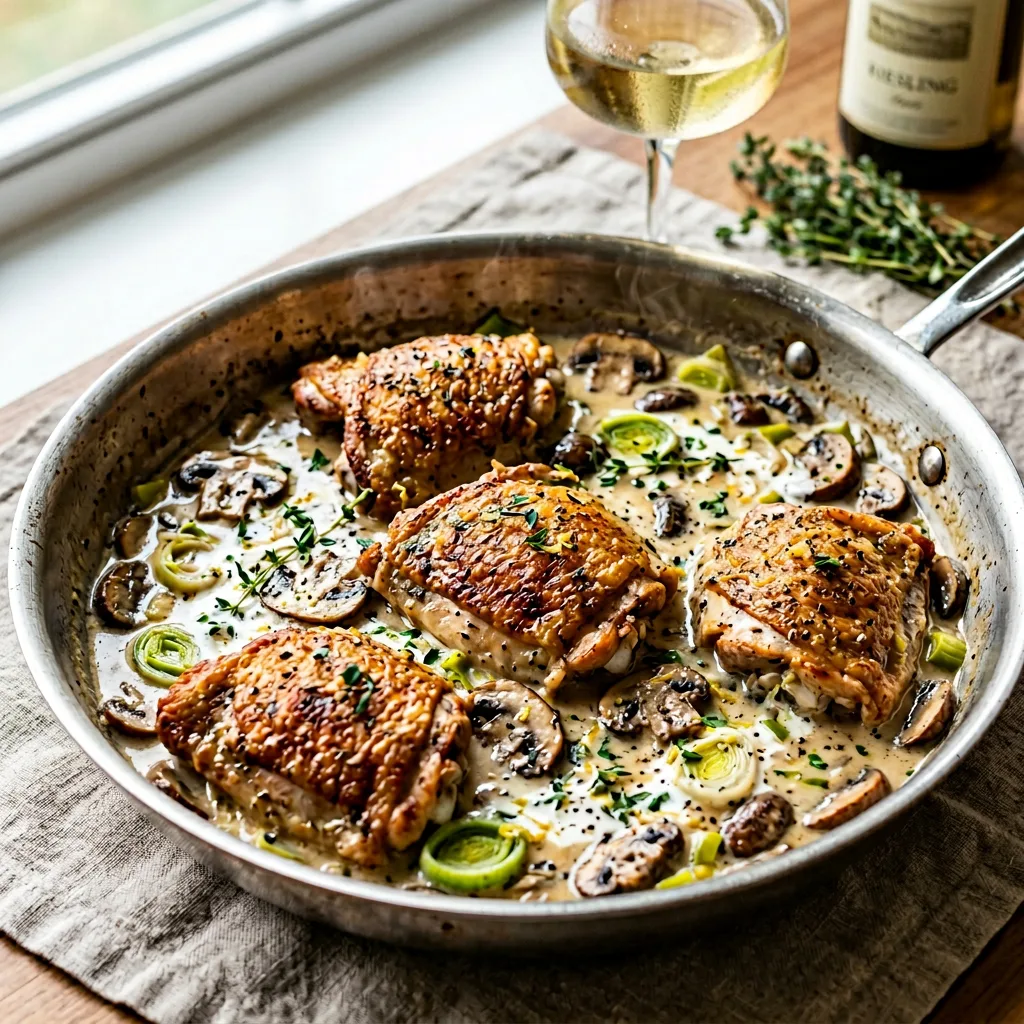
Creamy white wine chicken Riesling is a refined French-inspired dish that combines tender bone-in chicken thighs with a silky mushroom and leek sauce enriched by dry Riesling wine. This elegant dinner delivers restaurant-quality flavors in under one hour, making it perfect for both weeknight sophistication and special entertaining. The technique of searing skin-on chicken creates a crispy golden exterior while the gentle simmer in white wine sauce keeps the meat incredibly moist and flavorful.
| Metric | Value |
|---|---|
| Prep Time | 15 minutes |
| Cook Time | 40 minutes |
| Total Time | 55 minutes |
| Servings | 4 |
| Difficulty | Intermediate |
| Cuisine | French |
Why This Recipe Works
I have made this creamy white wine chicken countless times, and it never fails to impress both family and guests. The beauty of this dish lies in its simplicity combined with layered flavors that develop as the chicken poaches gently in the wine-based broth. Bone-in skin-on thighs are the ideal cut because they remain juicy and tender during the cooking process, unlike breasts which can dry out quickly.
The searing step at the beginning is critical because it creates what chefs call the Maillard reaction, which develops deep, complex flavors and creates that prized crispy skin. Once the chicken is removed, the same pan becomes a flavor base where mushrooms, leeks, and garlic soften and release their natural umami compounds. When you deglaze with Riesling, those caramelized bits dissolve into the liquid, creating an incredibly flavorful foundation for the sauce.

The addition of light cream at the end transforms the wine-based broth into a luxurious, velvety sauce that coats each piece of chicken perfectly. Lemon zest brightens the richness without adding liquid, while Dijon mustard adds subtle complexity and helps emulsify the sauce. According to How To Cook Chicken, achieving proper doneness while maintaining moisture is the cornerstone of excellent chicken cookery, and this method delivers both.
Ingredients
| Ingredient | Quantity | Notes with Alternatives |
|---|---|---|
| Bone-in skin-on chicken thighs | 4 | Do not substitute with breasts; thighs remain moist. Dark meat is essential for flavor. |
| Dry Riesling white wine | 1 cup | Use a quality wine you would drink. Sauvignon Blanc or Pinot Grigio work as alternatives. |
| Low-sodium chicken broth | 1 cup | Homemade broth preferred; avoid high-sodium versions as sauce reduces and concentrates. |
| Light cream or crème fraîche | 1/2 cup | Crème fraîche adds tanginess; Greek yogurt works but may break at high heat. |
| Button or cremini mushrooms, sliced | 2 cups | Cremini adds earthier flavor; shiitake or oyster mushrooms provide deeper umami. |
| Leek white and light green parts, thinly sliced | 1 | Leeks provide subtle sweetness; shallots offer sharper flavor as substitute. |
| Garlic, minced | 3 cloves | Fresh garlic only; do not use jarred. One clove equals approximately 1 teaspoon minced. |
| Fresh thyme sprigs | 2 | Essential for French flavor profile. Dried thyme uses 2/3 teaspoon; less potent than fresh. |
| Bay leaf | 1 | Adds subtle background flavor. Remove before serving or inform diners of its presence. |
| Olive oil | 1 tbsp | Use extra virgin for finishing; regular olive oil for high-heat cooking. |
| Butter | 1 tbsp | Unsalted butter recommended to control salt content of finished dish. |
| Dijon mustard | 1 tsp | Adds subtle complexity and aids sauce emulsification. Cannot be omitted without changing profile. |
| Lemon zest | 1 tsp | Fresh zest only; microplane zester recommended. Brightens cream sauce naturally. |
| Salt and pepper | To taste | Season in layers: at searing, before braising, and at end. Taste before serving. |
| Fresh thyme for garnish | As needed | Final garnish adds visual appeal and fresh herbal note to plated dish. |
| Fresh parsley for garnish | As needed | Chopped flat-leaf parsley brightens flavors and complements the herbaceous sauce. |
| Crusty bread for serving | 1 loaf | Essential for soaking up the luxurious sauce. Warm before serving. |
Step-by-Step Instructions
Preparation Phase
- Pat the chicken thighs dry with paper towels to remove surface moisture.
- Season both sides of each chicken thigh generously with salt and pepper.
- Slice the leek white and light green parts into thin rounds, rinsing between layers to remove any trapped soil.
- Slice the mushrooms into uniform pieces approximately 1/4 inch thick.
- Mince the garlic cloves finely using a sharp knife or microplane.
- Measure out the Riesling, chicken broth, and light cream into separate vessels for easy access during cooking.
Searing and Protein Foundation
- Heat olive oil and butter in a large heavy-bottomed skillet over medium-high heat until the butter foams and smells nutty.
- Place chicken thighs skin-side down in the hot pan without moving them for 5 to 6 minutes.
- Watch for the skin to turn deep golden brown and crispy; resist the urge to move the chicken during this critical step.
- Flip each thigh carefully and sear the non-skin side for 2 more minutes until lightly browned.
- Transfer the seared chicken to a clean plate and set aside.
Building the Sauce Base
- In the same skillet with the rendered chicken fat, add the sliced leeks and cook for 2 minutes until they begin to soften.
- Add the sliced mushrooms and cook for 3 to 4 minutes, stirring occasionally, until they release their moisture and begin to brown.
- Add the minced garlic and cook for 30 seconds until fragrant, stirring constantly to prevent burning.
- Pour in the dry Riesling wine and use a wooden spoon to scrape up all the golden browned bits stuck to the bottom of the pan.
- Let the wine reduce by half, approximately 2 to 3 minutes, concentrating the flavors significantly.
Braising and Final Cooking
- Add the chicken broth, Dijon mustard, fresh thyme sprigs, and bay leaf to the pan, stirring to combine evenly.
- Return the seared chicken thighs to the pan skin-side up, nestling them into the liquid.
- Reduce the heat to medium and partially cover the skillet with a lid, leaving a small gap for steam to escape.
- Simmer for 25 to 30 minutes until the chicken reaches an internal temperature of 165°F at the thickest part.
- Remove the pan from heat and stir in the light cream and lemon zest gently.
- Return to the stove over low heat and simmer uncovered for 5 more minutes until the sauce becomes silky and well-combined.
- Remove and discard the bay leaf and thyme sprigs using a slotted spoon or tweezers.
- Taste the sauce and adjust seasoning with additional salt and pepper as needed.
- Transfer the chicken and sauce to a serving platter or individual bowls.
- Garnish generously with fresh thyme sprigs and chopped parsley.
- Serve immediately with warm crusty bread for soaking up the luxurious sauce.
Chef Tips for Perfect Results
- Pat chicken completely dry before seasoning; any surface moisture prevents proper browning and crispy skin development during the searing stage.
- Do not move the chicken while searing skin-side down; uninterrupted contact with heat creates the Maillard reaction that builds deep flavor.
- Use a quality dry Riesling wine that you would actually drink; cheap cooking wine imparts sour, off-flavors that dominate the final dish.
- Stir the cream slowly into the hot broth rather than adding broth to cream; this technique prevents the dairy from curdling or breaking.
- Add lemon zest at the very end after removing from heat; heat can make zest taste bitter, while fresh zest brightens the sauce perfectly.
- Simmer partially covered during the braising phase to allow some liquid to reduce while maintaining moisture, creating a concentrated sauce.
Common Mistakes to Avoid
Using boneless skinless chicken breasts instead of thighs will result in dry, disappointing meat that lacks flavor. Breasts cook faster and contain less fat than thighs, causing them to dry out during the 30-minute braise. Always choose bone-in skin-on thighs for this recipe; they are engineered by nature for moist, flavorful cooking.
Moving the chicken constantly while searing prevents the development of a crispy golden skin and limits browning of the meat exterior. The golden crust that forms is flavor gold, containing compounds that make the entire dish taste better. Let the chicken sit undisturbed for the full 5 to 6 minutes without poking, prodding, or rotating it.
Adding the cream too quickly or at too high a temperature can cause the dairy to curdle and create a broken, grainy sauce. Fix this mistake by removing the pan from heat before adding cream, stirring slowly and gently to combine. If curdling does occur, strain the sauce through fine mesh and whisk in a tablespoon of cold cream to stabilize it.
Overcooking the chicken past 165°F internal temperature causes the meat to tighten and dry out, even in a braising liquid. Use an instant-read thermometer to check doneness at 25 minutes; remove from heat immediately when target temperature is reached. The residual heat continues cooking the chicken for 2 to 3 minutes after removal from the pan.
Skipping the deglazing step means missing out on deep, complex flavors that caramelize on the pan bottom during searing. Always use wine or broth to scrape and lift these golden bits; they contain concentrated chicken and vegetable flavors worth every second of effort.
Variations and Substitutions
| Ingredient | Substitution | Impact on Flavor |
|---|---|---|
| Dry Riesling | Sauvignon Blanc or Pinot Grigio | Slightly crisper, more herbaceous flavor; less fruity sweetness from Riesling. |
| Dry Riesling | Dry vermouth | More botanical, herbal notes; slightly more complex and less fruity. |
| Light cream | Crème fraîche | Adds subtle tanginess and richness; sauce becomes more complex and luxurious. |
| Light cream | Mascarpone cheese | Significantly richer and more decadent; use 1/3 cup as cream is thicker. |
| Button mushrooms | Cremini or shiitake mushrooms | Deeper, more earthy umami flavors; shiitake adds meaty, intense notes. |
| Leeks | Yellow onions or shallots | Sharper, more pungent flavor; less subtle sweetness than leeks. |
| Fresh thyme | Tarragon or chervil | Tarragon adds licorice notes; chervil provides more delicate herbal quality. |
| Chicken thighs | Chicken drumsticks or pork chops | Drumsticks work similarly; pork chops create entirely different, richer flavor profile. |
| Dijon mustard | Whole grain mustard | More texture and slightly spicier finish; emulsification properties remain similar. |
| Lemon zest | White wine vinegar (1/2 tsp) | Sharper acidity instead of citrus brightness; adds different type of brightness. |
Serving Suggestions and Pairings
Serve creamy white wine chicken Riesling with warm crusty bread to soak up every drop of the luxurious sauce. Accompany with simple green salad dressed in lemon vinaigrette to balance the richness, or roasted asparagus for elegant vegetable accompaniment. For a more substantial side, creamed spinach or buttered egg noodles complement the sauce beautifully without overwhelming the delicate chicken and wine flavors.
This dish is perfect for date night dinners, small dinner parties, or special occasions when you want to impress without spending hours in the kitchen. The refined presentation and sophisticated flavor profile make it appropriate for entertaining guests, yet the straightforward technique keeps stress levels low. Serve on warm dinner plates for optimal presentation, and garnish each portion with fresh thyme and parsley immediately before serving.
Wine pairing should be straightforward: serve the same Riesling you used in cooking, which creates flavor harmony on the palate. Alternatively, a crisp Pinot Grigio or Sauvignon Blanc complements the creamy sauce and chicken flavors without competing. If serving this to guests looking for variety, High-Protein Dinners: Shrimp Broccoli Sesame Stir Fry offers a completely different flavor direction for those preferring Asian-inspired cuisine.
Storage and Reheating
| Method | Duration | Instructions |
|---|---|---|
| Refrigerator | 3 to 4 days | Store in airtight container with chicken and sauce together. The sauce protects chicken from drying out. |
| Freezer | 2 to 3 months | Freeze in freezer-safe container, leaving 1-inch headspace for expansion. Thaw overnight in refrigerator before reheating. |
| Stovetop reheating | 10 minutes | Place in skillet over medium-low heat, stirring occasionally, until warmed through to 165°F at thickest point. |
| Microwave reheating | 3 to 5 minutes | Transfer to microwave-safe dish, cover loosely, and heat in 1-minute intervals, stirring between intervals to ensure even heating. |
| Oven reheating | 20 to 25 minutes | Preheat oven to 325°F, transfer to covered baking dish, and heat until warmed through, approximately 20 to 25 minutes. |
Nutritional Information
Approximate values per serving based on standard ingredients and portions.
| Nutrient | Amount per Serving |
|---|---|
| Calories | 485 |
| Protein | 42g |
| Fat | 26g |
| Carbohydrates | 8g |
| Fiber | 1g |
| Sugar | 2g |
| Sodium | 385mg |
This elegant dinner delivers substantial protein from chicken thighs combined with beneficial fats from the cream and olive oil. The mushrooms and leeks add minimal calories while contributing fiber, vitamins, and minerals to the nutritionally balanced meal. According to Salt Intake guidelines, this dish remains within recommended daily sodium limits when using low-sodium broth and tasting before final seasoning.
Frequently Asked Questions
Can I substitute chicken breasts for the thighs in creamy white wine chicken?
No, chicken breasts will not work successfully in this recipe because they lack the fat and connective tissue required for maintaining moisture during extended braising. Thighs contain significantly more fat and collagen, which converts to gelatin during cooking, creating the silky sauce and tender meat. If you prefer white meat, use bone-in skin-on chicken breasts but reduce braising time to 15 to 20 minutes and monitor closely with a meat thermometer.
How do I know when the chicken is cooked through without a meat thermometer?
Pierce the thickest part of the thigh with a sharp knife; the juices should run clear, not pink, indicating complete doneness. The meat should easily pull away from the bone when tested with a fork, and there should be no pink coloration at the bone. A meat thermometer is the most accurate method, reading 165°F at the thickest part, but visual inspection works if you know what to look for.
What should I do if my sauce breaks or becomes grainy after adding cream?
Remove the pan from heat immediately and let it cool for 1 to 2 minutes before proceeding. Whisk in a tablespoon of cold cream or crème fraîche to help stabilize the sauce and restore its silky texture. Strain the sauce through fine mesh if graininess persists, then gently whisk in remaining cold cream in small batches to reemulsify.
Can I prepare this dish ahead of time for entertaining?
Yes, you can prepare the entire dish up to one day ahead and store it in an airtight container in the refrigerator. Reheat gently on the stovetop over medium-low heat, stirring occasionally, until warmed through to 165°F at the thickest part. Do not freeze after cream is added, as dairy products may separate upon thawing; instead, freeze before adding cream and complete the sauce after reheating.
What are the best side dishes to serve with creamy white wine chicken for a complete meal?
Warm crusty bread remains the essential companion for soaking up the luxurious sauce and completes the dish perfectly. Simple green salad with lemon vinaigrette, roasted asparagus, creamed spinach, or buttered egg noodles all pair beautifully without overwhelming the delicate flavors. For a lighter meal, consider serving over cauliflower rice or with roasted vegetables like Brussels sprouts, which balance the richness with natural sweetness.
Conclusion
Creamy white wine chicken Riesling delivers restaurant-quality elegance in under one hour, transforming simple ingredients into a sophisticated dinner that impresses every time. The combination of crispy-skinned chicken, earthy mushrooms, and silky cream sauce enriched with white wine creates layers of complex flavor that taste like you spent all afternoon cooking. Master this technique and you will have an elegant dinner solution ready whenever you need to entertain or create something special for your table.

Elegant Dinner Ideas: Creamy White Wine Chicken Riesling
Ingredients
Method
- Pat the chicken thighs dry with paper towels to remove surface moisture.
- Season both sides of each chicken thigh generously with salt and pepper.
- Slice the leek white and light green parts into thin rounds, rinsing between layers to remove any trapped soil.
- Slice the mushrooms into uniform pieces approximately 1/4 inch thick.
- Mince the garlic cloves finely using a sharp knife or microplane.
- Measure out the Riesling, chicken broth, and light cream into separate vessels for easy access during cooking.
- Heat olive oil and butter in a large heavy-bottomed skillet over medium-high heat until the butter foams and smells nutty.
- Place chicken thighs skin-side down in the hot pan without moving them for 5 to 6 minutes.
- Watch for the skin to turn deep golden brown and crispy; resist the urge to move the chicken during this critical step.
- Flip each thigh carefully and sear the non-skin side for 2 more minutes until lightly browned.
- Transfer the seared chicken to a clean plate and set aside.
- In the same skillet with the rendered chicken fat, add the sliced leeks and cook for 2 minutes until they begin to soften.
- Add the sliced mushrooms and cook for 3 to 4 minutes, stirring occasionally, until they release their moisture and begin to brown.
- Add the minced garlic and cook for 30 seconds until fragrant, stirring constantly to prevent burning.
- Pour in the dry Riesling wine and use a wooden spoon to scrape up all the golden browned bits stuck to the bottom of the pan.
- Let the wine reduce by half, approximately 2 to 3 minutes, concentrating the flavors significantly.
- Add the chicken broth, Dijon mustard, fresh thyme sprigs, and bay leaf to the pan, stirring to combine evenly.
- Return the seared chicken thighs to the pan skin-side up, nestling them into the liquid.
- Reduce the heat to medium and partially cover the skillet with a lid, leaving a small gap for steam to escape.
- Simmer for 25 to 30 minutes until the chicken reaches an internal temperature of 165°F at the thickest part.
- Remove the pan from heat and stir in the light cream and lemon zest gently.
- Return to the stove over low heat and simmer uncovered for 5 more minutes until the sauce becomes silky and well-combined.
- Remove and discard the bay leaf and thyme sprigs using a slotted spoon or tweezers.
- Taste the sauce and adjust seasoning with additional salt and pepper as needed.
- Transfer the chicken and sauce to a serving platter or individual bowls.
- Garnish generously with fresh thyme sprigs and chopped parsley.
- Serve immediately with warm crusty bread for soaking up the luxurious sauce.