This creamy pepperoncini chicken skillet is a one-pan anti-inflammatory dinner that combines tender chicken thighs with tangy peppers and a silky cream sauce. The pepperoncini peppers deliver bright acidity and gentle heat while supporting natural anti-inflammatory benefits through their capsaicin content. Garlic, olive oil, and Italian herbs amplify the anti-inflammatory profile, making this dish both therapeutic and genuinely satisfying. You’ll have dinner ready in under 30 minutes with minimal cleanup and maximum nutritional value.
| Attribute | Details |
|---|---|
| Prep Time | 10 minutes |
| Cook Time | 20 minutes |
| Total Time | 30 minutes |
| Servings | 4 |
| Difficulty | Easy |
| Cuisine | Italian-American |
Why This Recipe Works
I’ve discovered that anti-inflammatory dinners don’t require hours of preparation or complicated techniques. This creamy pepperoncini chicken skillet proves that simple ingredients yield exceptional results when combined with proper cooking methods. The skillet format ensures every component gets properly cooked while flavors meld beautifully, and you’re left with one pan to clean instead of multiple dishes.
Chicken thighs deserve special attention in anti-inflammatory cooking because they contain more beneficial compounds than white meat. The fat in thighs stays intact during cooking, keeping the chicken moist and adding richness to the sauce. According to how to cook chicken guides, thighs benefit from higher heat searing, which creates a golden crust while locking in juices. This technique produces tender, succulent results that make the entire dish feel restaurant-quality.
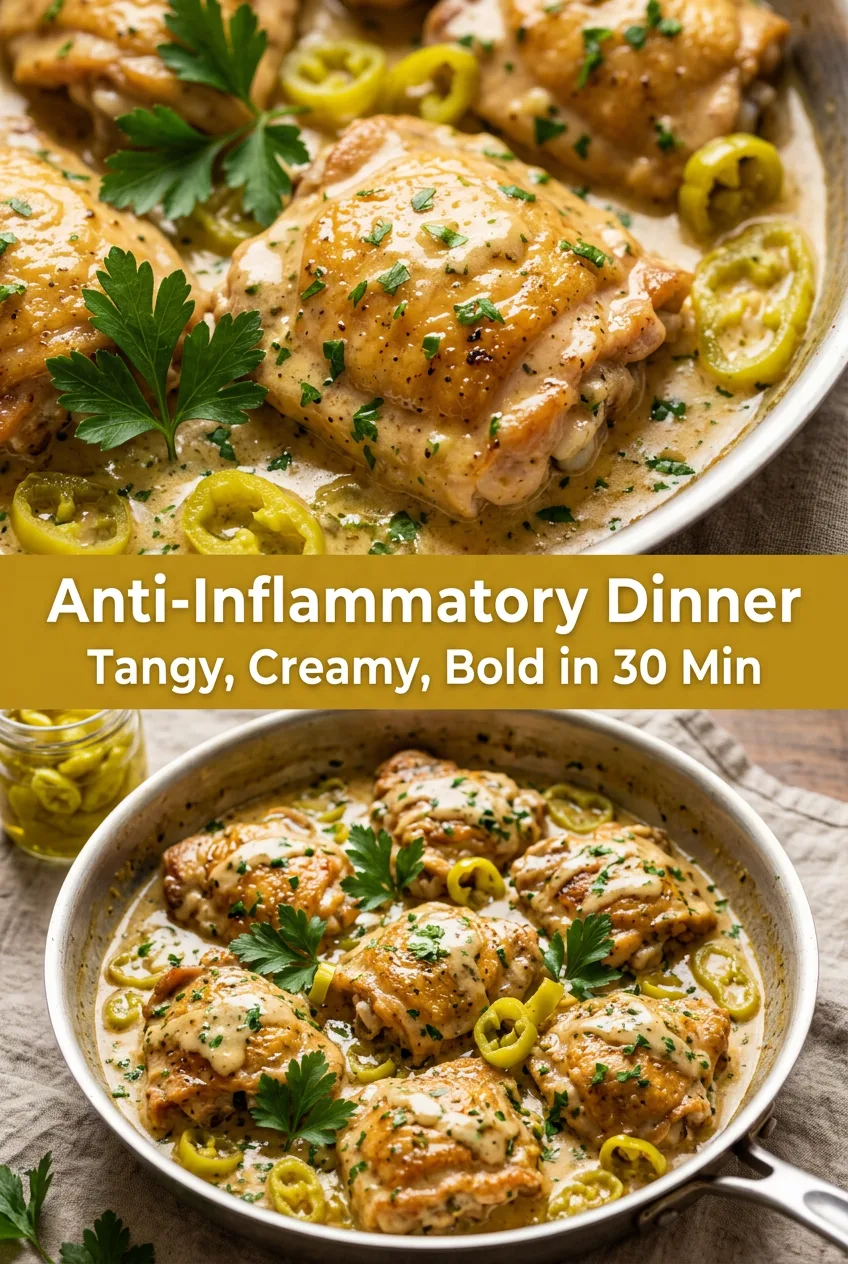
The pepperoncini peppers and their brine are functional ingredients, not afterthoughts. Pepperoncini contain capsaicin compounds that trigger natural anti-inflammatory responses in your body. The brine acts as a deglazing liquid that captures all the flavorful browned bits from the chicken, building complexity into the sauce. Combined with garlic’s proven anti-inflammatory properties and olive oil’s omega-3 fatty acids, this dinner becomes therapeutic nutrition rather than comfort food alone.
Ingredients
| Ingredient | Quantity | Notes and Alternatives |
|---|---|---|
| Boneless skinless chicken thighs or breasts | 4 | Thighs are preferred for moisture and anti-inflammatory fats. Use breasts if thighs unavailable, reduce cooking time by 1 minute per side. |
| Sliced pepperoncini peppers | 1 cup | Tangy, mildly spicy. Substitute banana peppers for milder flavor or jalapeños for higher heat. |
| Pepperoncini brine | 2 tbsp | Essential for deglazing and building sauce depth. Use reserved liquid from the jar. |
| Garlic cloves, minced | 4 | Fresh garlic provides superior anti-inflammatory compounds versus powder. Do not substitute with garlic powder (use 1.5 tsp if necessary). |
| Onion, diced | 1/2 small | Provides aromatic base without overwhelming delicate sauce. Red onion adds visual appeal; white onion yields milder flavor. |
| Low-sodium chicken broth | 1 cup | Essential for sauce body. Check salt intake guidelines when selecting brands. |
| Light cream or evaporated milk | 1/2 cup | Light cream offers richness; evaporated milk provides creaminess with lower fat content. Heavy cream works but masks pepper flavor. |
| Butter | 2 tbsp | Use unsalted for better sodium control. Ghee substitutes well for dairy-free cooking. |
| Olive oil | 1 tbsp | Extra-virgin olive oil contains polyphenols with anti-inflammatory properties. Use for searing at medium-high heat. |
| Dried Italian seasoning | 1 tsp | Blend of basil, oregano, thyme. Make fresh herb blend with 1/4 tsp each if available. |
| Smoked paprika | 1/2 tsp | Adds depth and smokiness. Sweet paprika substitutes if smoked unavailable. |
| Red pepper flakes | 1/4 tsp | Provides additional capsaicin and gentle heat. Increase to 1/2 tsp for spice lovers. |
| Salt and pepper | To taste | Add in stages; final seasoning after cream incorporation prevents over-salting. |
| Grated Parmesan cheese | 1/4 cup | Freshly grated melts smoothly into sauce. Pre-grated versions contain anti-caking agents affecting texture. |
| Fresh parsley | For garnish | Adds chlorophyll and fresh finish. Basil or chives work as alternatives. |
| Mashed potatoes or rice | For serving | Mashed potatoes soak up sauce beautifully. Rice or cauliflower rice for grain-free option. |
Step-by-Step Instructions
Prepare and Season the Chicken
- Pat chicken thighs dry with paper towels, which promotes better browning during searing.
- Combine Italian seasoning, smoked paprika, and a generous pinch of salt and pepper in a small bowl.
- Season both sides of each chicken piece thoroughly with the spice mixture, using your fingers to ensure even coating.
Sear the Chicken
- Heat olive oil in a large skillet over medium-high heat until it shimmers, about 1 minute.
- Place seasoned chicken pieces in the hot oil, working in batches if necessary to avoid crowding.
- Sear without moving for 4 to 5 minutes until the underside develops a golden-brown crust.
- Flip each piece and sear the opposite side for 4 to 5 minutes until golden and the thickest part reaches 165°F on an instant-read thermometer.
- Transfer cooked chicken to a clean plate and set aside.
Build the Sauce Foundation
- Melt butter in the same skillet over medium heat, scraping up any browned bits with a wooden spoon.
- Add diced onion to the melted butter and sauté for 3 to 4 minutes, stirring occasionally, until softened and translucent.
- Add minced garlic and cook for exactly 30 seconds, stirring constantly, to release aromatic compounds without burning.
- Pour pepperoncini brine into the pan, scraping the bottom thoroughly to incorporate all fond from the seared chicken.
Simmer the Broth and Peppers
- Add low-sodium chicken broth to the pan and stir to combine completely.
- Pour in the sliced pepperoncini peppers and sprinkle in the red pepper flakes.
- Bring the mixture to a gentle simmer and cook for exactly 3 minutes to allow flavors to meld.
Create the Creamy Finish
- Remove the pan from heat and stir in light cream slowly, whisking gently to incorporate smoothly.
- Add grated Parmesan cheese and stir continuously until fully melted and the sauce becomes silky.
- Return the pan to low heat and place the cooked chicken pieces back into the sauce.
- Spoon the creamy sauce over the top of each chicken piece, ensuring complete coverage.
- Simmer gently for 3 to 4 minutes until the sauce thickens slightly and becomes glossy in appearance.
Finish and Serve
- Remove from heat and taste the sauce, adjusting salt and pepper as needed.
- Tear fresh parsley leaves and scatter over the top of the skillet for color and fresh flavor.
- Serve immediately over mashed potatoes or rice, spooning extra sauce onto the starch.
Chef Tips for Perfect Results
- Pat chicken completely dry before seasoning and searing. Moisture on the surface prevents proper browning and creates steam that toughens the meat.
- Use a meat thermometer to verify doneness at 165°F in the thickest part, typically near the bone in thighs. This prevents overcooking while ensuring food safety.
- Don’t skip the deglazing step with pepperoncini brine. The liquid lifts flavorful browned bits called fond into the sauce, multiplying overall depth exponentially.
- Keep heat at medium or below once cream is added to prevent separation and curdling. Gentle simmering creates silky sauce texture.
- Grate Parmesan fresh from the block rather than using pre-grated versions, which contain anti-caking agents that prevent smooth melting into the sauce.
- Prepare mashed potatoes or rice just before the chicken finishes cooking so both components serve at optimal temperature simultaneously.
Common Mistakes to Avoid
Skipping the searing step ruins the foundation of this entire dish. Raw or insufficiently browned chicken lacks the complex flavors that develop through the Maillard reaction, making the final sauce taste one-dimensional. Always sear until deeply golden and let the chicken rest on a plate before reintegrating, which allows residual heat to finish cooking the interior.
Adding cream at high heat causes the sauce to break and become grainy rather than silky. Dairy proteins denature when shocked with extreme temperature changes, separating from the broth. Fix this by removing the pan from heat before incorporating cream, whisking gently, and maintaining low heat throughout the final stages.
Using pre-grated Parmesan instead of freshly grated creates a gritty, unpleasant texture in the sauce. Anti-caking agents in pre-grated cheese prevent smooth melting and leave grainy particles suspended throughout. Always grate fresh Parmesan directly into the warm sauce where it melts instantly into silky richness.
Overcooking the chicken before adding sauce leaves it tough and dry despite the creamy coating. Chicken thighs continue cooking from residual heat after removal from the skillet, so pull them when the thermometer reads 164°F, knowing carryover heat will reach the safe 165°F mark. This delivers the most tender, succulent results.
Neglecting to taste and adjust seasoning before serving leads to underseasoned sauce that disappoints. The cream dulls flavors slightly, so taste after adding it and increase salt, pepper, or red pepper flakes as needed for proper balance.
Variations and Substitutions
| Ingredient | Substitution | Impact on Flavor |
|---|---|---|
| Pepperoncini peppers | Banana peppers or cherry peppers | Banana peppers yield milder, sweeter profile; cherry peppers add smokier depth. |
| Chicken thighs | Boneless chicken breasts | Breasts cook faster (3 minutes per side) but yield drier texture; reduce total cooking time. |
| Light cream | Greek yogurt or sour cream | Greek yogurt adds tanginess and protein; sour cream sharpens sauce while adding tang. |
| Butter | Ghee or coconut oil | Ghee intensifies nutty flavor; coconut oil adds subtle sweetness to sauce. |
| Parmesan | Asiago or pecorino Romano | Asiago mellows sauce; pecorino Romano sharpens and adds salinity. |
| Italian seasoning | Fresh basil, oregano, and thyme | Fresh herbs brighten sauce and add herbaceous top notes; double the quantity when using fresh. |
| Chicken broth | Vegetable broth or white wine | Vegetable broth yields lighter sauce; white wine adds acidity and complexity. |
| Mashed potatoes | Polenta, cauliflower rice, or zucchini noodles | Polenta absorbs sauce beautifully; cauliflower and zucchini lower carb count significantly. |
Serving Suggestions and Pairings
Serve this anti-inflammatory dinner over creamy mashed potatoes for the classic pairing, or choose cauliflower mashed potatoes for lower carbohydrate content. Garlic mashed potatoes complement the sauce’s tang particularly well, while buttered egg noodles work beautifully for comfort food occasions. The creamy pepperoncini sauce clings perfectly to these starches, delivering every drop of flavor to your plate.
For grain-based sides, try wild rice pilaf or farro risotto, both of which absorb the sauce while adding textural interest. Cilantro-lime rice brightens the peppery sauce, creating contrast in flavor profiles. Brown rice or white basmati work reliably if you need quick preparation.
Pair this skillet dinner with bright vegetable sides that complement the tangy sauce. Sautéed spinach with garlic, roasted Brussels sprouts with balsamic, or steamed broccoli with lemon all work excellently. Consider a fresh green salad with Italian vinaigrette as a starter to prepare your palate for the rich main course.
For wine pairing, choose lighter whites like Pinot Grigio or Sauvignon Blanc that won’t overpower the delicate sauce. If you prefer red wine, a lighter Pinot Noir works without competing with the peppers. This dinner suits casual weeknight family meals, date night at home, or entertaining friends who appreciate anti-inflammatory cooking.
Transform this dinner into something special by garnishing with additional fresh peppers, crispy sage leaves, or a drizzle of truffle oil before serving. For meal prep purposes, serve alongside brown rice portions in divided containers for grab-and-heat lunches throughout the week. Looking for additional dinner inspiration, try Mother’s Day Brunch: Healthy Banana Oatmeal Pancakes for a lighter occasion or Healthy Dinner Idea: Chicken Parmesan Stuffed Zucchini Boats for a vegetable-forward alternative.
Storage and Reheating
| Method | Duration | Instructions |
|---|---|---|
| Refrigerator | 3-4 days | Let cool to room temperature, transfer to an airtight container, and refrigerate. Chicken stays tender and sauce sets slightly thicker. |
| Freezer | 2-3 months | Cool completely, transfer to freezer-safe container, and freeze. Label with date. Thaw overnight in refrigerator before reheating. |
| Stovetop reheat | 5-7 minutes | Place in a skillet over medium-low heat, stirring occasionally. Add splash of chicken broth if sauce seems thick. Heat until steaming. |
| Microwave reheat | 2-3 minutes | Transfer to a microwave-safe dish, cover loosely with paper towel, and microwave at 50% power in 30-second intervals. |
| Oven reheat | 12-15 minutes | Transfer to a covered baking dish and warm at 325°F. This method prevents sauce separation and keeps chicken tender. |
Nutritional Information
Approximate values per serving based on a 4-serving yield without mashed potatoes or rice. Actual values vary based on specific brands and preparation methods. This anti-inflammatory dinner delivers impressive protein content from chicken thighs while maintaining moderate fat from quality sources like olive oil and butter.
| Nutrient | Amount per Serving |
|---|---|
| Calories | 380 |
| Protein | 42g |
| Fat | 18g |
| Saturated Fat | 8g |
| Carbohydrates | 6g |
| Fiber | 0g |
| Sugar | 2g |
| Sodium | 620mg |
| Cholesterol | 145mg |
The anti-inflammatory benefits extend beyond macronutrient profiles to phytonutrient content from garlic, peppers, and herbs. Capsaicin from pepperoncini peppers supports natural inflammation reduction, while garlic’s sulfur compounds contribute to cardiovascular health. The fat content comes predominantly from monounsaturated and polyunsaturated sources that support inflammation management.
Frequently Asked Questions
Can I substitute chicken breast for chicken thighs in this anti-inflammatory skillet?
Yes, boneless chicken breasts work in this recipe but cook more quickly and yield slightly drier results. Sear breasts for 3 to 4 minutes per side only, since they contain less fat and connective tissue than thighs. The shorter cooking time means breasts may reach 165°F before the crust develops fully, so adjust your heat if needed to achieve golden browning.
How do I know when the chicken is cooked through?
Use an instant-read meat thermometer inserted into the thickest part of the chicken away from bone, aiming for 165°F internal temperature. This temperature kills all harmful bacteria while keeping the meat tender and juicy. Check multiple pieces rather than relying on a single temperature reading, as cooking may not be entirely uniform across all pieces.
What if my sauce breaks or becomes grainy after adding cream?
Remove the pan from heat immediately and whisk in one tablespoon of cold butter or a splash of chicken broth to help stabilize the sauce. The temperature shock causes dairy proteins to denature, creating graininess, so preventing high heat is your best defense. If already broken, strain the sauce through a fine-mesh sieve and start fresh with new cream added to cooled broth.
Can I prepare this dinner ahead of time for later reheating?
Yes, this dish reheats beautifully in the refrigerator for up to 4 days in an airtight container. The flavors actually intensify as it sits, making this an excellent meal prep candidate. Reheat gently on the stovetop at medium-low heat or in a 325°F oven for 12 to 15 minutes, stirring occasionally and adding a splash of broth if the sauce thickens too much during storage.
What are good side dishes to pair with creamy pepperoncini chicken?
Mashed potatoes stand as the classic pairing, absorbing every drop of tangy cream sauce perfectly. Garlic mashed potatoes, cauliflower mashed potatoes, wild rice pilaf, or buttered egg noodles all complement the peppers beautifully. Pair any starch with steamed vegetables like spinach, broccoli, or Brussels sprouts to balance the rich sauce with lighter elements.
More Chicken Dinner Ideas
If you enjoyed this creamy pepperoncini preparation, explore High-Protein Dinners: Creamy Baked Caesar Chicken Thighs for another satisfying skillet option that builds layers of classic flavor through simple techniques.
Conclusion
This anti-inflammatory dinner creamy pepperoncini chicken skillet proves that therapeutic eating doesn’t require sacrifice or complicated recipes. One skillet, 30 minutes, and quality ingredients deliver restaurant-caliber results with genuine anti-inflammatory benefits. The tangy peppers, aromatic garlic, and silky cream sauce create a memorable meal that satisfies completely. Serve over your favorite starch tonight and discover why this dish becomes an instant weeknight favorite.

Anti-Inflammatory Dinner: Creamy Pepperoncini Chicken Skillet
Ingredients
Method
- Season chicken with Italian seasoning, smoked paprika, salt, and pepper.
- Heat olive oil in a large skillet over medium-high heat until shimmering.
- Place seasoned chicken in the hot oil and sear for 4-5 minutes until golden brown.
- Flip chicken and sear the other side for 4-5 minutes until cooked through.
- Transfer cooked chicken to a clean plate.
- Melt butter in the same skillet over medium heat, scraping up browned bits.
- Add diced onion and sauté for 3-4 minutes until softened.
- Add minced garlic and cook for 30 seconds, stirring constantly.
- Pour pepperoncini brine into the pan and scrape to incorporate fond.
- Add low-sodium chicken broth and stir to combine.
- Pour in sliced pepperoncini peppers and sprinkle red pepper flakes.
- Simmer for 3 minutes to allow flavors to meld.
- Remove from heat and stir in light cream slowly.
- Add grated Parmesan cheese and stir until melted.
- Return pan to low heat and place cooked chicken back into sauce.
- Spoon sauce over each chicken piece.
- Simmer gently for 3-4 minutes until sauce thickens and becomes glossy.
- Remove from heat and adjust seasonings as needed.
- Garnish with fresh parsley.
- Serve immediately over mashed potatoes or rice.