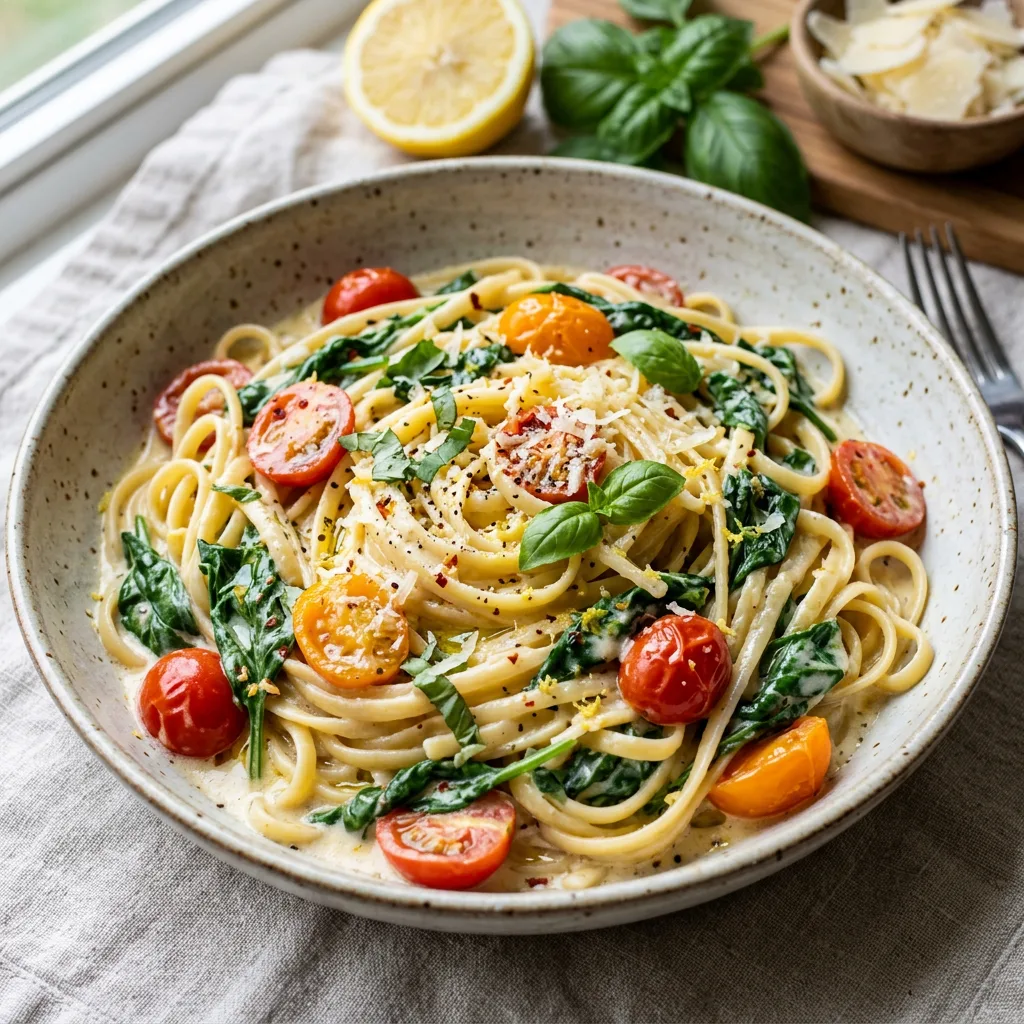
Hormone-friendly pasta with creamy lemon garlic sauce delivers balanced nutrition in a single pot. This one-pot creamy lemon garlic pasta combines tender pasta, vibrant vegetables, and light cream into a naturally nourishing meal. The recipe prioritizes whole ingredients and supports hormonal balance through nutrient-dense components. You’ll have dinner ready in under 25 minutes with minimal cleanup.
| Metric | Value |
|---|---|
| Prep Time | 10 minutes |
| Cook Time | 12 minutes |
| Total Time | 22 minutes |
| Servings | 4 |
| Difficulty | Easy |
| Cuisine | Italian |
Why This Recipe Works
I developed this hormone-friendly pasta recipe to address the challenge of eating satisfying dinners without inflammatory oils or excessive sodium. The one-pot method means everything cooks together, allowing flavors to meld while pasta absorbs the broth directly. Most traditional creamy pasta dishes rely on heavy cream and butter, which can spike insulin and disrupt hormonal balance. This version uses light cream or evaporated milk, cutting calories by nearly half while maintaining creaminess through starch naturally released by the pasta.
The lemon and garlic combination does more than brighten flavor. Lemon juice enhances nutrient absorption, particularly iron from the spinach, supporting energy levels and metabolic health. Fresh garlic contains allicin, a compound with anti-inflammatory properties that supports hormonal regulation. According to research on olive oil versus vegetable oil, using extra virgin olive oil provides polyphenols that reduce oxidative stress affecting hormone production.
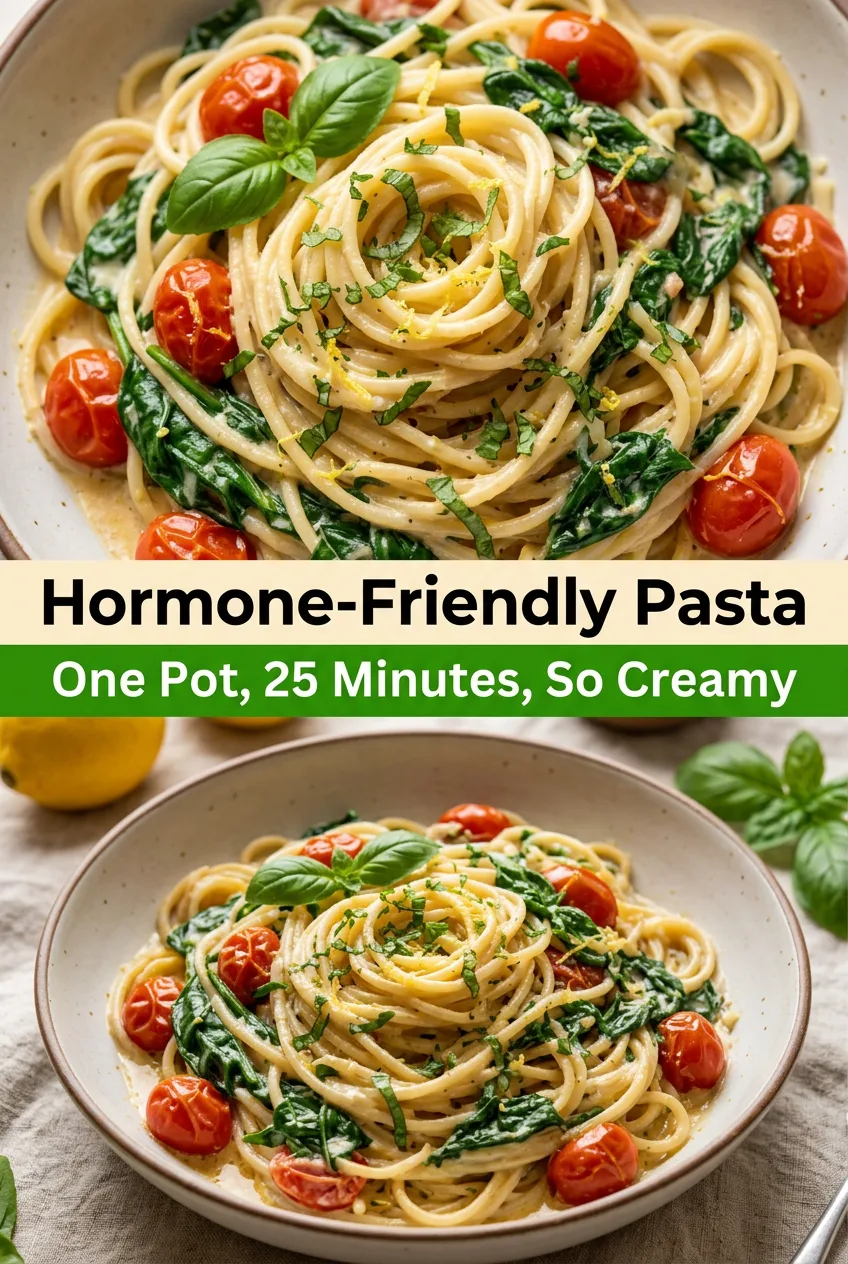
The spinach and cherry tomatoes add phytonutrients without bulk or heaviness. Baby spinach wilts into the sauce in seconds, delivering magnesium and folate critical for progesterone synthesis. Cherry tomatoes provide lycopene, a carotenoid supporting liver function and estrogen metabolism. Together, these vegetables make hormone-friendly pasta that tastes indulgent while nourishing your endocrine system.
Ingredients
| Ingredient | Quantity | Notes and Alternatives |
|---|---|---|
| Linguine or spaghetti | 12 oz | Whole wheat pasta adds fiber; brown rice pasta suits gluten-free needs |
| Low-sodium chicken or vegetable broth | 4 cups | Homemade broth is best; avoid regular broth containing 800+ mg sodium per cup |
| Water | 1 cup | Filtered water prevents mineral interference; tap water works fine |
| Garlic, minced | 5 cloves | Fresh garlic only; use 1/2 teaspoon garlic powder if fresh unavailable |
| Lemon, zested and juiced | 1 whole | Room temperature lemons yield more juice; Meyer lemons are sweeter |
| Light cream or evaporated milk | 1/2 cup | Half-and-half works; full-fat cream makes richer sauce; coconut milk adds tropical note |
| Parmesan, grated | 1/4 cup | Freshly grated melts smoothly; pre-grated contains anti-caking agents affecting texture |
| Baby spinach | 3 oz | Arugula adds peppery bite; kale requires 2-3 minute head start |
| Cherry tomatoes, halved | 1 cup | Sun-dried tomatoes intensify flavor; heirloom tomatoes add complexity |
| Olive oil, extra virgin | 2 tbsp | Quality matters for flavor and phytonutrient content; skip low-grade versions |
| Dried basil | 1 tsp | Fresh basil doubles weight but loses some intensity; oregano substitutes well |
| Red pepper flakes | 1/2 tsp | Adjust heat to preference; omit for sensitive stomachs |
| Garlic powder | 1/2 tsp | Adds depth; use only if fresh garlic is unavailable initially |
| Salt and pepper | To taste | Taste after adding spinach; sauce concentrates as liquid reduces |
| Fresh basil for garnish | 1/4 cup | Added at serving; prevents bruising and preserves bright flavor |
| Extra Parmesan for serving | 2 tbsp | Adds umami depth; nutritional yeast suits dairy-free preferences |
| Extra lemon zest for finishing | 1/2 tsp | Brightens each bite; use microplane for finest texture |
Step-by-Step Instructions
Phase One: Building the Base
- Add dry pasta, low-sodium chicken or vegetable broth, water, minced garlic, olive oil, dried basil, red pepper flakes, garlic powder, lemon zest, salt, and pepper to a large pot.
- Bring the mixture to a boil over high heat, stirring occasionally to prevent sticking.
- Reduce heat to maintain a vigorous simmer, keeping the surface actively bubbling.
Phase Two: Cooking the Pasta
- Cook uncovered for 9-11 minutes, stirring frequently every 1-2 minutes to ensure even cooking.
- Check pasta for al dente doneness at 9 minutes by tasting a strand, ensuring slight firmness at the center.
- Monitor liquid absorption, stopping when most liquid is absorbed and pasta is tender.
Phase Three: Creating the Creamy Sauce
- Remove the pot from heat immediately when pasta reaches al dente.
- Stir in light cream, grated Parmesan, baby spinach, halved cherry tomatoes, and fresh lemon juice.
- Toss continuously for 1-2 minutes until spinach wilts completely and sauce coats every strand.
- Serve immediately while sauce is creamy and warm, topped with fresh basil, extra Parmesan, and lemon zest.
Chef Tips for Perfect Results
- Stir frequently during cooking to prevent pasta from clustering at the bottom and sticking. Frequent stirring also releases starch that naturally thickens the sauce without additional cream.
- Use low-sodium broth exclusively, as regular broth contains 800+ mg sodium per cup and disrupts hormonal balance. Check labels for sodium content below 400 mg per serving.
- Add lemon juice only after removing from heat to preserve vitamin C content and acidity. Heat degrades these compounds, reducing both flavor brightness and nutritional value.
- Grate Parmesan fresh immediately before cooking for optimal melting. Pre-grated varieties contain cellulose preventing smooth integration into the creamy sauce.
- Don’t overcrowd the pot; use at least a 6-quart capacity to allow broth to bubble freely. Cramped conditions prevent even cooking and create mushy spots alongside undercooked pasta.
- Taste and adjust seasoning after adding spinach, as it concentrates flavors significantly. Add salt in quarter-teaspoon increments to avoid oversalting.
Common Mistakes to Avoid
The most common error involves using regular sodium broth, which contains 800-1000 mg per cup. This single choice doubles the sodium content of the entire dish, spiking blood pressure and cortisol levels. Fix this by reading labels carefully and selecting “low-sodium” or “reduced-sodium” options with under 400 mg per serving. Store-brand low-sodium broths cost less than name brands with identical nutritional profiles.
Insufficient stirring during cooking leads to uneven pasta texture and stuck starches at the pot bottom. Stir every 60-90 seconds, scraping the bottom and sides with a wooden spoon. This prevents hot spots where pasta cooks faster and releases starch needed for creaminess. Constant motion takes only three minutes total and prevents disappointing results.
Adding cream too early or at too high heat causes it to separate into greasy, watery pools. The timing matters: add cream only after removing the pot from heat. The residual warmth gently incorporates cream while pasta finishes absorbing liquid. This method creates silky sauce without breaking.
Using pre-bottled lemon juice instead of fresh eliminates the hormone-supporting benefits of whole lemon. Bottled juice contains preservatives altering flavor and loses volatile compounds supporting liver function. Squeeze fresh juice immediately before serving for maximum nutritional impact and brightness.
Overseasoning before the final taste damages hormone-friendly benefits. Salt added early concentrates as liquid reduces, doubling effective saltiness. Wait until spinach and tomatoes are incorporated, taste, then adjust. This prevents excessive sodium intake that disrupts electrolyte balance and hormone regulation.
Variations and Substitutions
| Ingredient | Substitution | Impact on Flavor |
|---|---|---|
| Light cream | Cashew cream (soaked cashews blended with water) | Adds richness and minerals; slightly nuttier profile |
| Baby spinach | Arugula or mixed greens | Arugula adds peppery bite; other greens are milder |
| Cherry tomatoes | Sun-dried tomatoes or heirloom varieties | Sun-dried deepens umami; heirlooms add complexity |
| Linguine | Whole wheat, brown rice, or chickpea pasta | Whole wheat adds nutty depth; chickpea increases protein |
| Parmesan | Pecorino Romano or nutritional yeast | Pecorino is sharper; nutritional yeast suits dairy-free |
| Lemon | Lime or white wine vinegar | Lime adds tropical brightness; vinegar brings earthiness |
| Chicken broth | Vegetable or bone broth | Vegetable is lighter; bone broth adds collagen and depth |
| Red pepper flakes | Freshly cracked black pepper or white pepper | Black pepper is milder; white pepper adds subtle heat |
Serving Suggestions and Pairings
Serve hormone-friendly pasta alongside grilled salmon for a complete protein-rich dinner supporting hormonal stability. The omega-3 fatty acids in salmon complement the lemon brightness while providing anti-inflammatory benefits. For weeknight simplicity, pair with Mother’s Day Brunch: Healthy Banana Oatmeal Pancakes as a meal prep base for breakfast the next morning.
Add roasted chicken thighs to make this one-pot meal a complete protein dish. Try the recipe alongside High-Protein Dinners: Creamy Baked Caesar Chicken Thighs for a hormone-balancing chicken variation. Combine with Healthy Dinner Idea: Chicken Parmesan Stuffed Zucchini Boats for double-vegetable nutrition supporting detoxification pathways.
For elegant entertaining, plate pasta in shallow bowls and garnish with microgreens and edible flowers alongside fresh basil. This presentation suits dinner parties where hormone-conscious guests appreciate lighter fare. Serve with sparkling water infused with fresh lemon to support water intake for optimal hydration during digestion.
Pack leftovers into glass containers for healthy office lunches. The flavors deepen overnight as lemon juice continues infusing into pasta. Eat cold straight from the container or warm gently to preserve heat-sensitive nutrients. This meal works beautifully for meal prep Sundays, providing four ready-made lunches supporting stable energy and hormone balance throughout the week.
Storage and Reheating
| Method | Duration | Instructions |
|---|---|---|
| Refrigerator storage | 3-4 days | Transfer to airtight glass containers immediately after cooling. Flavors deepen as lemon infuses. Store extra Parmesan and basil separately to prevent sogginess. |
| Freezer storage | 1-2 months | Freeze in portion-sized containers, leaving 1-inch headspace. Thaw overnight in refrigerator before reheating. Texture changes slightly but flavor remains strong. |
| Stovetop reheating | 5-7 minutes | Add 2 tablespoons water or broth per portion. Heat over medium, stirring occasionally, until steaming. Avoid high heat that separates cream. |
| Microwave reheating | 2-3 minutes | Transfer to microwave-safe container. Heat at 50% power for 2 minutes, then full power 1 minute. Stir halfway through to prevent hot spots. |
| Cold serving | Immediate or 4 days | Serve straight from refrigerator with extra lemon juice brightening flavors. Perfect for meal prep lunches requiring no reheating. |
Nutritional Information
Approximate values per serving (recipe yields 4 servings):
| Nutrient | Amount per Serving |
|---|---|
| Calories | 385 |
| Protein | 14g |
| Total Fat | 11g |
| Saturated Fat | 4g |
| Carbohydrates | 54g |
| Dietary Fiber | 4g |
| Sugars | 2g |
| Sodium | 385mg |
| Magnesium | 45mg |
| Iron | 3.2mg |
| Folate | 85mcg |
This hormone-friendly pasta delivers balanced macronutrients supporting stable blood sugar and sustained energy. The magnesium from spinach aids progesterone production, while folate supports estrogen metabolism. Moderate fat content from olive oil and cream promotes satiety without excess calories disrupting hormonal balance. Low sodium levels prevent fluid retention and cortisol elevation associated with excessive salt intake.
Frequently Asked Questions
Can I Use Regular Pasta for This Hormone-Friendly Recipe?
Yes, regular all-purpose pasta works perfectly in this recipe, cooking in the same 9-11 minute timeframe. Whole wheat, chickpea, and lentil pastas require the same timing while adding protein and fiber supporting hormone stability. Brown rice pasta suits gluten-free needs without changing cooking time.
What Does Al Dente Mean and How Do I Know When Pasta Reaches This Stage?
Al dente means pasta cooked to slight firmness with a tender exterior and barely firm center. Taste a strand at 9 minutes; it should offer gentle resistance when bitten without any chalky core. The center should show the thinnest white line when broken open.
Why Does My Sauce Look Separated or Greasy?
Separated sauce results from adding cream while the pot is too hot or from overcooking the dairy. Remove the pot from heat before adding light cream, allowing residual warmth to gently incorporate the dairy. Never boil cream after adding it to pasta.
Can I Make This Ahead and Reheat Later?
Yes, this recipe reheats beautifully for up to 3-4 days when stored in airtight glass containers. Reheat gently over medium heat with 2 tablespoons water per portion, stirring occasionally. Add fresh lemon juice and basil at serving time to restore brightness.
What Broth Type Best Supports Hormonal Balance in This Pasta?
Low-sodium bone broth provides collagen and amino acids supporting estrogen metabolism and gut health. Low-sodium vegetable broth offers a lighter option with mineral diversity. Homemade broth made from chicken or vegetable scraps delivers superior nutrient density and flavor compared to store-bought versions.
Conclusion
Hormone-friendly pasta with creamy lemon garlic sauce proves satisfying dinners don’t require sacrifice or complicated techniques. This one-pot method delivers restaurant-quality results in 22 minutes using whole ingredients supporting endocrine health. The combination of lemon brightness, garlic depth, and spinach nutrition makes every bite nourishing. Prepare this hormone-friendly pasta weekly for meals that taste indulgent while genuinely supporting your body’s natural balance.
“`

Hormone-Friendly Pasta: One-Pot Creamy Lemon Garlic
Ingredients
Method
- Add dry pasta, low-sodium chicken or vegetable broth, water, minced garlic, olive oil, dried basil, red pepper flakes, garlic powder, lemon zest, salt, and pepper to a large pot.
- Bring the mixture to a boil over high heat, stirring occasionally to prevent sticking.
- Reduce heat to maintain a vigorous simmer, keeping the surface actively bubbling.
- Cook uncovered for 9-11 minutes, stirring frequently every 1-2 minutes to ensure even cooking.
- Check pasta for al dente doneness at 9 minutes by tasting a strand, ensuring slight firmness at the center.
- Monitor liquid absorption, stopping when most liquid is absorbed and pasta is tender.
- Remove the pot from heat immediately when pasta reaches al dente.
- Stir in light cream, grated Parmesan, baby spinach, halved cherry tomatoes, and fresh lemon juice.
- Toss continuously for 1-2 minutes until spinach wilts completely and sauce coats every strand.
- Serve immediately while sauce is creamy and warm, topped with fresh basil, extra Parmesan, and lemon zest.