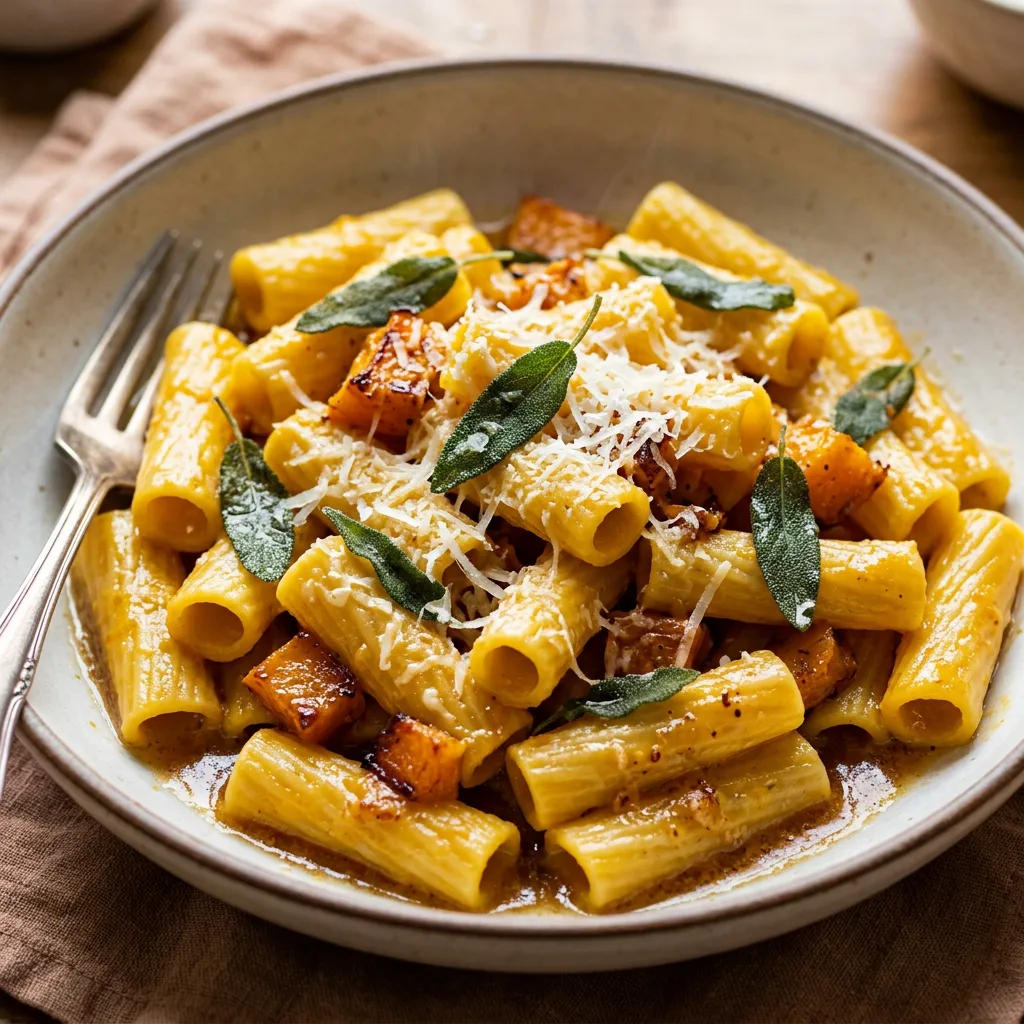
Butternut squash pasta with sage is a simple yet elegant dinner that combines roasted squash, crispy sage, and silky butter into a restaurant-quality meal. This easy dinner idea delivers autumn flavors in under an hour using pantry staples and fresh ingredients. The creamy sauce clings beautifully to pasta, creating a satisfying dish that works for weeknight cooking or entertaining guests.
| Detail | Information |
|---|---|
| Prep Time | 15 minutes |
| Cook Time | 35 minutes |
| Total Time | 50 minutes |
| Servings | 4 |
| Difficulty | Easy |
| Cuisine | Italian |
Why This Recipe Works
I discovered this butternut squash pasta combination while looking for dinner ideas that didn’t require complicated techniques or rare ingredients. The magic happens when you roast the squash until deeply caramelized, developing natural sweetness that balances the earthiness of sage perfectly. The brown butter technique creates a luxurious sauce without heavy cream, making this an accessible yet impressive dish for any skill level.
What makes this easy dinner idea truly special is the textural contrast between crispy sage leaves and tender pasta coated in silky sauce. The nutmeg adds warmth and complexity, while red pepper flakes provide subtle heat that keeps every bite interesting. I’ve made this recipe countless times, and it consistently delivers restaurant-quality results with minimal effort, which is why it remains one of my go-to dinner solutions for busy weeknights or when I want something elegant.
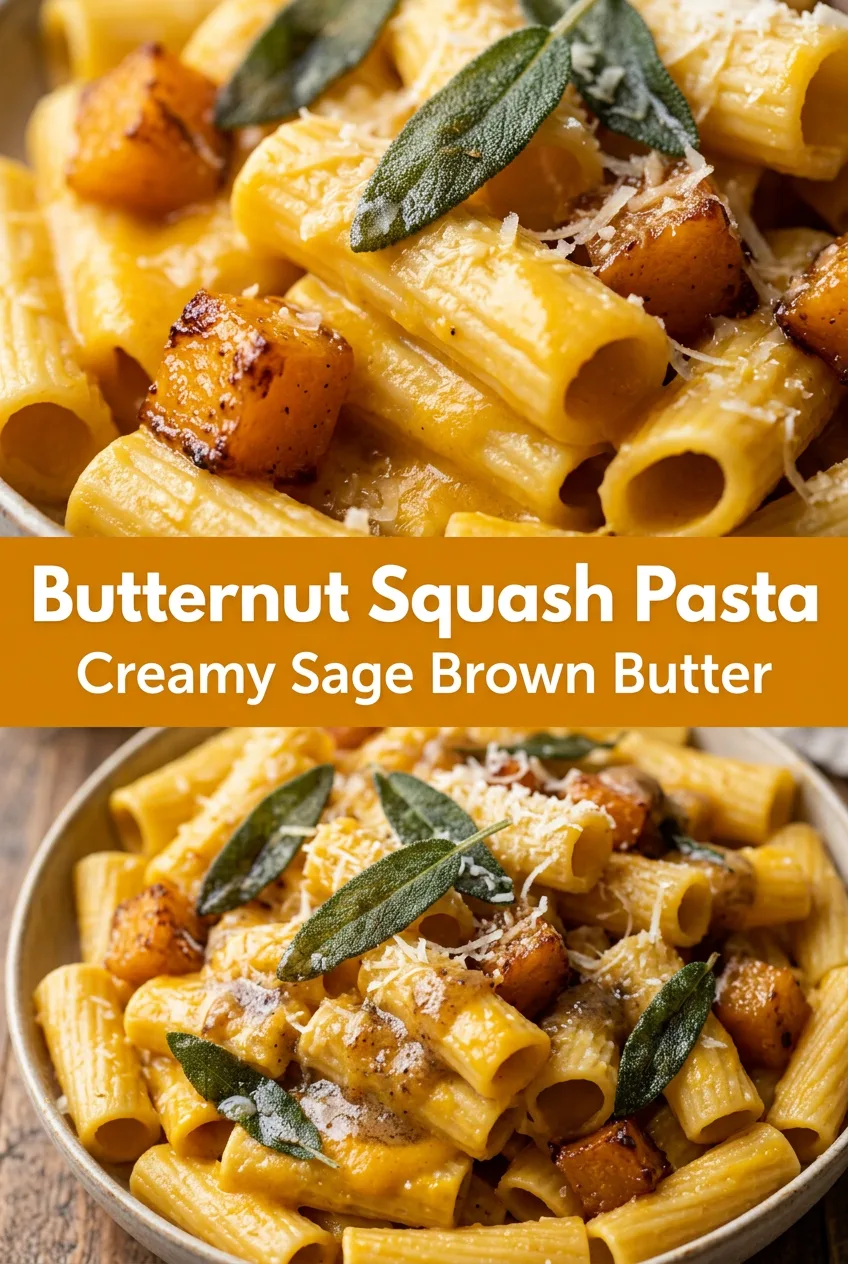
The pasta water acts as the crucial ingredient that transforms roasted squash into a cohesive, clinging sauce without any cream or heavy fats. This technique showcases Italian cooking wisdom, where starch becomes the sauce builder. Every component serves a purpose, and nothing feels unnecessary or overly complicated, making this butternut squash pasta truly foolproof for home cooks.
Ingredients
| Ingredient | Quantity | Notes |
|---|---|---|
| Rigatoni or Penne Pasta | 12 oz | Choose dried pasta for best texture. Gluten-free pasta works well as a substitute with same cooking time. |
| Butternut Squash, Cubed | 3 cups | Cut into 3/4-inch cubes for even roasting. Acorn squash or kabocha can replace butternut for similar results. |
| Unsalted Butter | 4 tbsp | Use good quality butter. Ghee works as a substitute for nutty flavor enhancement. |
| Fresh Sage Leaves | 8 leaves | Dried sage loses its delicate flavor. Fresh thyme or rosemary offer different but complementary notes. |
| Garlic, Minced | 4 cloves | Fresh garlic is essential. Adjust to taste preference for garlic intensity. |
| Grated Parmesan Cheese | 1/2 cup | Freshly grated preferred over pre-shredded. Pecorino Romano offers a sharper alternative. |
| Reserved Pasta Water | 1/2 cup | Save immediately after draining. This starchy liquid creates the silky sauce. |
| Olive Oil | 2 tbsp | Use extra-virgin for best flavor. Avocado oil works as a neutral alternative. |
| Nutmeg, Ground | 1/4 tsp | Freshly grated nutmeg provides superior flavor. Store in cool, dark place for potency. |
| Red Pepper Flakes | 1/4 tsp | Adjust to spice tolerance. Can add more for heat-lovers or omit completely. |
| Salt and Black Pepper | To taste | Season in layers throughout cooking. Freshly ground black pepper recommended. |
| Extra Parmesan and Crispy Sage | For serving | Reserve some fried sage before tossing with pasta for garnish purposes. |
Step-by-Step Instructions
Prepare the Butternut Squash
- Preheat your oven to 400°F and position a rack in the center for even heat distribution.
- Toss cubed butternut squash with 2 tablespoons olive oil, salt, and black pepper in a large bowl.
- Spread the seasoned squash in a single layer on a baking sheet, ensuring pieces don’t overlap.
- Roast for 25 minutes until the edges turn golden brown and the squash caramelizes completely.
- Remove from oven and set aside while preparing other components.
Cook the Pasta
- Bring a large pot of salted water to a rolling boil while the squash roasts.
- Add 12 ounces of rigatoni or penne and stir occasionally to prevent sticking.
- Cook until al dente according to package directions, typically 8-12 minutes for dried pasta.
- Reserve 1/2 cup of pasta water by setting aside in a measuring cup before draining.
- Drain the pasta in a colander and set aside, but do not rinse the starch coating.
Make the Sage Butter Sauce
- Melt 4 tablespoons unsalted butter in a large skillet over medium heat.
- Add 8 fresh sage leaves and fry for 1-2 minutes until they turn crispy and fragrant.
- Transfer crispy sage leaves to a paper towel-lined plate for garnish.
- Add 4 minced garlic cloves to the same butter and sauté for 30 seconds until fragrant.
- Stir in the roasted butternut squash, 1/4 teaspoon nutmeg, and 1/4 teaspoon red pepper flakes.
- Pour in the reserved pasta water gradually while stirring to create a silky, cohesive sauce.
Combine and Finish
- Add the drained pasta to the skillet with the squash sauce and toss continuously for 1-2 minutes.
- Shower with 1/2 cup grated Parmesan cheese and fold gently until fully incorporated.
- Taste the dish and adjust salt and pepper as needed for your preference.
- Divide pasta among four serving bowls and top with reserved crispy sage leaves.
- Finish with additional grated Parmesan and a pinch of red pepper flakes for color and heat.
Chef Tips for Perfect Results
- Cut butternut squash cubes uniformly to 3/4 inch so they roast evenly and achieve caramelization simultaneously throughout the batch.
- Don’t skip reserving pasta water before draining; the starch is essential for creating a velvety sauce that coats each pasta strand.
- Fry sage leaves until they turn dark and crispy but not burnt; burnt sage tastes bitter and ruins the delicate flavor profile completely.
- Grate Parmesan cheese fresh from a wedge rather than using pre-shredded varieties, which contain anti-caking agents that prevent smooth melting.
- Taste the sauce before serving and adjust nutmeg incrementally; it’s easy to add more but impossible to remove once over-seasoned.
- Work quickly once combining pasta with sauce; the residual heat helps the Parmesan melt into a cohesive coating rather than clumping.
Common Mistakes to Avoid
Underroasting the squash: Many home cooks remove butternut squash from the oven too early, resulting in pale cubes that lack caramelization and sweetness. The deep golden-brown color signals proper Maillard reaction development, which creates complex flavors that elevate the entire dish. Return the squash to the oven for additional minutes if it’s still pale after 25 minutes of roasting.
Using dried sage instead of fresh: Dried sage delivers a musty, dusty flavor that overwhelms rather than complements delicate butternut squash and pasta. Fresh sage leaves provide bright, herbaceous notes that crisp beautifully in butter without becoming bitter. If fresh sage is unavailable, substitute with fresh thyme or consider omitting herbs entirely rather than using dried varieties.
Rinsing the cooked pasta: Washing pasta removes the starch coating that helps the sauce adhere properly to each piece. This starch is crucial for creating the silky mouthfeel in your finished dish. Simply drain the pasta without rinsing and transfer immediately to the sauce for optimal texture and sauce incorporation.
Adding too much pasta water at once: Dumping all reserved pasta water into the skillet creates a soup-like consistency rather than a creamy coating sauce. Add pasta water gradually while stirring, allowing the mixture to emulsify properly around the roasted squash. You can always add more liquid, but you cannot remove it once the dish becomes too wet.
Burning the garlic: Adding garlic directly to hot butter without careful timing causes it to brown and develop bitter flavors. Sauté garlic for only 30 seconds at medium heat, stirring constantly, then immediately add the squash to prevent scorching and maintain its mild, sweet flavor.
Variations and Substitutions
| Ingredient | Substitution | Impact on Flavor |
|---|---|---|
| Butternut Squash | Acorn Squash or Kabocha | Slightly sweeter and nuttier; texture remains creamy when roasted. |
| Sage | Fresh Thyme or Rosemary | Thyme offers delicate herbal notes; rosemary provides stronger, piney flavor. |
| Parmesan Cheese | Pecorino Romano or Asiago | Pecorino adds sharper, saltier notes; Asiago brings nutty undertones. |
| Butter | Ghee or Quality Olive Oil | Ghee intensifies nutty flavor; olive oil creates lighter, more Mediterranean profile. |
| Nutmeg | Ground Cinnamon | Cinnamon adds warmth and sweetness; use same quantity for comparable effect. |
| Rigatoni Pasta | Fettuccine or Orecchiette | Fettuccine creates elegant presentation; orecchiette cups catch more sauce. |
| Red Pepper Flakes | Cayenne Pepper or Black Pepper | Cayenne delivers sharper heat; black pepper provides subtle warmth without intensity. |
Serving Suggestions and Pairings
Serve butternut squash pasta sage as the centerpiece of an autumn dinner party alongside crusty bread for sauce-soaking and a simple green salad with lemon vinaigrette to cut through richness. The mild, creamy pasta pairs beautifully with a crisp white wine like Pinot Grigio or Vermentino, which brightens the palate between bites. For casual weeknight dinners, pair this easy dinner idea with steamed broccoli or roasted Brussels sprouts for added nutrition and textural contrast.
This butternut squash pasta works wonderfully as a vegetarian main course for Thanksgiving or holiday gatherings, offering sophisticated flavors that satisfy both vegetarians and meat-eaters alike. Serve it on smaller plates when featuring as one of multiple courses, or offer generous portions as a standalone dinner. The recipe’s elegance makes it suitable for impressing dinner guests without requiring hours of preparation or complex cooking techniques.
For a heartier meal, pair this pasta with roasted chicken or crispy pancetta bits scattered over the top, transforming it into a more substantial dinner. The subtle sweetness of butternut squash complements pork tenderloin beautifully, making it an excellent side dish for holiday menus. Consider serving alongside Father’s Day Dinner: Pan-Seared Lemon Caper Chicken Piccata for a complete, restaurant-quality meal.
Storage and Reheating
| Method | Duration | Instructions |
|---|---|---|
| Refrigerator | 3-4 days | Transfer cooled pasta to an airtight container. Store fresh Parmesan separately to prevent sogginess. Reheat gently in a skillet with a splash of water or additional pasta water to restore creaminess. |
| Freezer | 2-3 months | Cool completely and freeze in freezer-safe containers, leaving 1-inch headspace for expansion. Thaw overnight in refrigerator before reheating. Pasta texture may soften slightly after freezing. |
| Stovetop Reheating | 5-7 minutes | Place pasta in a skillet over medium heat with 2-3 tablespoons water or pasta water. Stir occasionally until heated through and sauce becomes creamy again. |
| Microwave Reheating | 2-3 minutes | Transfer to a microwave-safe bowl, add 1 tablespoon water, cover loosely, and heat in 1-minute intervals, stirring between each. Watch carefully to prevent overheating. |
Store leftover butternut squash pasta in airtight containers immediately after cooking to maintain food safety and prevent bacterial growth. This dish keeps refrigerated for three to four days, though pasta texture gradually softens the longer it sits. Add a splash of additional pasta water when reheating to restore the silky sauce consistency, as the pasta continues absorbing moisture during storage.
Nutritional Information
Approximate values per serving based on four servings:
| Nutrient | Amount per Serving |
|---|---|
| Calories | 465 |
| Protein | 16g |
| Fat | 18g |
| Carbohydrates | 58g |
| Fiber | 4g |
| Sugar | 8g |
| Sodium | 385mg |
Butternut squash pasta sage delivers a balanced meal with complex carbohydrates from pasta and vegetables, quality protein from Parmesan cheese, and healthy fats from butter and olive oil. The beta-carotene in roasted butternut squash supports eye health and immune function, while sage provides antioxidants and anti-inflammatory compounds. This recipe requires minimal added salt since Parmesan provides natural sodium, making it a relatively heart-friendly dinner option. Adequate hydration complements this pasta well; consider drinking plenty of Water Intake throughout the day.
Frequently Asked Questions
Can I substitute regular pasta with whole wheat or gluten-free pasta for this butternut squash pasta recipe?
Yes, both whole wheat and gluten-free pasta work excellently in this butternut squash sauce. Whole wheat pasta adds nuttiness that complements sage beautifully, though it requires one to two additional minutes of cooking time. Gluten-free pasta performs identically to regular pasta when cooked properly, though some brands benefit from a one-minute rinse under cold water to prevent excess starch clumping, though traditional recipes avoid this step.
How do I know when my butternut squash is properly roasted and caramelized?
Your butternut squash reaches perfect caramelization when the edges turn deep golden brown and the flesh becomes fork-tender throughout. The cubes should smell sweet and nutty, indicating proper browning through the Maillard reaction. If your squash appears pale after 25 minutes, extend roasting in five-minute increments until achieving the desired color and texture.
What should I do if my sauce becomes too watery or thin?
Stop adding pasta water if your sauce appears too thin, as it will continue thickening as the pasta absorbs moisture and the mixture cools slightly. If sauce is already too thin, simmer the dish uncovered for two to three minutes over medium heat, stirring gently to allow excess liquid to evaporate. The starch in pasta water thickens gradually, so patience matters more than rushing the emulsification process.
Can I prepare this butternut squash pasta ahead of time for entertaining guests?
You can roast the butternut squash and fry the sage leaves up to one day ahead, storing both separately in airtight containers. Cook the pasta and assemble the dish just before serving to prevent sogginess and maintain optimal texture. If you must prepare the complete dish ahead, reheat gently on the stovetop with additional pasta water rather than microwaving, which can create uneven heating and texture loss.
What wine pairs best with butternut squash pasta sage for dinner service?
Crisp white wines like Pinot Grigio, Vermentino, or Sauvignon Blanc complement butternut squash pasta beautifully, their acidity cutting through the richness of butter and cheese. Light-bodied whites work better than heavy oaked varieties, which would overpower delicate sage flavors. If serving as an autumn dish, consider a dry Riesling or Albariño for additional complexity that doesn’t compete with the subtle spice notes.
Conclusion
Butternut squash pasta with sage delivers elegant, restaurant-quality dinner in just 50 minutes using simple ingredients and straightforward techniques. This easy dinner idea showcases Italian cooking philosophy, where quality ingredients and proper technique create magic without unnecessary complications. The creamy roasted squash sauce, crispy sage garnish, and nutty Parmesan transform humble pasta into an unforgettable autumn meal that satisfies both weeknight needs and entertaining ambitions.

Easy Dinner Ideas: Butternut Squash Pasta Sage
Ingredients
Method
- Preheat oven to 400°F and position rack in center.
- Toss cubed butternut squash with 2 tablespoons olive oil, salt, and black pepper in a large bowl.
- Spread seasoned squash in single layer on baking sheet without overlapping pieces.
- Roast for 25 minutes until edges turn golden brown and squash caramelizes completely.
- Remove from oven and set aside while preparing other components.
- Bring large pot of salted water to rolling boil.
- Add 12 ounces rigatoni or penne and stir occasionally to prevent sticking.
- Cook until al dente according to package directions, typically 8-12 minutes for dried pasta.
- Reserve 1/2 cup pasta water in measuring cup before draining.
- Drain pasta in colander and set aside without rinsing starch coating.
- Melt 4 tablespoons unsalted butter in large skillet over medium heat.
- Add 8 fresh sage leaves and fry for 1-2 minutes until crispy and fragrant.
- Transfer crispy sage leaves to paper towel-lined plate for garnish.
- Add 4 minced garlic cloves to same butter and sauté for 30 seconds until fragrant.
- Stir in roasted butternut squash, 1/4 teaspoon nutmeg, and 1/4 teaspoon red pepper flakes.
- Pour reserved pasta water gradually while stirring to create silky, cohesive sauce.
- Add drained pasta to skillet with squash sauce and toss continuously for 1-2 minutes.
- Shower with 1/2 cup grated Parmesan cheese and fold gently until fully incorporated.
- Taste dish and adjust salt and pepper as needed for preference.
- Divide pasta among four serving bowls and top with reserved crispy sage leaves.
- Finish with additional grated Parmesan and pinch of red pepper flakes for color and heat.