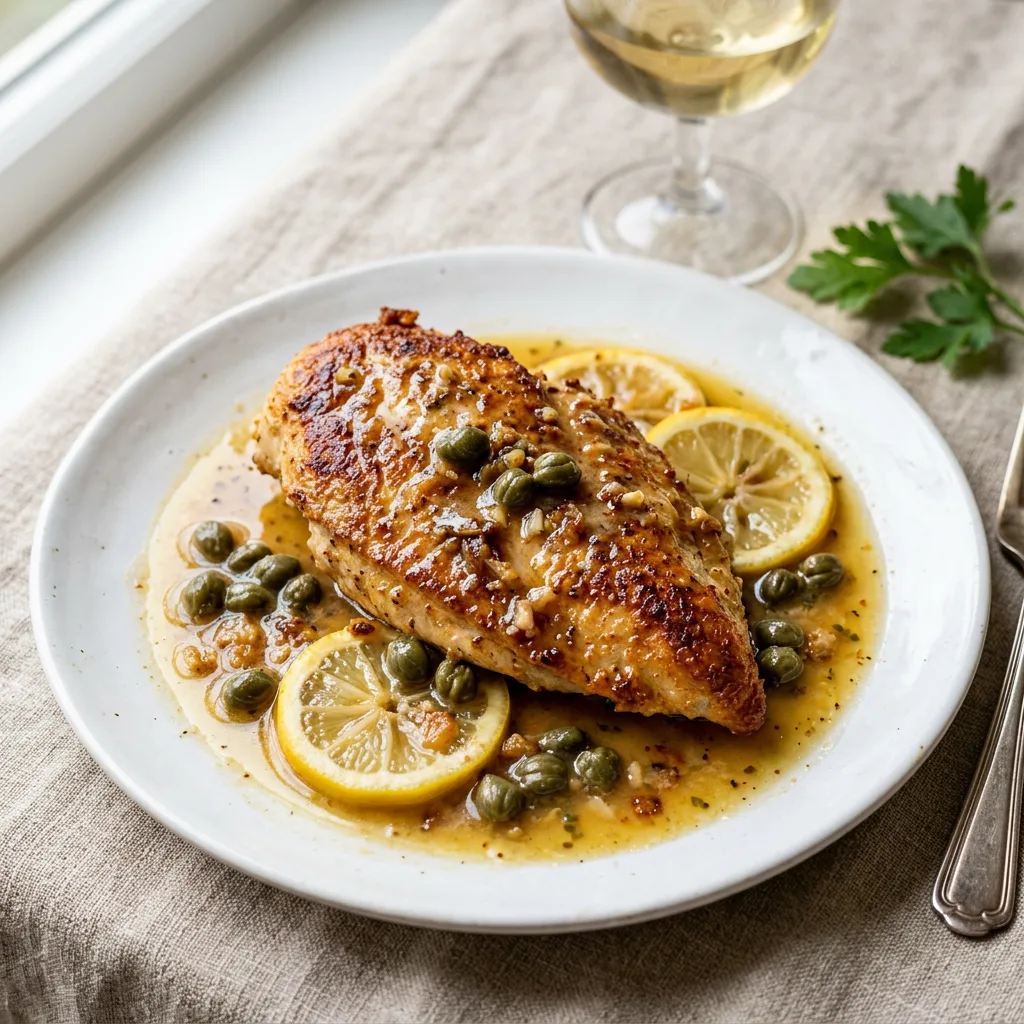
Pan-seared lemon caper chicken piccata is an elegant Italian-American dish featuring tender chicken breasts in a bright, tangy lemon sauce with briny capers. This restaurant-quality protein takes just 30 minutes from start to finish, making it perfect for honoring the dad in your life. The combination of crispy golden chicken and silky, citrus-forward sauce delivers sophisticated flavor without demanding hours in the kitchen. Serve this stunning entrée alongside your favorite sides for a Father’s Day dinner that tastes far more complicated than it actually is.
| Metric | Value |
|---|---|
| Prep Time | 10 minutes |
| Cook Time | 20 minutes |
| Total Time | 30 minutes |
| Servings | 4 |
| Difficulty | Easy to Intermediate |
| Cuisine | Italian-American |
Why This Recipe Works
I’ve made this lemon caper chicken piccata countless times, and it never fails to impress. The magic lies in the contrast between the crispy, golden-brown exterior and the tender, juicy interior of the chicken breast. When you pound the chicken to even thickness, it cooks quickly and uniformly, preventing that common problem of dry, overcooked chicken. This technique ensures every bite delivers the same perfect tenderness.
The sauce is where this dish truly shines, combining bright lemon juice with briny capers and a touch of white wine for depth. I love how the acidity cuts through the richness of the butter and olive oil, creating a sauce that feels light and elegant rather than heavy. The capers add little bursts of salty umami that make you want to scrape every drop from your plate. According to How To Cook Chicken, proper heat management and timing are essential for achieving perfectly cooked poultry.
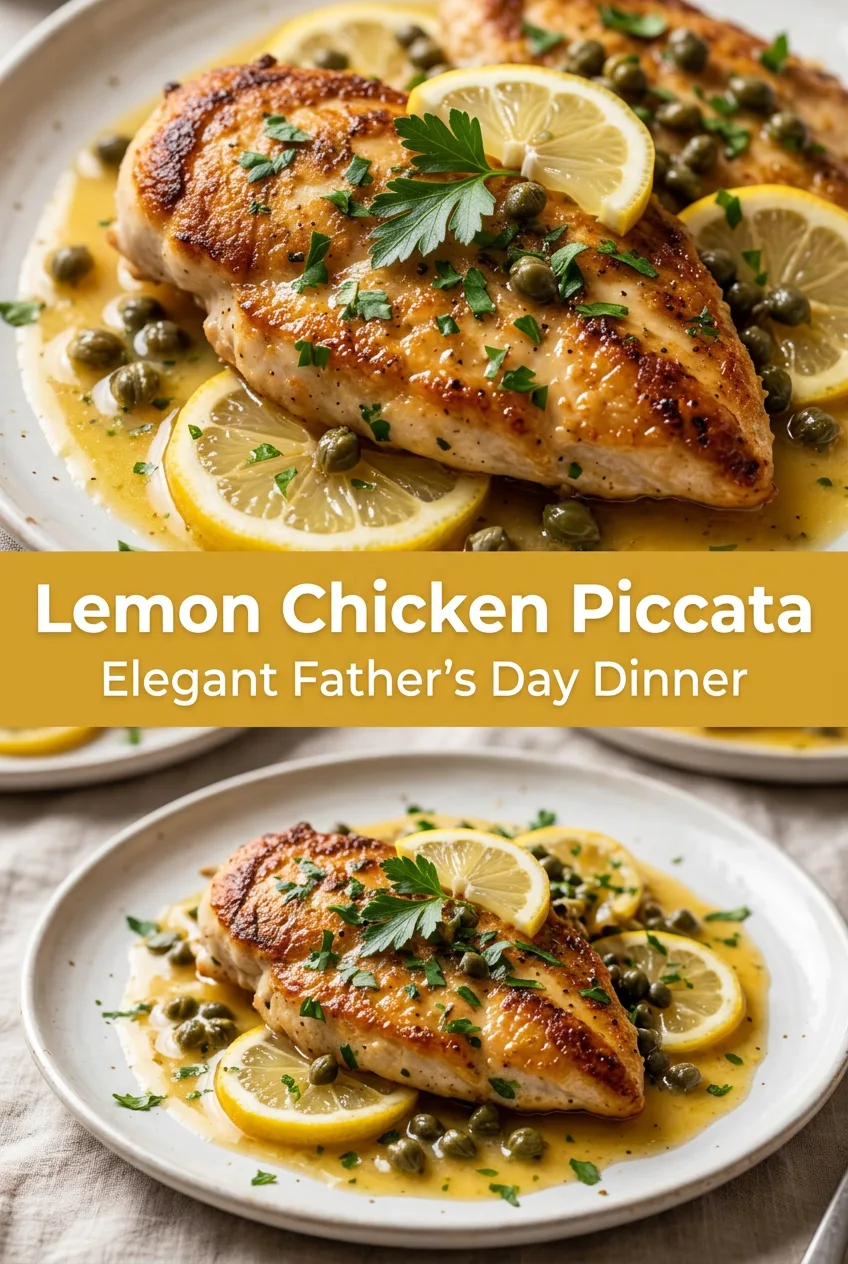
What makes this recipe so valuable for Father’s Day is its versatility and impressive presentation paired with minimal effort. You can have an impressive, restaurant-quality dinner on the table in under 30 minutes, leaving time for appetizers, wine, or meaningful conversation. The pan-searing method creates visual appeal with beautiful golden chicken that feels special without requiring advanced culinary skills.
Ingredients
| Ingredient | Quantity | Notes and Alternatives |
|---|---|---|
| Boneless, skinless chicken breasts | 4 | About 6-8 oz each; substitute with chicken paillards if pre-pounded |
| All-purpose flour | 1/2 cup | Use cornstarch or rice flour for gluten-free option |
| Garlic powder | 1 teaspoon | Fresh minced garlic works; use 1 clove pounded into paste |
| Salt | To taste | Use kosher salt; fine sea salt also works |
| Black pepper | To taste | Freshly ground pepper delivers better flavor than pre-ground |
| Olive oil | 3 tablespoons | Use extra virgin for better flavor; avocado oil works too |
| Unsalted butter | 3 tablespoons | Clarified butter prevents burning; salted butter requires salt reduction |
| Garlic cloves, minced | 4 | Fresh garlic essential; do not substitute with powder alone |
| Dry white wine | 1/2 cup | Use Pinot Grigio or Sauvignon Blanc; chicken broth works if avoiding alcohol |
| Low-sodium chicken broth | 3/4 cup | Vegetable broth for lighter flavor; bone broth adds richness |
| Fresh lemon juice | 1/3 cup | About 2-3 fresh lemons; bottled juice lacks brightness |
| Lemon zest | 1 lemon | Microplane zester recommended; adds essential citrus oils |
| Capers, drained | 3 tablespoons | Non-pareil capers are smaller; use green peppercorns if unavailable |
| Fresh flat-leaf parsley, chopped | 2 tablespoons | Basil or chives as alternatives; adds fresh finish |
| Lemon slices | For serving | Thin slices for garnish; adds visual appeal and optional tartness |
Step-by-Step Instructions
Preparation Phase
- Pound chicken breasts to an even thickness of approximately 1/2 inch using a meat mallet, placing each breast between plastic wrap or parchment paper to contain splatter.
- Season all chicken pieces generously with salt, freshly ground black pepper, and garlic powder on both sides.
- Pour flour into a shallow dish and dredge each seasoned chicken breast, coating both sides lightly and shaking off any excess flour before setting on a clean plate.
- Mince four garlic cloves into small, uniform pieces and set aside in a small bowl.
- Zest one fresh lemon directly into a separate bowl, then juice the lemon and additional lemons to yield 1/3 cup of fresh lemon juice.
- Drain capers in a fine-mesh strainer and pat dry with paper towels to remove excess liquid.
- Chop flat-leaf parsley finely and slice one fresh lemon into thin rounds for garnish.
Searing Phase
- Heat three tablespoons of olive oil in a large skillet over medium-high heat for approximately one minute until shimmering.
- Place flour-coated chicken breasts into the hot oil, working in batches if necessary to avoid overcrowding the pan.
- Sear chicken for four to five minutes per side until the exterior develops a deep golden-brown crust and the internal temperature reaches 165°F (74°C).
- Transfer cooked chicken to a clean plate and cover loosely with foil to retain warmth while preparing the sauce.
Sauce Building Phase
- Reduce heat to medium and add three tablespoons of unsalted butter to the same skillet, allowing it to melt completely.
- Add minced garlic to the melted butter and sauté for exactly 30 seconds, stirring constantly until fragrant but not browned.
- Pour the dry white wine into the pan, scraping the bottom with a wooden spoon to deglaze and lift all flavorful browned bits.
- Add 3/4 cup of low-sodium chicken broth to the pan, stirring to combine with the wine reduction.
- Stir in the fresh lemon juice and lemon zest, mixing thoroughly to incorporate the citrus throughout the sauce.
- Add the drained capers, stirring gently to distribute evenly throughout the liquid.
- Simmer the sauce over medium heat for three to four minutes, stirring occasionally, until slightly reduced and thickened.
- Return the seared chicken breasts to the skillet, nestling them into the sauce and spooning the liquid over the top of each piece.
- Simmer together for one to two minutes, allowing the chicken to absorb the flavors while heating through completely.
Finishing and Serving
- Remove the skillet from heat and taste the sauce, adjusting salt and pepper as needed for balanced seasoning.
- Transfer chicken to serving plates, dividing the sauce evenly among portions.
- Garnish each plate with fresh chopped parsley and arrange fresh lemon slices alongside the chicken for visual appeal and optional extra tartness.
- Serve immediately while the sauce is still warm and the chicken remains at its optimal temperature.
Chef Tips for Perfect Results
- Pound chicken to even thickness using gentle, controlled strikes with the mallet rather than aggressive pounding, which can tear the meat and create an uneven surface.
- Use a meat thermometer to verify doneness, pulling the chicken at 165°F internal temperature rather than relying on color alone, preventing overcooking that dries out the breast.
- Fresh lemon juice makes an enormous difference in flavor compared to bottled juice; squeeze lemons immediately before cooking and strain through a fine mesh to remove pulp.
- Let the pan get adequately hot before adding the floured chicken, as insufficient heat produces pale, steamed chicken rather than a golden-brown crust.
- Don’t skip the deglazing step with white wine, as this dissolves the flavorful brown bits on the pan bottom and creates depth in the sauce.
- Taste and adjust the sauce seasoning before plating, as capers and lemon juice can vary in saltiness depending on brand and freshness of citrus.
Common Mistakes to Avoid
Skipping the pounding step results in uneven cooking where the thicker edges remain undercooked while thin areas dry out. Fix this by pounding each breast between plastic wrap to 1/2-inch thickness, ensuring uniform heat distribution throughout.
Using bottled lemon juice produces a flat, chemical taste that lacks the brightness fresh lemon provides. Always squeeze fresh lemons immediately before cooking and use the vibrant yellow juice rather than the pale bottled variety.
Overcrowding the skillet lowers the oil temperature and steams the chicken rather than searing it, producing pale, rubbery results instead of crispy golden chicken. Cook the chicken in batches if necessary to maintain proper heat and allow proper browning.
Cooking the garlic too long causes it to burn and turn bitter, overwhelming the delicate sauce flavors. Add minced garlic for only 30 seconds before immediately deglazing with wine to arrest the cooking process.
Reducing the sauce too much concentrates the saltiness from the capers and can create an overly thick, cloying sauce. Simmer only three to four minutes until slightly reduced, then taste and adjust seasoning before serving.
Variations and Substitutions
| Ingredient | Substitution | Impact on Flavor |
|---|---|---|
| Dry white wine | Additional chicken broth or dry vermouth | Reduces acidity slightly; creates a more savory profile without wine complexity |
| Capers | Chopped green olives or green peppercorns | Green olives add mild brininess; peppercorns contribute spicy heat instead of saltiness |
| Lemon juice and zest | Lime juice and zest or white wine vinegar | Lime creates tropical brightness; vinegar adds sharpness with less sweetness |
| Chicken breasts | Thin chicken cutlets, turkey breast, or pork medallions | Turkey provides leaner protein; pork adds richness and deeper flavor |
| Fresh parsley | Fresh basil, chives, or tarragon | Basil adds Mediterranean sweetness; chives provide mild onion notes; tarragon contributes anise complexity |
| All-purpose flour | Cornstarch or gluten-free flour blend | Cornstarch creates crispier crust; gluten-free blends work identically with potential slight texture difference |
Serving Suggestions and Pairings
This pan-seared lemon caper chicken piccata deserves thoughtful accompaniments that complement rather than compete with its bright, delicate flavors. Serve alongside creamy polenta, buttered egg noodles, or roasted orzo pasta to capture the silky lemon butter sauce with each bite. For lighter options, pair with roasted asparagus, steamed green beans, or a simple side salad dressed with light vinaigrette.
Create a complete Father’s Day dinner by starting with a Summer Salad Ideas: Avocado Chickpea Cucumber Salad as a refreshing first course, allowing guests to enjoy fresh vegetables while the chicken finishes cooking. The cool, herbaceous salad cleanses the palate before transitioning to the warm, rich piccata sauce.
Wine pairing should feature crisp white wines with good acidity to echo the lemon notes in the sauce. Choose Pinot Grigio, Sauvignon Blanc, or Vermentino, which provide cleansing acidity without overwhelming the delicate chicken flavors. For non-wine drinkers, sparkling water with fresh lemon and herb-infused iced tea work beautifully alongside this bright dish.
Storage and Reheating
| Method | Duration | Instructions |
|---|---|---|
| Refrigerator | Up to 3 days | Store chicken and sauce together in an airtight container; reheat gently in a skillet over low heat with a splash of water to prevent drying |
| Freezer | Up to 2 months | Cool completely before transferring to freezer-safe container; freeze chicken and sauce together for best results |
| Thawing | Overnight | Transfer container to refrigerator 12-24 hours before reheating to allow safe, even thawing |
| Oven Reheating | 15-20 minutes | Place in covered baking dish at 325°F until chicken reaches 165°F internal temperature, stirring sauce occasionally |
| Stovetop Reheating | 5-8 minutes | Heat in a skillet over medium-low heat, stirring gently and adding water if sauce becomes too thick |
| Microwave Reheating | 2-3 minutes | Place on microwave-safe plate, cover loosely, and heat at 50% power in 1-minute intervals to prevent uneven reheating |
Nutritional Information
The nutritional values below represent approximate amounts per serving (one chicken breast with sauce) based on standard ingredient measurements and typical preparation methods. Individual values may vary depending on specific brands and exact quantities used in your kitchen.
| Nutrient | Amount per Serving |
|---|---|
| Calories | 385 |
| Protein | 42g |
| Total Fat | 15g |
| Saturated Fat | 5g |
| Carbohydrates | 8g |
| Dietary Fiber | 0g |
| Sugars | 0.5g |
| Sodium | 520mg |
This elegant dish provides excellent protein content essential for muscle maintenance and repair. The inclusion of fresh lemon juice and capers adds nutrients without significant calorie contribution. According to 5 A Day, pairing this entrée with vegetable sides ensures you meet daily micronutrient requirements while enjoying satisfying, restaurant-quality flavors.
Frequently Asked Questions
Can I make pan-seared lemon caper chicken piccata ahead of time for Father’s Day?
Yes, you can prepare this dish several hours in advance, making it perfect for stress-free Father’s Day entertaining. Cook the chicken and sauce completely, then cool to room temperature and refrigerate in an airtight container for up to three days. Reheat gently in a skillet over low heat with a splash of water to restore the sauce consistency, adding fresh parsley and lemon slices just before serving for optimal presentation and brightness.
How do I know when the chicken is perfectly cooked without drying it out?
Use an instant-read meat thermometer inserted into the thickest part of the chicken breast, pulling from heat when the internal temperature reaches exactly 165°F (74°C). Since chicken continues cooking slightly after removal from heat, removing at this temperature ensures perfectly juicy results rather than overdone, rubbery meat. The combination of proper pounding for even thickness and careful temperature monitoring guarantees tender, moist chicken every time.
What should I do if my lemon caper chicken piccata sauce breaks or looks separated?
A broken sauce typically results from excessive heat causing the butter to separate from other ingredients. Remove the skillet from heat immediately and whisk in one to two tablespoons of cold chicken broth slowly while stirring constantly to re-emulsify the sauce. If this doesn’t work, transfer the sauce to a blender, add a splash of cold broth, and blend briefly until smooth, then return to the pan and reheat gently.
Can I substitute boneless, skinless chicken thighs for breasts in this lemon caper chicken piccata recipe?
Yes, boneless chicken thighs work beautifully in this recipe and actually stay more tender than breasts due to their higher fat content. You may need to increase cooking time by one to two minutes per side since thighs are slightly thicker than breast meat. Pound thighs to even thickness just as you would breasts, and verify doneness with a meat thermometer at 165°F internal temperature for both optimal taste and food safety.
Is there a way to make pan-seared lemon caper chicken piccata without alcohol for Father’s Day dinner?
Absolutely, simply replace the dry white wine with an equal amount of additional low-sodium chicken broth or dry vermouth for a non-alcoholic version. The sauce will be slightly more savory and less complex without the wine’s acidity, so you may want to add an extra teaspoon of fresh lemon juice to brighten the flavors. This substitution works perfectly well and ensures everyone at your Father’s Day table can enjoy this elegant dish regardless of alcohol preferences.
Conclusion
Pan-seared lemon caper chicken piccata delivers restaurant-quality elegance in under 30 minutes, making it the ideal Father’s Day dinner choice. The bright, tangy sauce with crispy golden chicken requires only basic techniques and readily available ingredients, yet impresses with sophisticated flavors. This dish celebrates the special dad in your life with a meal that tastes like you spent hours in the kitchen, when honestly, you’ve created something spectacular in barely half an hour. Serve this stunning chicken piccata with your favorite sides and watch your Father’s Day celebration become an unforgettable evening of delicious, citrus-forward flavors.

Father's Day Dinner: Pan-Seared Lemon Caper Chicken Piccata
Ingredients
Method
- Pound chicken breasts to an even thickness of approximately 1/2 inch using a meat mallet, placing each breast between plastic wrap.
- Season all chicken pieces generously with salt, freshly ground black pepper, and garlic powder on both sides.
- Pour flour into a shallow dish and dredge each seasoned chicken breast, coating both sides lightly and shaking off excess flour.
- Mince garlic cloves into small, uniform pieces and set aside.
- Zest one fresh lemon and juice to yield 1/3 cup of fresh lemon juice.
- Drain capers in a fine-mesh strainer and pat dry with paper towels.
- Chop flat-leaf parsley finely and slice one fresh lemon into thin rounds for garnish.
- Heat three tablespoons of olive oil in a large skillet over medium-high heat for approximately one minute until shimmering.
- Place flour-coated chicken breasts into the hot oil, working in batches if necessary.
- Sear chicken for four to five minutes per side until the exterior develops a deep golden-brown crust and internal temperature reaches 165°F.
- Transfer cooked chicken to a clean plate and cover loosely with foil to retain warmth.
- Reduce heat to medium and add three tablespoons of unsalted butter to the same skillet, allowing it to melt completely.
- Add minced garlic and sauté for exactly 30 seconds, stirring constantly until fragrant but not browned.
- Pour the dry white wine into the pan, scraping the bottom with a wooden spoon to deglaze.
- Add chicken broth to the pan, stirring to combine with the wine reduction.
- Stir in the fresh lemon juice and lemon zest, mixing thoroughly.
- Add the drained capers, stirring gently to distribute evenly.
- Simmer the sauce over medium heat for three to four minutes until slightly reduced and thickened.
- Return the seared chicken breasts to the skillet, nestling them into the sauce.
- Simmer together for one to two minutes, allowing the chicken to absorb the flavors.
- Remove the skillet from heat and taste the sauce, adjusting salt and pepper as needed.
- Transfer chicken to serving plates, dividing the sauce evenly among portions.
- Garnish each plate with fresh chopped parsley and arrange fresh lemon slices alongside the chicken.
- Serve immediately while the sauce is still warm and the chicken remains at optimal temperature.