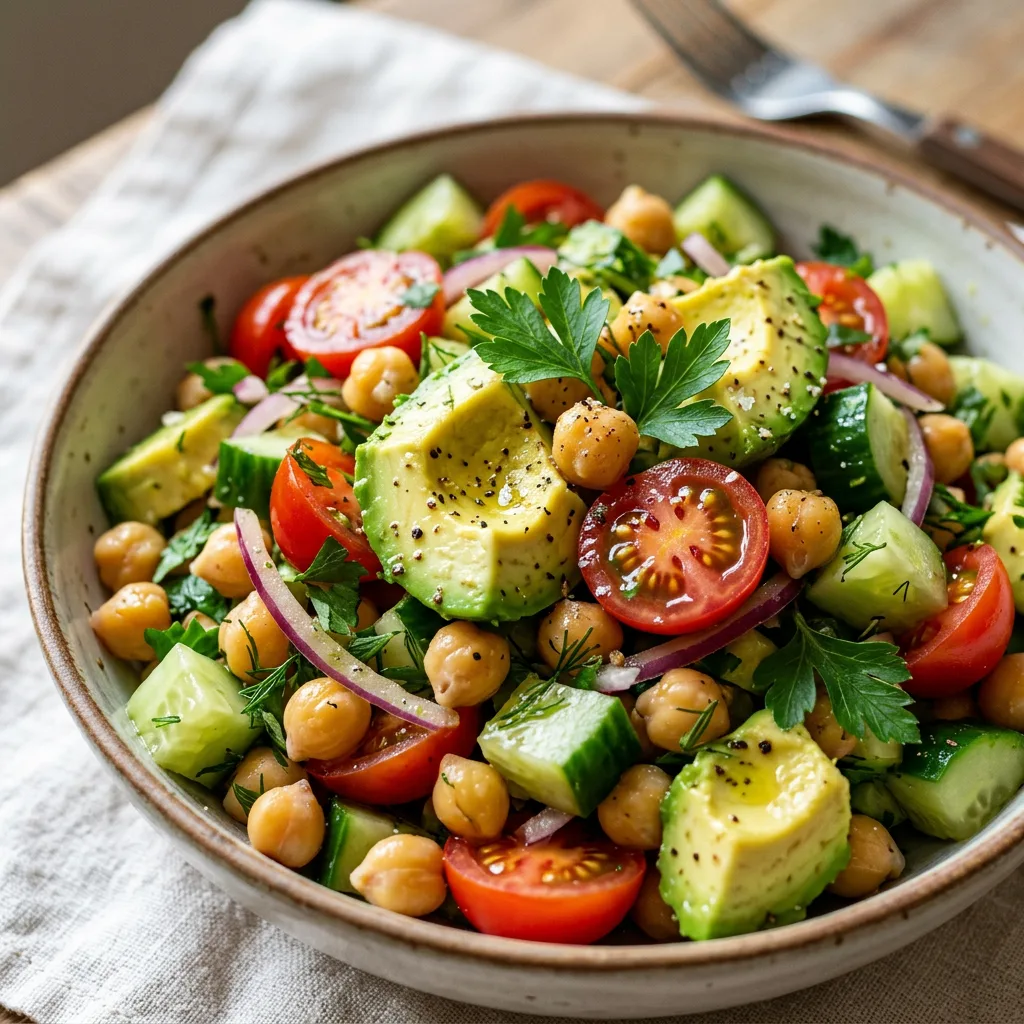
This avocado chickpea cucumber salad is a nutrient-dense, plant-based summer dish that combines creamy avocados, protein-packed chickpeas, and crisp vegetables in one refreshing bowl. The zesty lemon-cumin dressing ties everything together with bright, Mediterranean-inspired flavors that work for lunch, dinner, or meal prep throughout the week. Built entirely from whole ingredients, this salad delivers satisfaction without requiring any cooking, making it perfect for hot summer days when you want to skip the stove.
| Metric | Value |
|---|---|
| Prep Time | 15 minutes |
| Cook Time | 0 minutes |
| Total Time | 15 minutes |
| Servings | 4 |
| Difficulty | Easy |
| Cuisine | Mediterranean |
Why This Recipe Works
I developed this avocado chickpea cucumber salad specifically to address the challenge of creating a satisfying vegetarian lunch that doesn’t rely on grains or legume-based starches as its foundation. The beauty of this combination lies in how each ingredient serves a distinct nutritional purpose. Chickpeas provide plant-based protein and fiber that keeps you full for hours, while avocados deliver healthy monounsaturated fats that help your body absorb fat-soluble vitamins from the other vegetables.
The flavor profile balances bright acidity from fresh lemon juice with warm, earthy spices like cumin and smoked paprika. This creates a complex dressing that elevates simple raw vegetables into something sophisticated enough for entertaining, yet simple enough for weeknight preparation. The textural contrast between creamy avocado, tender chickpeas, and crisp cucumber creates genuine eating pleasure without requiring any cooking technique skill.
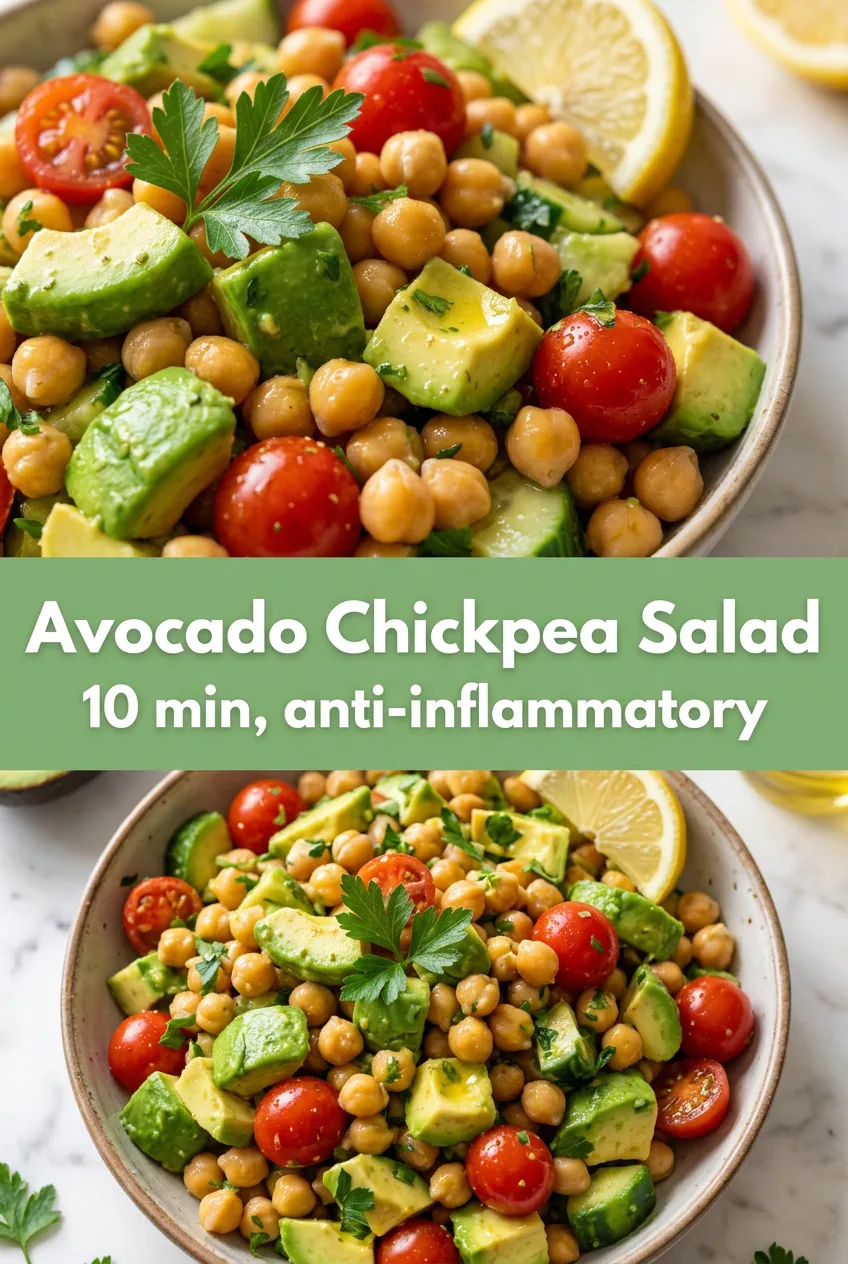
What makes this recipe genuinely reliable is its flexibility with storage and preparation timing. Unlike many salads that wilt or become soggy, this version actually improves when vegetables and chickpeas marinate separately in the dressing for a few hours before combining with the avocado. This means you can prepare components in advance and assemble just before serving, making it ideal for meal prep routines. The olive oil benefits work beautifully with the lemon juice to preserve the avocado’s texture while adding richness to every bite.
Ingredients
| Ingredient | Quantity | Notes |
|---|---|---|
| Ripe avocados | 2, diced | Choose avocados that yield slightly to pressure; rock-hard fruit won’t have optimal creamy texture |
| Chickpeas (canned) | 1 can (15 oz), rinsed and drained | Rinse thoroughly to remove excess sodium; dried chickpeas can substitute if soaked and cooked ahead |
| English cucumber | 1 large, diced | English cucumbers have thinner skin and fewer seeds than regular varieties; Persian or seedless varieties work well |
| Cherry tomatoes | 1 cup, halved | Use peak-season tomatoes for maximum sweetness; grape tomatoes are acceptable alternatives with similar texture |
| Red onion | 1/4, finely diced | The raw bite provides sharp contrast; soaking in ice water for 10 minutes reduces harshness if preferred |
| Fresh parsley | 1/4 cup, chopped | Flat-leaf parsley offers better flavor than curly variety; cilantro provides a different but equally valid brightness |
| Extra-virgin olive oil | 3 tbsp | Quality matters here since it’s consumed raw; use a bottle labeled “first cold-pressed” |
| Fresh lemon juice | 2 tbsp | Always use fresh-squeezed; bottled juice lacks the vibrant acidity needed for this dressing |
| Lemon zest | 1 tsp | Zest before juicing the lemon for easier extraction; adds aromatic oils that juice alone cannot provide |
| Cumin | 1 tsp | Ground cumin works best; toasting whole seeds before grinding intensifies the flavor if time allows |
| Smoked paprika | 1/2 tsp | Provides subtle smokiness without heat; regular paprika can substitute but lacks the signature depth |
| Salt | To taste | Start conservatively since canned chickpeas retain residual sodium even after rinsing |
| Black pepper | To taste | Freshly ground pepper provides better flavor than pre-ground varieties |
Step-by-Step Instructions
Prepare the Legumes and Vegetables
- Rinse the canned chickpeas under cold running water for 30 seconds, then drain thoroughly in a fine-mesh strainer to remove excess sodium and starches.
- Dice the two ripe avocados by cutting them lengthwise around the pit, twisting to separate halves, removing the pit with a spoon, and cutting the flesh into 1/2-inch cubes within the skin before scooping into your large mixing bowl.
- Dice the English cucumber into 1/2-inch pieces, cutting it crosswise along its length to create uniform chunks that will hold their structure throughout the salad.
- Halve the cherry tomatoes lengthwise to create flat surfaces that display the vibrant interior color and allow the juice to distribute through the salad.
- Finely dice the red onion quarter into pieces no larger than 1/4 inch to distribute its sharp flavor evenly without overpowering individual bites.
- Chop the fresh parsley leaves roughly into 1/4-inch pieces, discarding the woody stems which add bitterness without flavor benefit.
Combine Salad Ingredients
- Combine the prepared avocado, drained chickpeas, diced cucumber, halved cherry tomatoes, diced red onion, and chopped parsley in a large mixing bowl with at least 4-quart capacity.
- Toss the combined vegetables and legumes gently with a wooden spoon using a folding motion rather than aggressive stirring to prevent breaking apart the delicate avocado pieces.
Prepare and Apply the Dressing
- Whisk together the extra-virgin olive oil, fresh lemon juice, lemon zest, ground cumin, and smoked paprika in a small bowl or liquid measuring cup until the spices are fully suspended and the mixture is homogeneous.
- Pour the prepared dressing over the salad ingredients, distributing it evenly across the entire surface.
- Gently toss the salad using the folding method with a wooden spoon, ensuring every component receives coating while protecting the avocado from excessive handling that would cause browning or mushiness.
Season and Serve
- Taste the salad and season with salt and black pepper according to your preference, starting with 1/4 teaspoon of each and adjusting incrementally.
- Serve immediately while the vegetables maintain peak crispness and before the avocado has time to oxidize and brown.
- Alternatively, store the chickpeas, cucumber, tomatoes, red onion, and parsley together in a covered container in the refrigerator for up to 2 days, keeping the avocado separate in an airtight container with plastic wrap pressed directly onto its surface to minimize oxygen exposure.
- When ready to serve a refrigerated batch, combine the reserved vegetables and chickpeas with freshly diced avocado and dress just before serving.
Chef Tips for Perfect Results
- Select avocados that yield to gentle pressure with your thumb but aren’t mushy; they should be eaten within one day of ripening for optimal texture and flavor in this raw preparation.
- Zest the lemon before cutting it in half to juice, as whole lemons are easier to work with and the zest microplane won’t slip on the juice-slick surface of a halved fruit.
- Whisk the dressing ingredients in a mason jar with a tight-fitting lid rather than a bowl, then shake vigorously for 10 seconds to create a temporary emulsion that coats the vegetables more evenly than hand-whisked versions.
- Prepare vegetables in the order they appear on your cutting board to establish a rhythm that reduces overall prep time from 20 minutes to 15 minutes through efficient movement and tool use.
- Taste the dressing before combining with vegetables by dipping a piece of cucumber into it, adjusting seasoning when it’s easier to fix rather than after the salad is already mixed.
- Refrigerate serving bowls for 10 minutes before plating if you’re serving this during hot summer weather; cold bowls help maintain the salad’s temperature and crisp texture longer.
Common Mistakes to Avoid
Using Under-Ripe or Over-Ripe Avocados
The most common error is selecting avocados based on color alone rather than firmness and ripeness stage. Under-ripe avocados feel hard and taste bitter with an unpleasant waxy texture, while over-ripe avocados become mushy and brown quickly once diced. To fix this, purchase avocados 3-4 days before you plan to make the salad and store them at room temperature in a paper bag, checking daily for the perfect yield-to-gentle-pressure stage. If you discover your avocado is already browning, use it in a different recipe like guacamole where the browning won’t affect presentation.
Mixing Avocado with Dressing Too Far in Advance
Combining the avocado with the acidic lemon dressing more than 5 minutes before serving causes the avocado to brown due to enzymatic oxidation that the acid cannot fully prevent in a wet environment. The solution is to prepare all other ingredients and the dressing completely, then dice and add the avocado only in the final steps immediately before serving. If you’re making this for meal prep, keep diced avocado in a separate container with plastic wrap pressed directly on its surface, and fold it into the already-dressed salad components only when eating.
Not Rinsing Canned Chickpeas Adequately
Canned chickpeas are packed in liquid containing sodium, starch, and preservatives that create a cloudy, salty coating on the beans. Failing to rinse them thoroughly results in a salad that tastes overly salty and has a gummy texture rather than the desired firm bite. Remedy this by rinsing for at least 30 seconds under running water while gently rubbing the chickpeas between your fingers to remove the slippery surface coating, then draining completely in a fine-mesh strainer before adding to your salad.
Using Bottled Lemon Juice Instead of Fresh-Squeezed
Bottled lemon juice contains preservatives and lacks the bright, aromatic quality of fresh juice, resulting in a dressing that tastes flat and chemical. The avocado chickpea cucumber salad depends entirely on the lemon’s vibrant acidity to balance the richness of the avocado and olive oil. Always squeeze fresh lemon juice immediately before making the dressing, and if you don’t have a lemon at the exact moment you want to prepare the salad, delay preparation until you can obtain one rather than substituting bottled juice.
Cutting Vegetables to Inconsistent Sizes
Varying vegetable sizes creates uneven bites where some forkfuls are mostly cucumber while others contain only tomato, compromising the balanced flavor profile that makes this salad work. Additionally, smaller pieces release their liquid faster, making the salad soggy if held longer than 30 minutes. Achieve consistent sizing by using a cutting board with measurement marks or by dicing one vegetable completely before moving to the next, checking each piece against your first cut to maintain uniformity.
Variations and Substitutions
| Original Ingredient | Substitution | Impact on Flavor |
|---|---|---|
| English cucumber | Seedless Persian cucumber or regular cucumber with seeds removed | Slightly crunchier texture with less water content; flavor remains mild and refreshing |
| Cherry tomatoes | Diced heirloom or beefsteak tomatoes | More complex tomato flavor with greater sweetness or acidity depending on variety; larger pieces may require forks rather than spoon eating |
| Fresh parsley | Fresh cilantro, fresh mint, or combination of both | Cilantro adds citrus notes and peppery finish; mint provides cooling quality; combination creates more complex herbal profile |
| Chickpeas | White beans, cannellini beans, or fava beans | White beans provide milder flavor that lets other ingredients shine; fava beans offer earthier, more robust taste |
| Smoked paprika | Regular paprika or cayenne pepper | Regular paprika provides color without smoky depth; cayenne adds heat in place of smokiness, requiring reduced quantity (1/4 teaspoon) |
| Cumin | Coriander, fennel seed, or dukkah spice blend | Coriander adds citrus notes; fennel brings subtle licorice quality; dukkah provides complex herbal-nutty profile with less single-spice intensity |
| Lemon juice and zest | Lime juice and zest or white wine vinegar | Lime provides more herbaceous acidity with slight bitterness; vinegar adds sharper tang without the aromatic brightness lemon provides |
| Extra-virgin olive oil | Avocado oil or walnut oil | Avocado oil provides neutral flavor that lets spices stand out; walnut oil adds nutty richness that complements cumin and paprika intensely |
| Red onion | Red shallots or thinly sliced red bell pepper | Shallots offer milder, more refined onion flavor; red bell pepper provides sweetness without the sharp bite of raw onion |
| Cherry tomatoes | Sun-dried tomatoes or roasted red peppers | Sun-dried tomatoes add concentrated sweetness and chewiness, transforming the salad into a more substantial side dish; roasted peppers add smoky sweetness |
Serving Suggestions and Pairings
This avocado chickpea cucumber salad functions beautifully as a standalone lunch bowl served in a wide, shallow dish that displays the colorful components. For warm-weather entertaining, serve it alongside grilled protein like Mediterranean herb-marinated chicken breasts or freshly caught grilled fish. The salad’s bright, fresh flavor profile also pairs exceptionally well with heartier proteins that benefit from acidic balance, such as the flavors found in a Anti-Inflammatory Dinner: Creamy Pepperoncini Chicken Skillet.
For picnics and outdoor dining, transport the dressed vegetables and chickpeas in one container and keep the diced avocado separate in a sealed container, then combine just before serving on a blanket or picnic table. The salad pairs wonderfully with crusty whole grain bread, feta cheese crumbles, and a simple white wine like Sauvignon Blanc that echoes the lemon notes in the dressing.
In meal prep contexts, portion the chickpea-vegetable mixture into four glass containers with the dressing already combined, then add fresh diced avocado to each portion just before eating throughout the week. This salad also serves as an exceptional side dish for Mediterranean-inspired weeknight dinners, providing a fresh vegetable component that balances richer mains. The Mediterranean flavor profile makes it particularly appropriate for summer solstice gatherings, Father’s Day dinners, or any occasion where guests appreciate fresh, light fare without heavy cooking demands.
For a more substantial meal, top this salad with grilled chickpeas that have been tossed separately in the same cumin-paprika spice blend, or serve alongside complementary meal prep proteins like the High-Protein Meal Prep: Easy 10-Minute Hormone-Balancing Fried Rice for a complete grain-inclusive meal. The salad also transitions beautifully into appetizer territory when served in endive leaves or on crisps alongside creamy dips.
Storage and Reheating
| Storage Method | Maximum Duration | Instructions |
|---|---|---|
| Undressed vegetables and chickpeas together in glass container | Up to 2 days | Combine all ingredients except avocado in a glass or plastic container with an airtight lid. Store on refrigerator’s main shelf. Add freshly diced avocado and dressing just before serving. |
| Fully dressed salad without avocado in glass container | Up to 24 hours | Prepare salad with all ingredients except avocado, add dressing, and refrigerate covered. The vegetables will soften slightly but remain edible. Dice avocado immediately before eating. |
| Separated vegetables, chickpeas, and dressing in individual containers | Vegetables and chickpeas up to 2 days; dressing up to 3 days | Store diced vegetables and drained chickpeas in one airtight container, keeping avocado in a separate sealed container with plastic wrap pressed on surface. Keep dressing in a mason jar. Combine only when eating. |
| Prepared salad with diced avocado in glass container | Same day only (consume within 2 hours) | If avocado has already been added and combined with dressing, the salad begins browning immediately. This method is only acceptable if eating within 2 hours of preparation. |
| Dressing only in mason jar with tight-fitting lid | Up to 3 days | Store dressing separately at room temperature or refrigerated. Shake vigorously before using to re-emulsify the oil and juice components that may have separated. |
| Room temperature in wide, shallow serving bowl | Up to 1 hour | Once assembled and combined, serve this salad immediately or store uncovered at room temperature if dining shortly. Do not refrigerate after assembly as cold temperatures make vegetables and avocado unpleasantly hard. |
This salad does not require reheating, as it is intentionally served cold and fresh. The textural contrast between crisp vegetables and creamy avocado is essential to the dish’s appeal, and heating would completely destroy this quality. If you’ve prepared components in advance and refrigerated them, allow the vegetables and chickpeas to return to room temperature for 5 minutes before combining with freshly diced avocado and dressing for optimal flavor and texture.
Nutritional Information
| Nutrient | Amount per Serving (Approximate) |
|---|---|
| Calories | 285 |
| Protein | 9 grams |
| Total Fat | 18 grams |
| Saturated Fat | 2.5 grams |
| Monounsaturated Fat | 12 grams |
| Polyunsaturated Fat | 2.5 grams |
| Total Carbohydrates | 32 grams |
| Dietary Fiber | 8 grams |
| Net Carbohydrates | 24 grams |
| Sugar | 5 grams |
| Sodium | 285 mg |
Approximate values are calculated using standard USDA database entries for each ingredient. Actual nutritional content varies based on specific brands, growing conditions, and preparation methods. This salad provides approximately 30% of daily fiber intake from chickpeas and avocados, supporting digestive health and sustained satiety. The monounsaturated fat from avocado and olive oil supports cardiovascular health, and the combination of plant-based protein from chickpeas with the complete amino acid profile of parsley creates a nutritionally complete vegetarian meal. For specific dietary restrictions or health conditions, consult a registered dietitian, as individual nutritional needs vary considerably based on age, activity level, and metabolic factors. Information about Salt Intake recommendations can guide your seasoning choices if you’re managing sodium consumption.
Frequently Asked Questions
Can I Make This Avocado Chickpea Cucumber Salad Without Fresh Lemon Juice?
Fresh lemon juice is essential to this recipe and cannot be effectively replaced with bottled alternatives, as the bright acidity and aromatic oils distinguish the flavor profile from other Mediterranean dressings. Bottled lemon juice contains preservatives and sulfites that create a chemical taste and lack the natural brightness that makes this salad special. If you absolutely must use an alternative due to availability, substitute with fresh lime juice in equal quantity, which provides similar acidity though with a different herbal note that shifts the salad toward a more Latin-inspired profile.
How Do I Know When Avocados Are Ripe Enough for This Salad?
Ripe avocados should yield gently to pressure from your thumb without your finger penetrating the skin, creating a slight indentation that disappears when you release. If the avocado feels rock-hard, it needs 1-3 more days of room-temperature ripening; if it feels mushy or has brown spots inside when you cut it, it’s too ripe for this salad’s raw preparation. Select avocados 3-4 days before you plan to make the salad, store them in a paper bag at room temperature away from direct sunlight, and check daily for perfect ripeness by applying gentle thumb pressure.
What Should I Do If My Salad Gets Watery and Soggy?
Sogginess results from vegetables releasing water into the dressing over time, which happens faster with cut tomatoes and inadequately drained chickpeas sitting together for hours. To prevent this, store undressed vegetables and chickpeas separately, keeping the avocado in a sealed container with plastic wrap pressed directly on its surface to minimize oxygen exposure. When you’re ready to eat, combine the pre-dressed vegetables and chickpeas with freshly diced avocado just before serving, creating a texture contrast that remains crisp and textually interesting.
Can This Avocado Chickpea Cucumber Salad Be Made Ahead for Tomorrow?
You can prepare components separately up to 2 days in advance, but the fully assembled salad should be eaten within 2 hours of combining to preserve optimal texture and prevent avocado browning. Store the drained chickpeas, diced cucumber, halved tomatoes, diced red onion, and chopped parsley together in one airtight glass container for up to 2 days, keeping the dressing in a separate jar and the avocado in its own sealed container. On the day you want to eat it, combine the chickpea-vegetable mixture with the dressing, let it sit for 5 minutes to allow flavors to meld, then fold in freshly diced avocado just before serving.
How Should I Serve This Salad With a Main Protein for a Complete Meal?
This salad pairs beautifully with grilled or roasted proteins that benefit from bright acidic balance, such as herb-marinated chicken like the Creamy Herb Cream Cheese Stuffed Chicken, grilled fish, or plant-based proteins like marinated tofu. Serve the salad on one half of the plate with the protein taking up the other half, allowing flavors to remain distinct while creating visual balance. For warm-weather meals, serve the salad chilled alongside room-temperature or warm protein, as the temperature contrast provides pleasant textural contrast and prevents the salad from becoming mushy from the heat of a just-cooked protein.
Conclusion
This summer salad of avocado, chickpeas, and cucumber delivers restaurant-quality nutrition and flavor in 15 minutes of hands-on preparation with zero cooking required. The combination of creamy avocado, plant-based protein from chickpeas, crisp vegetables, and a zesty lemon-cumin dressing creates a meal that satisfies completely while remaining light enough for hot summer days. Make this salad as part of your regular meal prep rotation, and you’ll discover it becomes a reliable foundation for weekday lunches and weekend entertaining that showcases the bright, Mediterranean flavors that define summer eating at its finest.

Summer Salad Ideas: Avocado Chickpea Cucumber Salad
Ingredients
Method
- Rinse the canned chickpeas under cold running water for 30 seconds, then drain thoroughly in a fine-mesh strainer
- Dice the ripe avocados by cutting lengthwise around the pit, twisting to separate halves, removing the pit, and cutting the flesh into 1/2-inch cubes
- Dice the English cucumber into 1/2-inch pieces, cutting crosswise to create uniform chunks
- Halve the cherry tomatoes lengthwise to create flat surfaces
- Finely dice the red onion quarter into 1/4-inch pieces
- Chop the fresh parsley leaves roughly into 1/4-inch pieces, discarding woody stems
- Combine the prepared avocado, drained chickpeas, diced cucumber, halved cherry tomatoes, diced red onion, and chopped parsley in a large mixing bowl
- Toss the combined vegetables and legumes gently with a wooden spoon using a folding motion
- Whisk together the extra-virgin olive oil, fresh lemon juice, lemon zest, ground cumin, and smoked paprika in a small bowl until homogeneous
- Pour the prepared dressing over the salad ingredients, distributing evenly
- Gently toss the salad using the folding method with a wooden spoon
- Taste the salad and season with salt and black pepper according to preference
- Serve immediately while vegetables maintain peak crispness
- Alternatively, store the chickpeas, cucumber, tomatoes, red onion, and parsley together in a covered container for up to 2 days, keeping the avocado separate until ready to serve