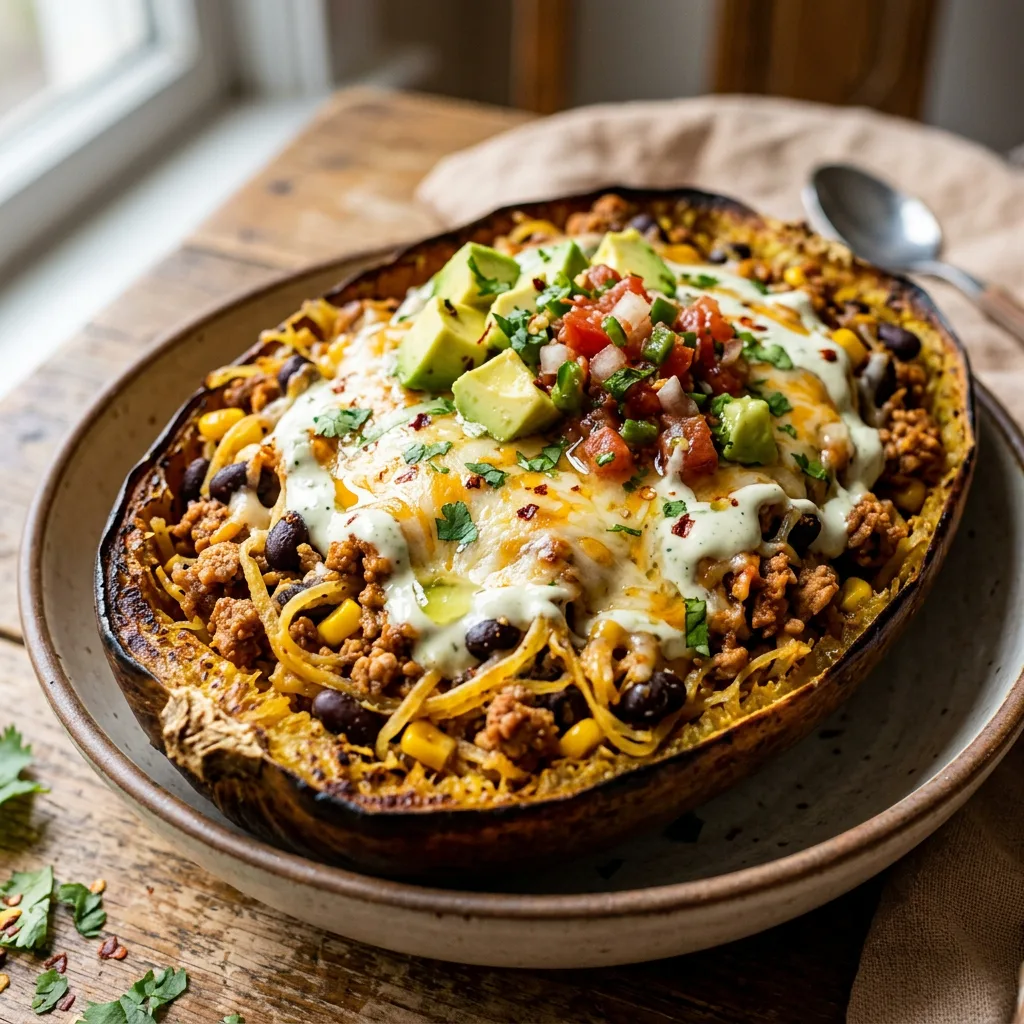
Turkey spaghetti squash burrito bowls combine roasted vegetable shells with seasoned ground turkey, black beans, corn, and fresh toppings for a satisfying, low-carb dinner. This recipe delivers authentic burrito flavors in a nutrient-dense format that requires minimal cleanup and maximum kitchen efficiency. The roasted spaghetti squash serves as a naturally tender, fiber-rich base that mimics traditional rice without refined carbohydrates.
| Prep Time | Cook Time | Total Time | Servings | Difficulty | Cuisine |
|---|---|---|---|---|---|
| 15 minutes | 50 minutes | 65 minutes | 4 | Easy | Mexican-Inspired |
Why This Recipe Works
I developed this burrito bowl recipe because I needed weeknight dinners that taste restaurant-quality without demanding hours in the kitchen. The spaghetti squash becomes perfectly tender in 40-45 minutes at 400 degrees Fahrenheit, creating natural bowl vessels that hold the turkey mixture without falling apart. While the squash roasts, your stovetop work takes only 10 minutes total, meaning you’re essentially preparing two components simultaneously rather than sequentially.
The seasoning blend of cumin, chili powder, smoked paprika, and garlic powder replicates authentic burrito bowl flavor profiles found at specialty restaurants. I’ve tested numerous spice ratios, and these precise measurements deliver balanced heat without overwhelming delicate turkey meat. The diced tomatoes with green chiles already contain acidity and flavor depth, so you’re not starting with a blank canvas. Consider pairing this dinner with Breakfast Ideas: Anti-Inflammatory Protein Overnight Oats if you’re planning a full day of health-conscious meals.
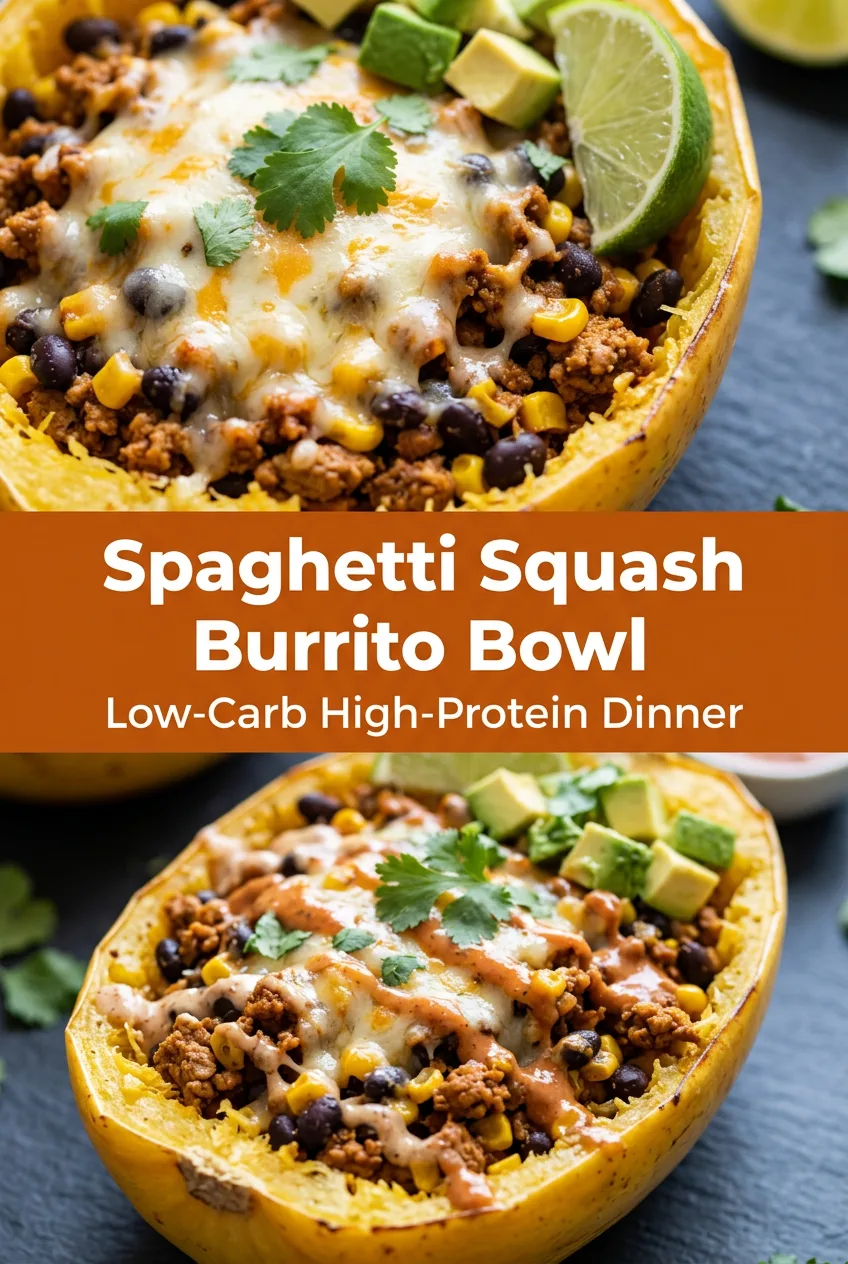
The broiling step at the end transforms this dish from simple to spectacular. When cheese melts and bubbles under high heat, it caramelizes slightly, creating textural contrast against the tender squash strands. This final touch takes 2-3 minutes and elevates the entire presentation without adding complexity. The Olive Oil Benefits extend throughout this recipe, from initial squash brushing through the finished product’s nutritional profile.
Ingredients
| Ingredient | Quantity | Notes with Alternatives |
|---|---|---|
| Spaghetti squash | 2 medium, halved and seeded | Choose squash roughly 2.5-3 lbs each. Butternut squash works but requires longer roasting. |
| Lean ground turkey | 1 lb | Ground chicken (3.5 oz fat) substitutes equally. Avoid 93/7 ground turkey as it becomes dry. |
| Black beans | 1 can (15 oz), drained | Pinto or kidney beans replace black beans with minimal flavor change. |
| Corn kernels | 1 cup | Fresh, frozen, or canned work identically. Frozen thaws during cooking. |
| Diced tomatoes with green chiles | 1 can (14 oz) | Rotel brand is standard. Regular diced tomatoes plus 1/2 tsp cayenne pepper substitute. |
| Cumin | 1 tsp | Ground cumin only. Whole seeds require blooming and grinding. |
| Chili powder | 1 tsp | Standard chili powder works. Ancho chili powder adds depth but changes color. |
| Smoked paprika | 1/2 tsp | Regular paprika reduces smokiness but maintains structure. Do not substitute with cayenne. |
| Garlic powder | 1/2 tsp | Fresh garlic minced (2 cloves) intensifies flavor but requires cooking time adjustment. |
| Salt | To taste | Start with 1/2 tsp. Black beans and canned tomatoes already contain sodium. |
| Black pepper | To taste | Freshly ground pepper delivers superior flavor to pre-ground. |
| Shredded Mexican cheese blend | 1/2 cup | Monterey Jack and cheddar mix is standard. Cotija crumbles add tang without melting. |
| Olive oil | 2 tbsp | Extra virgin olive oil for finishing. Light olive oil for high-heat cooking. |
| Greek yogurt (topping) | 1/2 cup | Sour cream or Mexican crema provide similar richness. |
| Fresh salsa (topping) | 3/4 cup | Pico de gallo, mango salsa, or corn salsa all work. Jarred salsa sacrifices freshness. |
| Diced avocado (topping) | 1 avocado | Ripe avocado must be added immediately before serving to prevent oxidation. |
| Fresh cilantro (topping) | 1/4 cup, chopped | Parsley substitutes if cilantro is unavailable, though flavor becomes milder. |
| Lime wedges (topping) | 2 limes | Fresh lime juice required. Bottled lime juice lacks acidity and brightness. |
Step-by-Step Instructions
Preparation Phase
- Preheat your oven to 400 degrees Fahrenheit and position the rack in the center for even heat distribution.
- Rinse both spaghetti squash halves under cool running water and pat completely dry with paper towels.
- Brush the cut-side of each squash half with 1/2 tablespoon olive oil, coating the entire interior surface.
- Season the oiled squash halves generously with salt and pepper, distributing spices evenly across all exposed flesh.
- Place squash halves cut-side-down on a rimmed baking sheet lined with parchment paper for easy cleanup.
Roasting Phase
- Roast squash halves at 400 degrees Fahrenheit for 40-45 minutes until the flesh shreds easily when pierced with a fork.
- Test doneness by inserting a fork into the thickest part of the flesh and gently pulling outward to check for natural separation.
Protein Mixture Phase
- While squash roasts, heat 1 tablespoon olive oil in a large skillet over medium-high heat for 2 minutes until shimmering.
- Add 1 pound lean ground turkey to the heated oil, breaking it into small crumbles using a wooden spoon.
- Cook ground turkey for 5-7 minutes, stirring frequently, until no pink remains and edges begin to brown slightly.
- Add 1 teaspoon cumin, 1 teaspoon chili powder, 1/2 teaspoon smoked paprika, and 1/2 teaspoon garlic powder to the cooked turkey.
- Stir continuously for 30 seconds to toast the spices and release their aromatic compounds into the oil.
- Pour in 1 can (14 oz) diced tomatoes with green chiles including all juices and stir thoroughly to combine.
- Add 1 can (15 oz) drained black beans and 1 cup corn kernels to the skillet and stir until evenly distributed.
- Simmer the turkey mixture uncovered for 5 minutes, allowing flavors to meld while liquid reduces slightly.
- Taste and adjust seasoning with additional salt and pepper as needed, keeping in mind canned ingredients already contain sodium.
Assembly and Finishing Phase
- Remove roasted squash from the oven and let cool for 2 minutes until safe to handle without burning fingers.
- Using a fork held parallel to the squash, rake the flesh into thin strands, working from one end toward the opposite end.
- Divide the raked squash strands evenly among the four squash halves, creating a loose base for the turkey mixture.
- Spoon the turkey mixture evenly into each squash half, distributing beans, corn, and sauce so all four bowls appear balanced.
- Sprinkle 2 tablespoons shredded Mexican cheese blend over each bowl, covering the turkey mixture completely.
- Transfer the baking sheet to your oven, switching to the broiler setting positioned 4-6 inches from the heating element.
- Broil for 2-3 minutes until the cheese melts completely and begins to bubble slightly at the edges.
- Remove from the oven using oven mitts and let cool for 1 minute before adding fresh toppings.
- Top each bowl with 2 tablespoons Greek yogurt, 3 tablespoons fresh salsa, 1/4 of the diced avocado, and 1 tablespoon fresh cilantro.
- Serve immediately with lime wedges positioned alongside each bowl for individual juice application.
Chef Tips for Perfect Results
- Choose spaghetti squash that feels heavy for its size and has one yellow spot indicating ripeness. A squash that feels light often contains excess moisture that won’t roast properly, resulting in mushy rather than tender strands.
- Don’t skip the cut-side-down roasting position. This orientation allows the squash’s flat surface to make contact with the hot baking sheet, creating caramelization on the flesh that deepens flavor significantly compared to cut-side-up roasting.
- Toast your spice blend in the hot oil for exactly 30 seconds before adding wet ingredients. This step blooms aromatic compounds and prevents raw spice flavor from dominating the finished dish, creating a more balanced taste profile throughout.
- Use a meat thermometer if you’re uncertain about turkey doneness. Ground turkey is safely cooked at 165 degrees Fahrenheit internal temperature. Visual browning alone can be misleading with ground poultry since it cooks through before browning completely.
- Add Greek yogurt and avocado only immediately before serving. Greek yogurt will absorb heat from the hot squash and become runny, while avocado oxidizes and browns within 10 minutes of cutting. Timing these toppings ensures optimal texture and appearance.
- Broil from 4-6 inches distance to prevent cheese from burning while the interior remains cool. Too-close proximity burns the cheese exterior, while excessive distance prevents melting entirely. Monitor through your oven window continuously during this brief phase.
Common Mistakes to Avoid
Mistake 1: Roasting Squash Cut-Side-Up
Roasting spaghetti squash cut-side-up allows steam to escape while the flesh steams rather than roasts. The result is waterlogged, mushy strands that lose structural integrity when raked with a fork. Instead, roast cut-side-down so the flat surface contacts the hot baking sheet directly, creating gentle caramelization on the flesh while the curved skin protects interior moisture. This produces firm, easily shredded strands that hold their shape under the weight of the turkey mixture and toppings.
Mistake 2: Overcooking Ground Turkey
Ground turkey becomes dry and crumbly when cooked beyond the point of color change. Many home cooks cook turkey for 10-12 minutes, assuming longer cooking ensures food safety. Ground turkey is safely cooked when it reaches 165 degrees Fahrenheit internal temperature, which typically occurs in 5-7 minutes of continuous cooking over medium-high heat. Remove the skillet from heat the moment browning appears, even if some pink remains visibly. The residual heat will continue cooking the meat while you prepare remaining components.
Mistake 3: Skipping the Spice Toasting Step
Adding spices directly to wet ingredients like canned tomatoes prevents the heat from blooming aromatic compounds. The spices essentially steam rather than toast, delivering raw, slightly bitter flavors to your finished dish. Always add spices to hot oil and cook for 30 seconds before adding wet ingredients. This brief step transforms cumin from harsh to warm, chili powder from flat to rounded, and paprika from one-dimensional to complex.
Mistake 4: Using Cold Toppings on Hot Bowls
Removing Greek yogurt and avocado from the refrigerator and immediately topping hot bowls creates temperature shock. The yogurt melts and separates, while the avocado becomes warm and browns rapidly. Store toppings at cool room temperature for 10 minutes before serving. If using refrigerated yogurt, drizzle a small amount over the hot bowl first, allowing it to cool slightly before adding remaining cold ingredients.
Mistake 5: Adding Toppings Too Early
Many cooks assemble burrito bowls completely in the kitchen, then serve after several minutes. Fresh cilantro wilts, lime juice oxidizes avocado, and salsa’s acidity breaks down yogurt texture. Prepare all components on each individual’s plate immediately before serving. Hand diners lime wedges and encourage them to add juice and toppings themselves, ensuring maximum freshness and allowing customization to personal preference.
Variations and Substitutions
| Ingredient | Substitution | Impact on Flavor |
|---|---|---|
| Ground turkey | Ground chicken or ground beef | Chicken increases dryness if overcooked; beef adds richness and deepens savory notes while increasing fat content slightly. |
| Black beans | Pinto beans or kidney beans | Pinto beans are earthier; kidney beans are firmer. Both provide similar protein and fiber without flavor disruption. |
| Corn kernels | Diced zucchini or bell peppers | Zucchini reduces sweetness and adds moisture; peppers add sweetness and crunch depending on color selection. |
| Diced tomatoes with green chiles | Fire-roasted tomatoes plus 1/4 tsp cayenne pepper | Fire-roasted tomatoes provide smokiness without chile heat; cayenne adds controlled spice without vegetal notes from actual chiles. |
| Smoked paprika | Regular paprika or chili powder | Regular paprika removes smoky undertones; chili powder increases heat and adds subtle sweetness. Both work but change flavor profile. |
| Spaghetti squash | Butternut squash or acorn squash halves | Butternut is sweeter and creamier; acorn is firmer. Both become soft rather than stringy, changing textural experience significantly. |
| Mexican cheese blend | Cotija crumbles or feta cheese | Cotija adds tangy, crumbly texture without melting; feta adds salinity and tang while remaining distinct rather than blending. |
| Greek yogurt | Sour cream or Mexican crema | Sour cream increases tang; crema adds creaminess without tartness. Both provide similar richness to yogurt with slightly different flavor profiles. |
| Fresh cilantro | Fresh parsley or green onions | Parsley removes cilantro’s distinctive herbaceous note; green onions add mild onion flavor and textural crunch instead of delicate leaves. |
Serving Suggestions and Pairings
Serve these burrito bowls as the main course for casual weeknight family dinners or weekend meal prep projects. The natural squash vessels make individual portions visually impressive enough for entertaining small groups without requiring plating finesse. Pair each bowl with fresh lime agua fresca, a refreshing beverage that complements the warm spices and provides palate cleansing between bites.
For a complete Mexican-inspired meal, add cilantro-lime rice on the side, though the squash base already provides substantial carbohydrates. Serve alongside corn tortilla chips with guacamole or salsa verde as appetizers. Consider pairing this dinner with Father’s Day Dinner: Pan-Seared Lemon Caper Chicken Piccata if you’re planning a multi-course celebration dinner featuring different proteins.
These bowls work beautifully for game day entertaining, allowing guests to customize toppings according to individual heat tolerance and ingredient preferences. Set out toppings in separate bowls alongside the filled squash halves, creating a build-your-own-bowl experience. Margaritas or Mexican beer pair naturally with the cumin and chili powder spice profile, while horchata offers a cooling non-alcoholic alternative.
For a lighter lunch option, serve at room temperature by preparing components several hours ahead and assembling just before eating. The spaghetti squash strands remain firm when cooled, creating a texturally interesting salad-like dish when topped with cold yogurt and fresh vegetables. This preparation method works for office lunch boxes, picnics, or poolside dining during warm months.
Storage and Reheating
| Method | Duration | Instructions |
|---|---|---|
| Refrigerator (cooked components separately) | 3-4 days | Store roasted squash halves and turkey mixture in separate airtight containers. Refrigerate toppings separately. Assemble and heat just before serving to prevent sogginess. |
| Refrigerator (fully assembled) | 1-2 days | Store complete bowls in airtight containers. Cheese will harden and toppings will wilt. Reheating makes texture unpleasant compared to fresh assembly. |
| Freezer (turkey mixture only) | 2-3 months | Freeze turkey and bean mixture in freezer bags or containers. Thaw overnight in refrigerator and reheat gently over medium heat, stirring occasionally. Do not freeze roasted squash or fresh toppings. |
| Reheating on stovetop | 5-7 minutes | Place roasted squash halves on a baking sheet. Reheat turkey mixture in a skillet over medium heat until warmed through, stirring occasionally. Combine in bowls and top with fresh ingredients immediately before serving. |
| Reheating in oven | 12-15 minutes | Preheat oven to 350 degrees Fahrenheit. Place assembled bowls (without fresh toppings) on a baking sheet and cover loosely with foil. Heat until warmed through, then remove foil and add fresh toppings at the table. |
| Reheating in microwave | 3-4 minutes | Transfer turkey mixture to a microwave-safe bowl and heat on 50% power, stirring every minute. Reheat squash separately if desired. Not recommended for fully assembled bowls due to uneven heating and texture degradation. |
Nutritional Information
Approximate values per serving (1 burrito bowl including toppings):
| Nutrient | Amount per Serving |
|---|---|
| Calories | 385 |
| Protein | 32 grams |
| Fat | 14 grams |
| Saturated Fat | 4 grams |
| Carbohydrates | 32 grams |
| Dietary Fiber | 8 grams |
| Sugars | 6 grams |
| Sodium | 620 milligrams |
This recipe provides substantial protein from ground turkey and black beans, supporting muscle maintenance and satiety throughout the evening. The spaghetti squash base delivers 8 grams of fiber per serving, supporting digestive health and stable blood sugar levels. Review Salt Intake guidelines if you monitor sodium consumption, as canned beans and tomatoes contribute approximately 400 milligrams of sodium before additional seasoning.
Frequently Asked Questions
Can I prepare spaghetti squash burrito bowls ahead and reheat them for meal prep?
Yes, you can prepare components separately up to 4 days ahead for reliable meal prep. Store roasted squash halves and the turkey mixture in separate airtight containers to prevent sogginess. Assemble and reheat each bowl individually using your preferred method 5-10 minutes before eating, then add fresh toppings immediately. Fully assembled bowls deteriorate in texture and flavor after 24 hours refrigeration, making component-based storage superior for meal prep planning.
How do I know when spaghetti squash is fully roasted and ready to shred?
Spaghetti squash is fully roasted when the flesh shreds easily with a fork without requiring force. Insert a fork into the thickest area near the center and gently pull outward; if strands separate naturally without crumbling, the squash is perfectly done. If flesh remains firm and doesn’t separate, return to the oven for an additional 5 minutes. Overcooked squash becomes mushy and waterlogged, while undercooked squash shreds unevenly with tough fibers remaining intact.
What should I do if my ground turkey is dry after cooking?
Ground turkey dryness typically results from overcooking beyond 165 degrees Fahrenheit internal temperature. Prevent this by removing the skillet from heat the moment visible browning appears, even if slight pink coloring remains. The residual heat continues cooking the meat while you prepare remaining components. If dryness already occurred, stir in an additional 1/4 cup beef or chicken broth to the cooked mixture and simmer for 2 minutes, allowing the liquid to absorb into the meat and restore moisture.
Can I make this recipe dairy-free by omitting cheese and Greek yogurt?
Absolutely, you can prepare this recipe completely dairy-free by replacing these components with non-dairy alternatives. Use cashew cream, coconut cream, or dairy-free sour cream as yogurt substitutes for similar richness and tang. Nutritional yeast provides a cheesy flavor for finishing, though it won’t melt like traditional cheese. The finished bowl remains delicious and satisfying without dairy products, as the seasoned turkey mixture and fresh toppings deliver substantial flavor.
Why does my broiled cheese look burned instead of melted and bubbly?
Burned cheese results from positioning the broiler rack too close to the heating element or broiling for longer than 3 minutes. Position your oven rack 4-6 inches from the broiler element and monitor closely through the oven window. Broil for exactly 2-3 minutes until cheese melts and bubbles slightly at the edges, then immediately remove from the oven. Every oven broils differently, so adjust distance accordingly based on your specific appliance’s heat intensity.
Conclusion
Turkey spaghetti squash burrito bowls deliver restaurant-quality flavor with straightforward home cooking techniques and minimal ingredient complexity. The roasted squash base provides natural sweetness and fiber while ground turkey offers lean protein that absorbs bold spice flavors beautifully. Fresh toppings added immediately before serving ensure optimal texture, flavor, and visual appeal that family and guests will appreciate. Prepare these bowls regularly throughout fall and winter months when spaghetti squash peaks in availability and quality, creating satisfying dinners centered around fresh, whole food ingredients rather than processed alternatives.

Dinner Ideas: Turkey Spaghetti Squash Burrito Bowls
Ingredients
Method
- Preheat oven to 400 degrees Fahrenheit and position rack in center.
- Rinse spaghetti squash halves under cool water and pat completely dry.
- Brush cut-side of each squash half with 1/2 tablespoon olive oil, coating entire interior.
- Season oiled squash halves generously with salt and pepper.
- Place squash halves cut-side-down on rimmed baking sheet lined with parchment paper.
- Roast at 400 degrees Fahrenheit for 40-45 minutes until flesh shreds easily with fork.
- Test doneness by inserting fork and pulling gently to check for natural separation.
- Heat 1 tablespoon olive oil in large skillet over medium-high heat for 2 minutes.
- Add 1 pound ground turkey and break into small crumbles using wooden spoon.
- Cook ground turkey for 5-7 minutes, stirring frequently, until no pink remains.
- Add cumin, chili powder, smoked paprika, and garlic powder to cooked turkey.
- Stir continuously for 30 seconds to toast spices and release aromatic compounds.
- Pour in diced tomatoes with green chiles including all juices and stir thoroughly.
- Add drained black beans and corn kernels and stir until evenly distributed.
- Simmer turkey mixture uncovered for 5 minutes, allowing flavors to meld.
- Taste and adjust seasoning with salt and pepper as needed.
- Remove roasted squash from oven and cool for 2 minutes.
- Using fork held parallel to squash, rake flesh into thin strands.
- Divide raked squash strands evenly among four squash halves.
- Spoon turkey mixture evenly into each squash half, distributing all components.
- Sprinkle 2 tablespoons cheese blend over each bowl.
- Transfer baking sheet to oven and switch to broiler setting 4-6 inches from heating element.
- Broil for 2-3 minutes until cheese melts and bubbles slightly at edges.
- Remove from oven and cool for 1 minute before adding toppings.
- Top each bowl with 2 tablespoons Greek yogurt, 3 tablespoons salsa, 1/4 avocado, and 1 tablespoon cilantro.
- Serve immediately with lime wedges alongside each bowl.