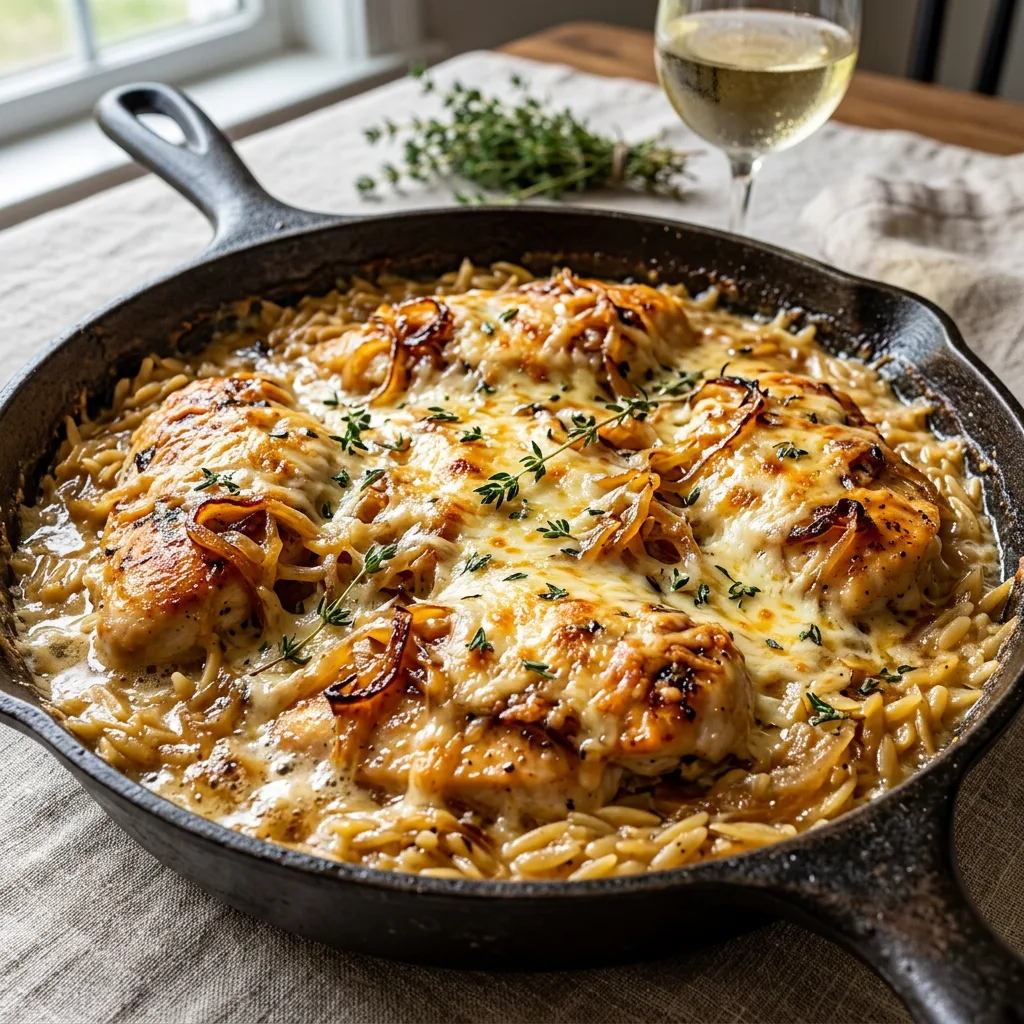
French Onion Chicken Orzo Bake combines caramelized onions, tender chicken breasts, and creamy pasta in one stunning oven-safe skillet. This elegant yet approachable dish delivers the sophisticated flavors of classic French onion soup transformed into a hearty main course. The recipe requires minimal hands-on time while producing restaurant-quality results that impress fathers and family alike.
| Metric | Value |
|---|---|
| Prep Time | 15 minutes |
| Cook Time | 50 minutes |
| Total Time | 65 minutes |
| Servings | 4 |
| Difficulty | Intermediate |
| Cuisine | French-Inspired |
Why This Recipe Works
I’ve cooked countless chicken dishes over the years, and this French Onion Chicken Orzo Bake stands out for its simplicity paired with sophisticated depth. The low-and-slow caramelization of onions creates a rich, sweet umami foundation that elevates every component of the dish. When you build flavor through patience during this initial step, the entire recipe benefits from that concentrated sweetness.
What makes this bake particularly special is how it transforms humble ingredients into something that tastes like you’ve spent hours in the kitchen. The white wine deglazes the pan, capturing all those browned bits that pack genuine flavor. The orzo pasta absorbs the savory chicken broth while staying tender, not mushy, because you control the cooking time precisely. According to How To Cook Chicken, boneless skinless breasts cook evenly and quickly, making them perfect for weeknight entertaining.
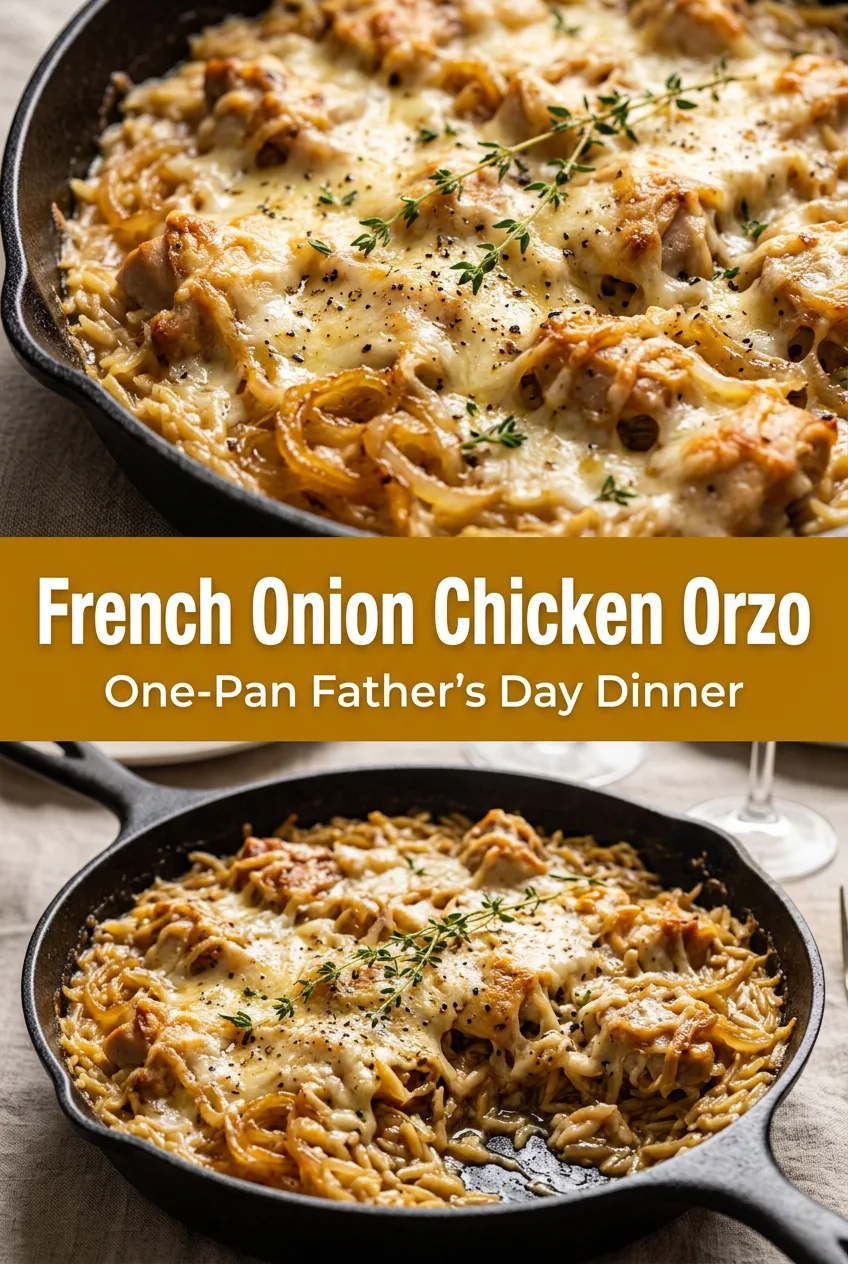
The light cream and Gruyere cheese create a silky, luxurious texture that brings all the components together harmoniously. The broiler finish adds a golden, bubbly top that looks impressive and tastes irresistible. This is genuinely the kind of dish that makes fathers feel celebrated without requiring you to spend your entire day cooking.
Ingredients
| Ingredient | Quantity | Notes and Alternatives |
|---|---|---|
| Boneless Skinless Chicken Breasts | 4 | Approximately 6-8 oz each. Pound to even thickness for uniform cooking. Can substitute with thighs for more flavor. |
| Large Yellow Onions | 2, thinly sliced | Sweet onions work well. Use a sharp knife or mandoline for consistent slicing. Red onions add earthiness. |
| Olive Oil | 3 tbsp | Extra-virgin for flavor. Cannot substitute with vegetable oil for best results. |
| Unsalted Butter | 2 tbsp | Critical for deep caramelization. Salted butter works but reduce added salt slightly. |
| Garlic Cloves | 4, minced | Fresh garlic only. Add near the end of onion cooking to prevent burning. |
| Fresh Thyme Leaves | 1 tsp | Dried thyme uses 1/3 teaspoon. Rosemary substitutes well but use slightly less. |
| Dry White Wine | 1/2 cup | Sauvignon Blanc or Pinot Grigio preferred. Chicken broth works in a pinch but loses complexity. |
| Low-Sodium Chicken Broth | 3 cups | Homemade broth creates superior depth. Room temperature works best for even cooking. |
| Dry Orzo Pasta | 1.5 cups | Small rice-shaped pasta. Cannot use regular long pasta without adjusting cooking time significantly. |
| Light Cream | 1/2 cup | Half-and-half works perfectly. Heavy cream creates overly rich results; whole milk creates thinner sauce. |
| Shredded Gruyere Cheese | 1 cup | Swiss cheese substitutes well. Freshly shredded melts better than pre-shredded varieties. |
| Salt and Black Pepper | To taste | Kosher salt preferred for better texture control. Add in stages to prevent over-seasoning. |
| Fresh Thyme Sprigs | For garnish | Optional but highly recommended for presentation and fresh flavor accent. |
Step-by-Step Instructions
Phase 1: Caramelizing the Onions
- Heat olive oil and butter together in a large oven-safe skillet over medium heat until butter foams, approximately 1 minute.
- Add thinly sliced yellow onions to the pan, spreading them evenly across the bottom.
- Cook onions uncovered for 25 to 30 minutes, stirring frequently every 3 to 4 minutes to ensure even browning.
- Watch for onions to transform from pale yellow to deep golden brown, developing sweet caramelized edges throughout.
- Reduce heat to medium-low if onions brown too quickly or if liquid appears instead of caramelization.
Phase 2: Searing Chicken and Building Flavor
- Push caramelized onions to the sides of the skillet, creating space in the center for the chicken.
- Season all four chicken breasts generously with salt and black pepper on both sides.
- Sear chicken breasts in the cleared center space for 3 to 4 minutes without moving them.
- Flip chicken breasts carefully and sear the opposite side for 3 to 4 minutes until golden brown but not fully cooked.
- Add minced garlic cloves and fresh thyme leaves directly to the pan around the chicken.
- Pour dry white wine into the pan, using a wooden spoon to scrape up all browned bits from the bottom.
Phase 3: Cooking the Orzo
- Pour low-sodium chicken broth into the skillet, distributing it evenly around the chicken and onions.
- Sprinkle dry orzo pasta over the entire mixture, stirring gently to distribute evenly.
- Bring the mixture to a simmer over medium-high heat, watching for small bubbles breaking the surface.
- Cook uncovered for 10 to 12 minutes, stirring occasionally, until orzo reaches tender texture and liquid is mostly absorbed.
- Test orzo by tasting a few pieces; it should have no hard center and feel creamy but not mushy.
Phase 4: Finishing with Cream and Cheese
- Stir light cream into the pan, folding it gently into the orzo mixture to create a silky sauce.
- Sprinkle half of the shredded Gruyere cheese over the entire bake, stirring to incorporate throughout.
- Top the bake with the remaining Gruyere cheese in an even layer across the entire surface.
- Transfer the skillet to the oven’s broiler setting, positioning the rack 6 inches from the heat source.
- Broil for 2 to 3 minutes until the cheese bubbles actively and turns golden brown on top.
- Remove from the broiler and let rest for 2 minutes before garnishing with fresh thyme sprigs.
Chef Tips for Perfect Results
- Invest time in proper onion caramelization by stirring every 3 to 4 minutes without rushing this step. The deeper the golden-brown color, the richer and more complex your final dish will taste. Rushing caramelization produces pale, bitter results.
- Use room-temperature chicken broth rather than cold broth to prevent temperature shock in the pan. This ensures even cooking of the orzo and prevents the dish from cooling down during the simmering phase.
- Pound chicken breasts to even thickness of about three-quarter inch before seasoning and searing. Uniform thickness guarantees all four pieces cook through simultaneously without any remaining pink centers.
- Freshly shred Gruyere cheese from a block rather than using pre-shredded cheese, which contains anti-caking agents that prevent smooth melting. Block cheese creates a creamier, more luxurious final texture.
- Watch the broiler constantly during the final 2 to 3 minutes because cheese can transition from golden to burnt in seconds. Set a timer and keep your kitchen door open slightly to monitor the top.
- Let the bake rest for 2 minutes after broiling to allow the cream and cheese to set slightly. This prevents the sauce from appearing too loose when plated.
Common Mistakes to Avoid
Rushing the onion caramelization stands as the most frequent error home cooks make with this dish. Many cook onions on high heat for just 10 to 12 minutes, producing pale, slightly burned results with harsh flavors. The solution requires cooking on medium heat with frequent stirring for the full 25 to 30 minutes, allowing moisture to evaporate gradually while sugars develop naturally.
Adding garlic too early causes it to burn and turn bitter, overwhelming the delicate caramel flavors. Always add garlic during the final minutes of onion cooking, right before the chicken sears. If you accidentally add it too early, discard that batch and start with fresh garlic to preserve the dish’s refined taste.
Overcooking orzo transforms it from tender to mushy and unappetizing in mere minutes. The key involves checking doneness at the 10-minute mark and removing the pan from heat the moment you taste no hard center. Residual heat continues cooking the pasta even after heat removal, so slightly underdone is preferable to overcooked.
Using pre-shredded cheese creates a grainy, clumpy sauce that never fully melts smoothly. The cellulose coating prevents proper melting and creates an unpleasant texture. Freshly shredded block cheese melts evenly into a silky, luxurious consistency that makes the dish feel truly special.
Skipping the broiler finish eliminates the crucial golden, bubbly texture that makes this dish visually impressive and adds textural contrast. Never prepare this as a stove-top only dish; the broiler step transforms the final presentation from ordinary to extraordinary.
Variations and Substitutions
| Original Ingredient | Substitution | Impact on Flavor |
|---|---|---|
| Gruyere Cheese | Swiss Cheese | Slightly milder, more delicate nutty notes; same melting quality. |
| Light Cream | Sour Cream | Tangier, more acidic finish with French onion soup undertones. |
| Dry White Wine | Chicken Broth | Loses complexity and depth; results in more straightforward, less sophisticated flavor profile. |
| Fresh Thyme | Dried Oregano | More Mediterranean character; herbaceous notes replace subtle earthiness. |
| Orzo Pasta | Small Shells (Conchigliere) | Similar creamy coating; slightly different mouthfeel but comparable results. |
| Boneless Skinless Breasts | Bone-In Thighs | Richer, more flavorful results; requires 5 to 7 additional minutes cooking time. |
| Yellow Onions | Sweet Onions (Vidalia) | Even sweeter caramel notes; reduces overall savory depth slightly. |
Serving Suggestions and Pairings
Present French Onion Chicken Orzo Bake directly from the skillet at the dinner table for impressive tableside service on Father’s Day. Pair this elegant dinner with a crisp Sauvignon Blanc or light Pinot Grigio that echoes the white wine in the sauce. The subtle acidity cuts through the richness of the cream and cheese beautifully.
Serve alongside a simple green salad dressed with lemon vinaigrette to add brightness and balance the rich, creamy components. Add crusty bread for soaking up any remaining sauce on plates. Consider Pesto Pasta Salad: Grilled Salmon Farfalle as a lighter alternative side if your gathering prefers seafood options.
Roasted asparagus or sautéed green beans provide a classic French accompaniment that complements the caramelized onions without competing for attention. For a more casual presentation, plate individual portions with extra thyme garnish and a small side of crusty bread. This meal works perfectly for special occasions, weeknight entertaining, or any dinner where you want to impress without spending hours cooking.
Storage and Reheating
| Method | Duration | Instructions |
|---|---|---|
| Refrigerator | 3 to 4 days | Store in an airtight glass container after cooling to room temperature. Do not cover while warm as condensation makes the top soggy. |
| Freezer | 2 to 3 months | Cool completely before transferring to freezer-safe containers. Leave 1 inch headspace for expansion. Thaw overnight in refrigerator before reheating. |
| Oven Reheating | 20 to 25 minutes | Preheat oven to 350°F. Transfer to oven-safe dish, cover with foil, and heat until warm throughout. Add 2 tablespoons milk if sauce seems dry. |
| Microwave Reheating | 2 to 3 minutes | Transfer single serving to microwave-safe bowl, add 1 tablespoon milk, cover loosely, and heat at 50% power, stirring halfway through. |
| Stovetop Reheating | 5 to 8 minutes | Place in skillet over medium-low heat, stirring frequently. Add cream or broth if needed to restore creamy sauce consistency. |
Nutritional Information
Approximate values per serving based on four equal portions:
| Nutrient | Amount per Serving |
|---|---|
| Calories | 545 |
| Protein | 42g |
| Total Fat | 22g |
| Saturated Fat | 10g |
| Carbohydrates | 38g |
| Dietary Fiber | 2g |
| Sugar | 8g |
| Sodium | 680mg |
This dish provides substantial protein from chicken breasts and cheese, supporting muscle maintenance and repair. The onions contribute vitamins and minerals while adding minimal calories through their natural sweetness. According to 5 A Day, incorporating vegetables like caramelized onions contributes meaningfully to daily nutritional goals.
Frequently Asked Questions
Can I make French Onion Chicken Orzo Bake ahead of time?
Yes, you can prepare this dish through the cream and first layer of cheese up to 24 hours in advance. Cover and refrigerate, then add the remaining cheese and broil just before serving for the best golden finish. Alternatively, complete the entire recipe, cool completely, and reheat in a 350°F oven for 20 to 25 minutes until warm throughout before serving to guests.
What if I don’t have an oven-safe skillet?
Transfer the entire mixture to a 9 by 13-inch baking dish after cooking the orzo on the stovetop. Proceed with adding cream, cheese, and broiling as directed, adjusting broiler time by 1 to 2 minutes since baking dishes conduct heat differently than cast iron. Ensure your baking dish has a heat-safe handle if you plan to broil it directly.
How do I know when the chicken is fully cooked?
The internal temperature of chicken breasts should reach 165°F when measured with a meat thermometer inserted into the thickest portion. Check temperature after the orzo finishes cooking to confirm doneness. If chicken appears undercooked, transfer the skillet to a 375°F oven for 5 to 8 additional minutes before returning to the broiler step.
Can I substitute regular pasta for orzo in this recipe?
Regular long pasta like penne or fettuccine requires significantly different cooking times and absorbs liquid differently than small rice-shaped orzo. If you must substitute, use short pasta like penne or small shells and reduce the initial simmering time to 8 to 10 minutes, checking frequently for doneness. The final texture and sauce consistency may differ slightly from the original recipe.
What pairs well with French Onion Chicken Orzo Bake for a complete dinner?
Serve with crisp green salad, roasted asparagus, or sautéed green beans for balanced vegetable intake and textural contrast. Crusty bread is essential for soaking up the creamy sauce. For a complete meal including additional vegetables, try Easy Dinner Ideas: Butternut Squash Pasta Sage as an alternative if preparing multiple courses.
Conclusion
French Onion Chicken Orzo Bake delivers sophisticated flavor and impressive presentation without excessive cooking time or complicated techniques. The caramelized onions create a rich foundation that elevates tender chicken breasts and creamy orzo into something truly restaurant-worthy. This Father’s Day dinner brings savory depth, luxurious textures, and that signature sweet and umami flavor profile that makes every bite memorable.

Father's Day Dinner: French Onion Chicken Orzo Bake
Ingredients
Method
- Heat olive oil and butter together in a large oven-safe skillet over medium heat until butter foams, approximately 1 minute.
- Add thinly sliced yellow onions to the pan, spreading them evenly across the bottom.
- Cook onions uncovered for 25 to 30 minutes, stirring frequently every 3 to 4 minutes to ensure even browning.
- Watch for onions to transform from pale yellow to deep golden brown, developing sweet caramelized edges throughout.
- Reduce heat to medium-low if onions brown too quickly or if liquid appears instead of caramelization.
- Push caramelized onions to the sides of the skillet, creating space in the center for the chicken.
- Season all four chicken breasts generously with salt and black pepper on both sides.
- Sear chicken breasts in the cleared center space for 3 to 4 minutes without moving them.
- Flip chicken breasts carefully and sear the opposite side for 3 to 4 minutes until golden brown but not fully cooked.
- Add minced garlic cloves and fresh thyme leaves directly to the pan around the chicken.
- Pour dry white wine into the pan, using a wooden spoon to scrape up all browned bits from the bottom.
- Pour low-sodium chicken broth into the skillet, distributing it evenly around the chicken and onions.
- Sprinkle dry orzo pasta over the entire mixture, stirring gently to distribute evenly.
- Bring the mixture to a simmer over medium-high heat, watching for small bubbles breaking the surface.
- Cook uncovered for 10 to 12 minutes, stirring occasionally, until orzo reaches tender texture and liquid is mostly absorbed.
- Test orzo by tasting a few pieces; it should have no hard center and feel creamy but not mushy.
- Stir light cream into the pan, folding it gently into the orzo mixture to create a silky sauce.
- Sprinkle half of the shredded Gruyere cheese over the entire bake, stirring to incorporate throughout.
- Top the bake with the remaining Gruyere cheese in an even layer across the entire surface.
- Transfer the skillet to the oven's broiler setting, positioning the rack 6 inches from the heat source.
- Broil for 2 to 3 minutes until the cheese bubbles actively and turns golden brown on top.
- Remove from the broiler and let rest for 2 minutes before garnishing with fresh thyme sprigs.