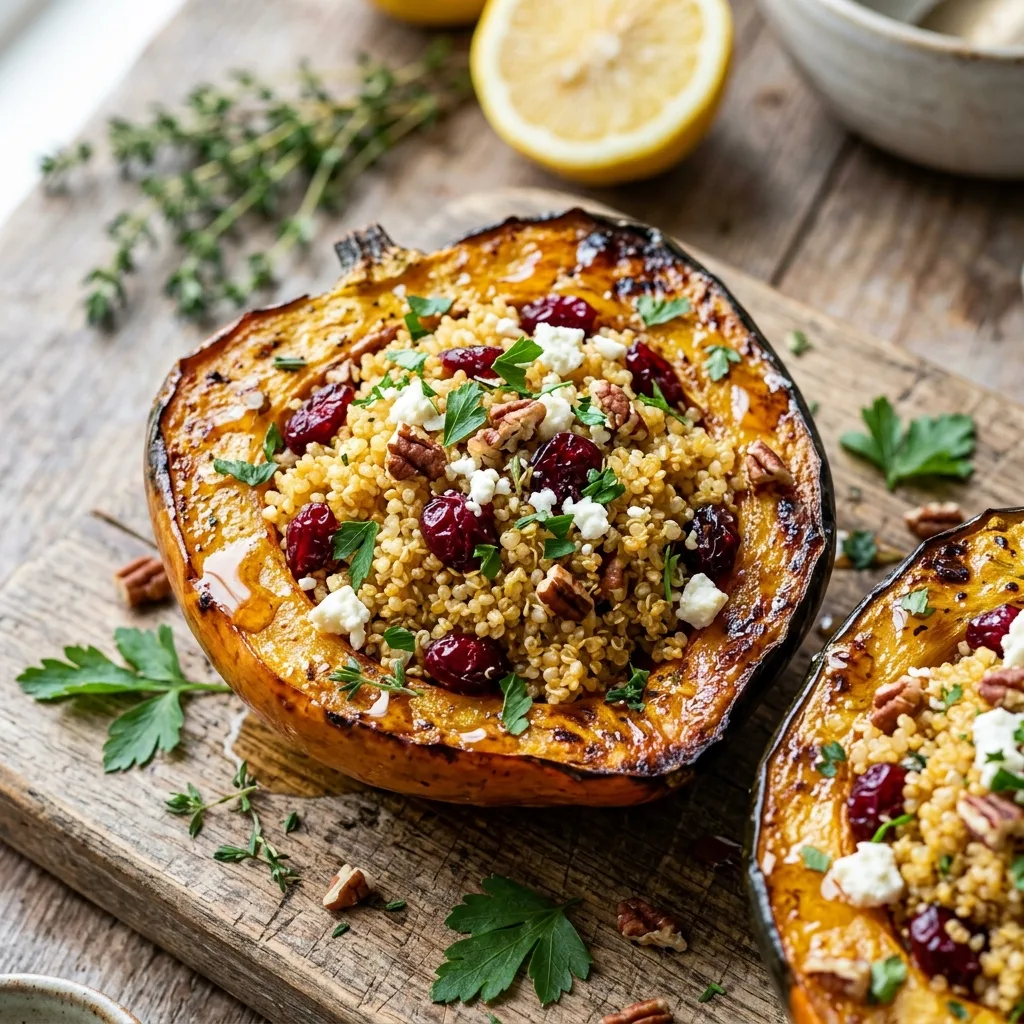
Herb roasted stuffed acorn squash is a nutrient-dense, anti-inflammatory side dish that combines caramelized seasonal vegetables with protein-rich quinoa and wholesome toppings. This recipe delivers vibrant flavors and impressive nutritional benefits in every bite. The golden-roasted squash halves create a naturally sweet vessel for a savory-tart quinoa filling. Maple syrup and warm spices create depth while fresh herbs provide fresh brightness and anti-inflammatory compounds.
| Metric | Value |
|---|---|
| Prep Time | 15 minutes |
| Cook Time | 45 minutes |
| Total Time | 60 minutes |
| Servings | 4 |
| Difficulty | Easy to Intermediate |
| Cuisine | Contemporary American |
Why This Recipe Works
I’ve developed this recipe because it perfectly balances anti-inflammatory ingredients with genuine satisfaction. The acorn squash provides natural sweetness and beta-carotene, while quinoa offers complete amino acids. Every element serves a nutritional purpose without compromising on taste. This dish proves that healthy eating doesn’t require sacrificing flavor or visual appeal.
The roasting technique caramelizes the squash’s natural sugars, creating crispy edges that contrast beautifully with tender flesh. This textural complexity keeps each bite interesting. The maple syrup and cinnamon amplify the squash’s inherent sweetness naturally. Research from Olive Oil Vs Vegetable Oil confirms that the quality olive oil used here provides oleocanthal, a compound with potent anti-inflammatory effects.
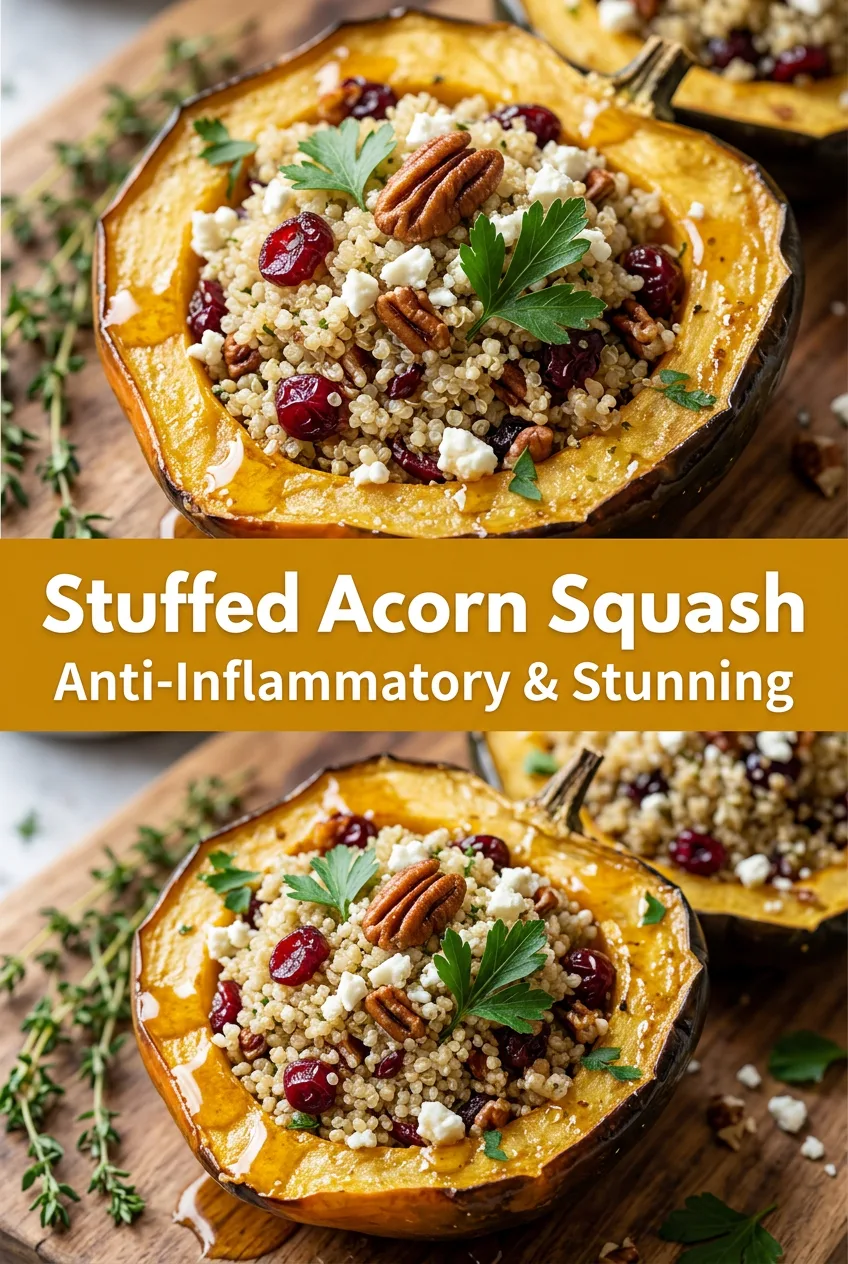
The quinoa filling delivers protein, fiber, and mineral density that transforms this into a complete main or substantial side. Pecans and feta add richness and umami depth. Dried cranberries provide tartness that cuts through the sweetness, while fresh lemon juice brightens the entire composition. The combination of roasted and fresh elements creates dynamic flavor profiles that evolve as you eat.
Ingredients
| Ingredient | Quantity | Notes and Alternatives |
|---|---|---|
| Acorn squash | 2 medium, halved and seeded | Choose squash of similar size for even cooking. Delicata or kabocha squash work well as substitutes. |
| Olive oil | 2 tbsp (roasting) + 1 tbsp (filling) | Extra virgin olive oil provides superior anti-inflammatory compounds. Use cold-pressed variety for maximum benefit. |
| Maple syrup | 1 tbsp (roasting) + drizzle (garnish) | Pure maple syrup contains polyphenols with antioxidant properties. Honey can replace this in equal amounts. |
| Fresh thyme leaves | 1 tsp (roasting) + 1 tsp (filling) | Fresh thyme contains thymol, a potent anti-inflammatory compound. Dried thyme requires half the quantity. |
| Cinnamon | 1/2 tsp | Ceylon cinnamon has lower coumarin levels than cassia varieties. Provides blood sugar regulation support. |
| Salt and pepper | To taste | Use sea salt for mineral content. Black pepper enhances curcumin absorption from other spices. |
| Dry quinoa | 1 cup | Always rinse quinoa under cool water to remove saponins and bitter flavor. Red or black quinoa adds visual interest. |
| Low-sodium vegetable broth | 2 cups | Homemade broth provides superior flavor and mineral content. Bone broth adds additional collagen and amino acids. |
| Dried cranberries | 1/4 cup | Look for unsweetened varieties to control sugar content. Dried cherries or pomegranate arils provide tartness alternatives. |
| Toasted pecans | 1/4 cup, roughly chopped | Toasting nuts releases beneficial compounds and enhances nutty flavor. Walnuts or almonds substitute well for anti-inflammatory benefits. |
| Fresh flat-leaf parsley | 2 tbsp, chopped | Parsley contains apigenin, a flavonoid with anti-inflammatory properties. Cilantro or fresh mint provide herbaceous alternatives. |
| Crumbled feta cheese | 2 tbsp | Feta’s tangy flavor complements sweet squash. Goat cheese or ricotta salata provide similar textural contrast. |
| Lemon juice | 1 tbsp, fresh squeezed | Fresh lemon juice provides vitamin C and brightness. Lime juice creates slightly different but equally appealing acidity. |
Step-by-Step Instructions
Prepare the Acorn Squash
- Preheat your oven to 400 degrees Fahrenheit, positioning the rack to the center.
- Rinse the acorn squash halves under cool running water and pat completely dry with paper towels.
- Combine 2 tablespoons of olive oil with 1 tablespoon of maple syrup, 1 teaspoon of fresh thyme leaves, 1/2 teaspoon of cinnamon, and salt and pepper in a small bowl.
- Brush this mixture generously across all cut surfaces and exterior edges of the squash halves.
- Place squash halves cut-side down on a parchment-lined baking sheet, ensuring they don’t touch.
- Roast at 400 degrees Fahrenheit for 30 to 35 minutes until the flesh becomes fork-tender and the edges develop golden caramelization.
Prepare the Quinoa Filling
- While the squash roasts, rinse 1 cup of dry quinoa thoroughly under cool water using a fine-mesh strainer.
- Pour 2 cups of low-sodium vegetable broth into a medium saucepan and bring to a boil over medium-high heat.
- Add the rinsed quinoa to boiling broth, stir once, and reduce heat to low.
- Cover the saucepan with a tight-fitting lid and simmer for 15 minutes.
- Remove from heat and let stand covered for 5 minutes to allow complete liquid absorption.
- Fluff the cooked quinoa gently with a fork to separate the grains.
- Add 1/4 cup of dried cranberries, 1/4 cup of roughly chopped toasted pecans, 2 tablespoons of chopped fresh flat-leaf parsley, 2 tablespoons of crumbled feta cheese, and 1 teaspoon of fresh thyme to the fluffed quinoa.
- Drizzle 1 tablespoon of olive oil and 1 tablespoon of fresh-squeezed lemon juice over the mixture.
- Toss all ingredients together gently until evenly distributed, then season generously with salt and pepper to your preference.
Assemble and Finish
- Remove the roasted squash halves from the oven when they’re fork-tender and edges are caramelized golden.
- Carefully flip each squash half cut-side up using kitchen tongs or a sturdy spoon.
- Divide the prepared quinoa stuffing evenly among the four squash halves, mounding it generously in the center cavity.
- Return the filled squash halves to the oven for 8 to 10 minutes to warm the filling through completely.
- Remove from the oven and arrange on a serving platter or individual plates.
- Garnish each stuffed squash half with fresh parsley and a light drizzle of maple syrup.
- Serve immediately while the squash is still warm and the filling is steaming.
Chef Tips for Perfect Results
- Select acorn squash that feel heavy for their size and have no soft spots, indicating good sugar content and proper ripeness. Avoid squash with blemished skins or thin walls, which cook unevenly.
- Brush the squash cut-sides with oil before roasting to prevent them from drying out and to promote caramelization. The parchment paper prevents sticking while allowing excellent browning on the exposed flesh.
- Toast your pecans in a dry skillet for 3 to 4 minutes at medium heat if starting with raw nuts, enhancing their oils and deepening their nutty flavor profile significantly. Stir constantly to prevent burning.
- Rinse quinoa thoroughly under running water for at least one minute to remove saponins, which create bitterness and can interfere with mineral absorption. This single step dramatically improves the final flavor.
- Use fresh herbs whenever possible, as their volatile oils contain the anti-inflammatory compounds you’re seeking. Fresh thyme and parsley should be added just before serving to preserve their bright, peppery notes.
- Taste the quinoa filling after seasoning and adjust salt and lemon juice to your preference. The filling should taste intentionally flavorful, as it will balance the natural sweetness of the roasted squash.
Common Mistakes to Avoid
Cutting the squash immediately after removing from the oven leads to burns and uneven cooking. The cut surfaces release steam unevenly, causing some areas to remain firm. Allow the roasted squash to rest for 2 minutes after removing from the oven. This resting period allows residual heat to penetrate evenly and provides a safer, more pleasant cutting experience.
Skipping the quinoa rinsing step results in a distinctly bitter, soapy-tasting filling that overshadows all other flavors. Saponins coat each grain naturally and require thorough water removal. Place quinoa in a fine-mesh strainer and rinse under cool running water for a full minute, agitating gently with your fingers. This crucial step takes mere moments but transforms the final dish quality completely.
Overfilling the squash halves causes the stuffing to spill onto the baking sheet during reheating, creating a messy presentation and dried-out filling edges. Mound the filling generously within the squash cavity without overflowing. The filling should dome slightly above the rim but not extend beyond the squash’s natural edges. This approach maintains moisture and contains the ingredients effectively.
Using old, stale pecans or toasting them improperly results in rancid flavors that contaminate the entire dish. Pecans contain oils that oxidize rapidly once exposed to oxygen. Purchase pecans from sources with high turnover and store them in airtight containers in your freezer. Toast them fresh daily for optimal flavor and health benefits.
Neglecting to season the quinoa filling adequately creates a bland, underseasoned component that fails to complement the sweet roasted squash. Build flavor gradually, tasting after each seasoning addition. The filling should taste distinctly savory and bright, standing on its own before combining with the naturally sweet squash. Proper seasoning ensures the two elements balance beautifully.
Variations and Substitutions
| Ingredient | Substitution | Impact on Flavor and Texture |
|---|---|---|
| Acorn squash | Delicata squash or kabocha squash | Delicata offers buttery texture and milder sweetness; kabocha provides deeper, more complex sweetness with denser flesh. |
| Quinoa | Wild rice, farro, or millet | Wild rice adds earthiness and chewiness; farro provides nutty depth; millet creates lighter texture with subtle sweetness. |
| Dried cranberries | Dried cherries, pomegranate arils, or raisins | Cherries provide deeper tartness; pomegranate arils add juiciness and fresh crunch; raisins increase sweetness without tartness. |
| Toasted pecans | Walnuts, almonds, or sunflower seeds | Walnuts add earthiness and superior omega-3 content; almonds create lighter crunch; sunflower seeds reduce fat content. |
| Feta cheese | Goat cheese, ricotta salata, or aged cheddar | Goat cheese provides tanginess with creamier texture; ricotta salata adds firmer crumble; cheddar deepens savory notes. |
| Maple syrup | Honey, date paste, or balsamic reduction | Honey offers floral sweetness without maple complexity; date paste creates caramel notes; balsamic adds vinegar-forward acidity. |
| Fresh thyme | Fresh sage, oregano, or rosemary | Sage provides more earthiness and slight peppery heat; oregano adds Mediterranean brightness; rosemary creates stronger herbal intensity. |
| Flat-leaf parsley | Cilantro or fresh mint | Cilantro introduces bright citrus notes with polarizing flavor; mint adds refreshing coolness and digestive benefits. |
Serving Suggestions and Pairings
Serve herb roasted stuffed acorn squash as a stunning centerpiece at autumn dinner gatherings alongside roasted root vegetables and crispy kale. The dish’s anti-inflammatory properties and satisfying substance make it ideal for Thanksgiving tables seeking lighter alternatives to traditional sides. Pair it with grain-based salads like our Pesto Pasta Salad: Grilled Salmon Farfalle for contrasting textures and flavor profiles.
This stuffed squash works beautifully for plant-based dinner parties, providing the heft and nutritional completeness that vegan guests expect. Serve it alongside a simple arugula salad dressed with lemon vinaigrette and shaved Parmesan. The earthiness of the greens complements the caramelized sweetness perfectly. For smaller gatherings, serve as an elegant lunch course with complementary proteins like grilled chicken breast or baked salmon fillet.
Create a complete breakfast scenario by pairing a cold squash and quinoa salad the next morning with our Breakfast Ideas: Spinach Feta Egg Muffins. The flavors transition beautifully from dinner to morning when served cold with extra lemon juice and fresh herbs. For holiday entertaining, plate individual stuffed squash halves on beds of arugula or microgreens, creating impressive individual presentations.
Complement this anti-inflammatory side dish with proteins that share similar healing properties. Serve alongside herb-roasted chicken thighs, baked wild-caught salmon, or grilled tempeh for complete nutritional profiles. The Easy Dinner Ideas: Butternut Squash Pasta Sage offers a wonderful companion dish that echoes similar flavor notes in pasta form for those seeking variety.
For wine pairing, select medium-bodied whites like Riesling or Sauvignon Blanc, whose acidity mirrors the lemon juice and cranberries in the filling. These wines enhance the quinoa’s earthiness while complementing the roasted squash’s sweetness. Alternatively, light red wines like Pinot Noir offer subtle tannins that support the dish’s complexity without overwhelming delicate flavors.
Storage and Reheating
| Method | Duration | Instructions |
|---|---|---|
| Refrigerator Storage | 3 to 4 days | Cool completely to room temperature. Cover tightly with plastic wrap or store in airtight containers. The quinoa filling keeps separate from squash for best texture, though combined storage is acceptable. |
| Freezer Storage | 2 to 3 months | Cool completely and wrap individual squash halves tightly in plastic wrap, then aluminum foil. Label with date clearly. Freeze filling separately in airtight containers for flexible meal planning. |
| Oven Reheating | 20 to 25 minutes | Preheat oven to 350 degrees Fahrenheit. Place refrigerated stuffed squash on a baking sheet covered with foil. Bake for 15 to 20 minutes until heated through. Remove foil in final 5 minutes to restore slight textural crispness if desired. |
| Microwave Reheating | 3 to 4 minutes | Place stuffed squash halves on a microwave-safe plate, cover loosely with damp paper towel. Microwave on 50 percent power for 3 to 4 minutes, checking halfway through. Higher power creates uneven heating and texture loss. |
| Stovetop Reheating | 10 to 12 minutes | Place stuffed squash halves cut-side down in a skillet with 1/4 cup water over medium-low heat. Cover with lid and heat gently until warmed through. This method restores some textural moisture lost during initial cooking. |
| Cold Serving | Immediate | Serve chilled as a salad-style dish the next day, drizzling with extra lemon juice and olive oil. Cold leftover squash and quinoa combine beautifully with fresh greens for light summer lunches. |
Nutritional Information
The following nutritional values are approximate and calculated per serving, assuming 4 servings total. Actual nutritional content may vary based on specific ingredient brands and portion sizes. For precise tracking, utilize Salt Intake guidelines when adjusting seasoning.
| Nutrient | Amount per Serving |
|---|---|
| Calories | 385 |
| Protein | 12 grams |
| Total Fat | 18 grams |
| Saturated Fat | 3 grams |
| Carbohydrates | 48 grams |
| Dietary Fiber | 8 grams |
| Sugar | 14 grams |
| Sodium | 285 milligrams |
| Vitamin A | 195% Daily Value |
| Vitamin C | 28% Daily Value |
| Iron | 21% Daily Value |
| Magnesium | 31% Daily Value |
| Potassium | 12% Daily Value |
Frequently Asked Questions
Can I prepare herb roasted stuffed acorn squash the day before serving?
Yes, you can prepare this anti-inflammatory side dish completely through step 16, then cover and refrigerate for up to 24 hours before the final warming step. Reheat as directed in the storage section for best results. This make-ahead approach works excellently for entertaining, allowing you to focus on other dishes during service.
How do I know when the acorn squash is properly roasted and fork-tender?
The squash flesh should yield easily to a fork when pressed firmly, with no resistance at the thickest point near the skin. The edges should display golden caramelization and slight charring. Check at 30 minutes, and if resistance remains, continue roasting in 2-minute increments until the flesh yields completely to gentle pressure without splitting.
What should I do if my quinoa turns out mushy or gummy?
Mushy quinoa indicates either too much water absorption or extended cooking time after the liquid reaches completion. Use exactly 2 cups broth per 1 cup quinoa, and remove from heat immediately when the liquid fully absorbs at 15 minutes. The key is the 5-minute resting period with the lid still on, which completes cooking through residual heat without liquid saturation.
Can I substitute the pecans with a different nut or seed for allergy purposes?
Walnuts, almonds, sunflower seeds, or pumpkin seeds work excellently as replacements in equal quantities. Each option provides different nutritional benefits while maintaining textural contrast. Toast your chosen substitute for 3 to 4 minutes before adding to the filling to ensure maximum flavor development and removal of any antinutrient compounds.
Is this herb roasted stuffed squash truly anti-inflammatory, and which ingredients provide those benefits?
Yes, the primary anti-inflammatory components include the extra virgin olive oil’s polyphenols, fresh thyme’s thymol compound, quinoa’s complete amino acid profile, and pecans’ omega-3 fatty acids. Cranberries and parsley contribute additional antioxidant polyphenols that combat systemic inflammation. The combination of these whole, minimally processed ingredients creates a genuinely therapeutic dish backed by nutritional science.
Conclusion
Herb roasted stuffed acorn squash delivers serious anti-inflammatory nutrition without sacrificing any of the comfort and satisfaction you crave. This side dish combines autumn’s best seasonal produce with protein-rich quinoa and healing herbs into a single elegant presentation. Whether you’re planning holiday entertaining or seeking weeknight nourishment, this recipe proves that nutritious food tastes exceptional. Serve warm with fresh garnishes, and experience the warming, restorative power of whole foods in every bite.

Anti-Inflammatory Side Dish: Herb Roasted Stuffed Acorn Squash
Ingredients
Method
- Preheat oven to 400 degrees Fahrenheit
- Rinse acorn squash halves and pat dry
- Combine 2 tbsp olive oil with 1 tbsp maple syrup, 1 tsp fresh thyme, 1/2 tsp cinnamon, salt and pepper
- Brush mixture generously on all squash surfaces
- Place squash halves cut-side down on parchment-lined baking sheet
- Roast for 30 to 35 minutes until fork-tender with golden caramelized edges
- Rinse 1 cup quinoa under cool water
- Bring 2 cups vegetable broth to boil
- Add rinsed quinoa to boiling broth and stir
- Reduce heat to low and cover
- Simmer for 15 minutes
- Remove from heat and let stand covered for 5 minutes
- Fluff cooked quinoa with a fork
- Add 1/4 cup dried cranberries, 1/4 cup pecans, 2 tbsp parsley, 2 tbsp feta, and 1 tsp fresh thyme to quinoa
- Drizzle 1 tbsp olive oil and 1 tbsp lemon juice over mixture
- Toss all ingredients until evenly distributed
- Season with salt and pepper to taste
- Flip roasted squash halves cut-side up
- Divide quinoa stuffing evenly among squash halves
- Return to oven for 8 to 10 minutes to warm filling through
- Remove from oven and arrange on serving platter
- Garnish with fresh parsley and drizzle of maple syrup
- Serve immediately while warm