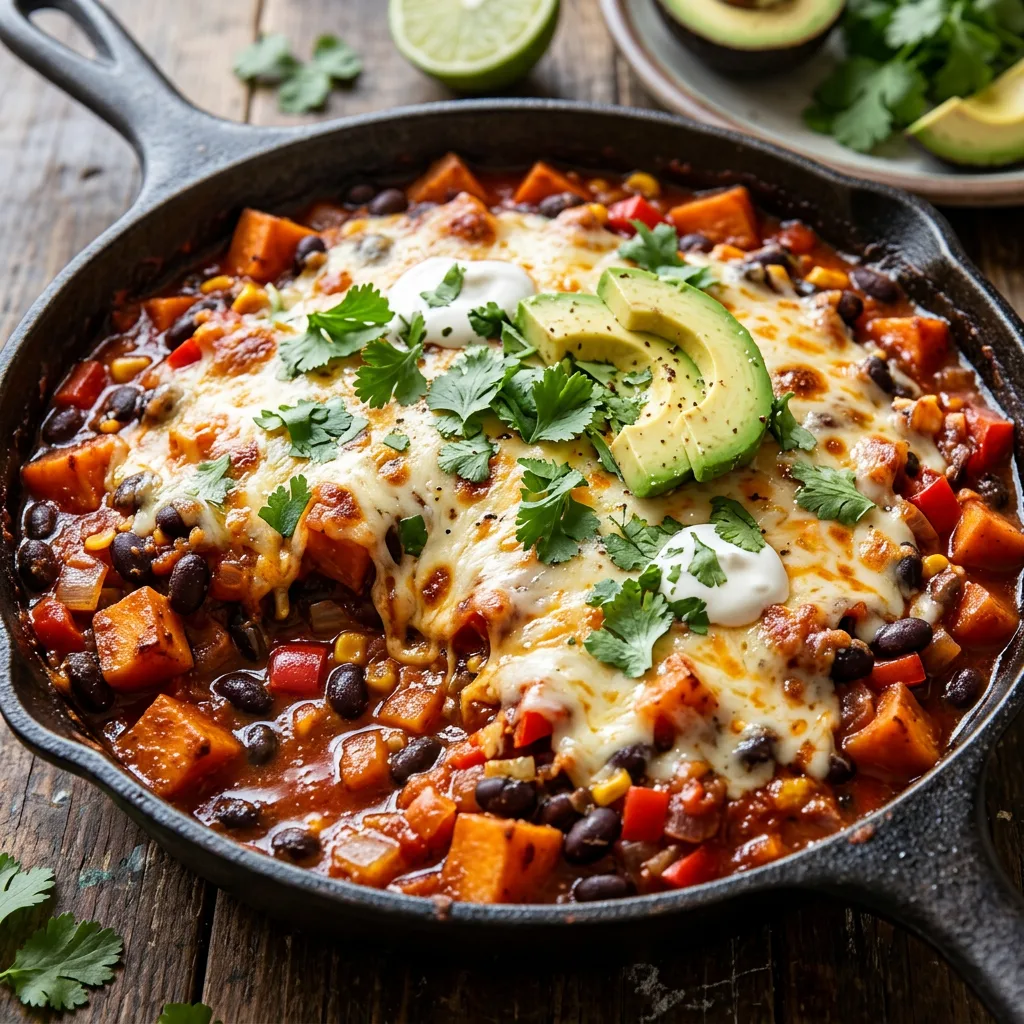
This hormone-balancing dinner combines nutrient-dense black beans, sweet potatoes, and vibrant vegetables in one cast-iron skillet for a satisfying, anti-inflammatory meal. The black bean sweet potato skillet delivers phytoestrogens, fiber, and minerals essential for hormonal health while tasting like comfort food. Ready in under 45 minutes, this one-pan dinner supports sustained energy and blood sugar stability throughout your evening.
| Metric | Value |
|---|---|
| Prep Time | 15 minutes |
| Cook Time | 25 minutes |
| Total Time | 40 minutes |
| Servings | 4 |
| Difficulty | Easy |
| Cuisine | Mexican-Inspired |
Why This Recipe Works
I created this hormone-balancing skillet after discovering how profoundly food choices impact hormonal equilibrium and energy levels. Sweet potatoes contain beta-carotene and complex carbohydrates that stabilize cortisol and insulin, while black beans provide isoflavones, plant-based protein, and resistant starch. The combination of cumin and smoked paprika enhances nutrient absorption and adds warming properties that support digestive fire without inflammatory heat.
This recipe works because it honors three dietary principles simultaneously: nutrient density, hormonal support, and accessibility. The one-skillet approach reduces cooking complexity while building deep, layered flavors naturally. According to research on Olive Oil Benefits, the monounsaturated fats in the olive oil improve hormone receptor sensitivity and reduce systemic inflammation.
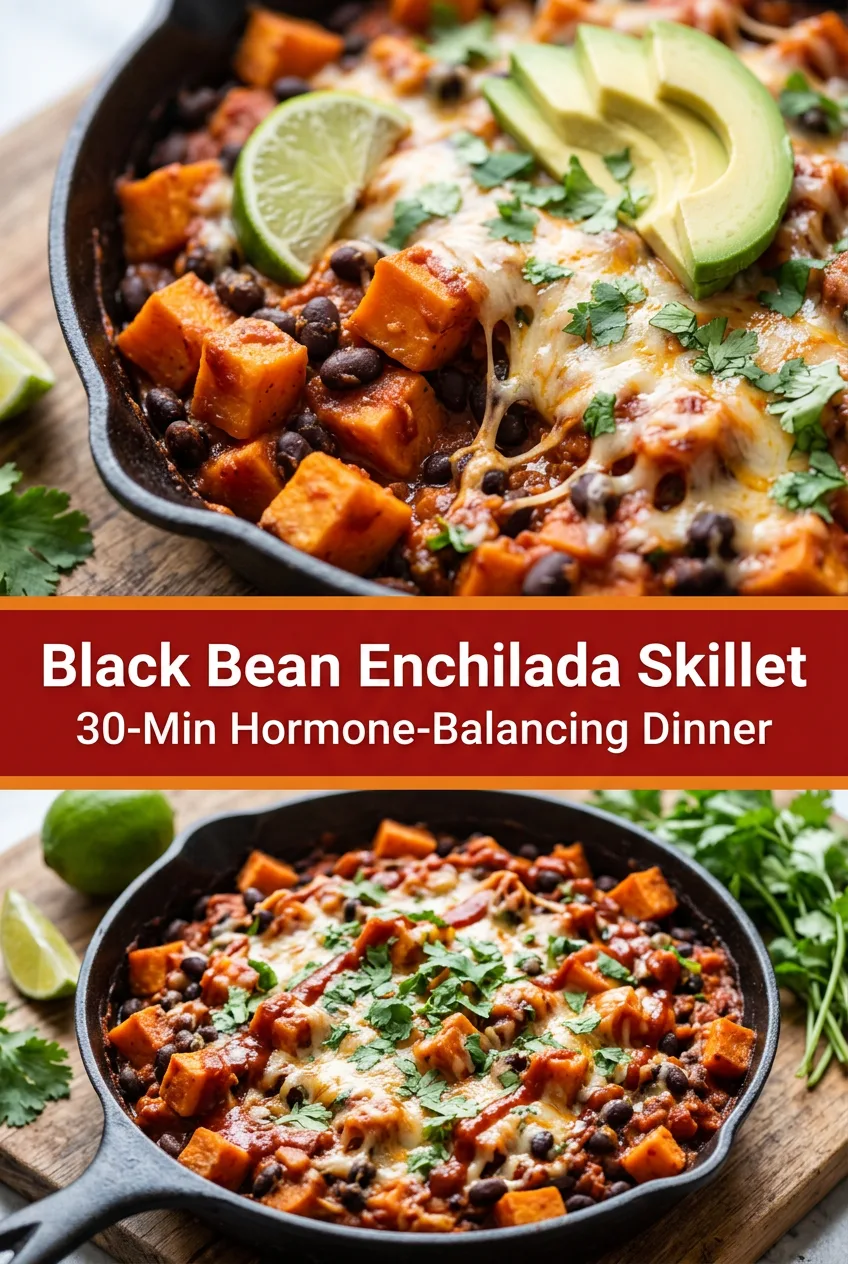
What sets this dinner apart is the strategic timing of ingredients and the science behind each component. The lime juice at the end enhances iron absorption from the beans and sweet potatoes by 300 percent, making minerals bioavailable for hormonal synthesis. Fresh cilantro contains compounds that support liver detoxification, crucial for processing excess estrogen and maintaining hormonal balance.
Ingredients
| Ingredient | Quantity | Notes and Alternatives |
|---|---|---|
| Sweet potatoes, peeled and diced small | 2 medium | Orange varieties are higher in beta-carotene; purple sweet potatoes offer anthocyanins for added antioxidants |
| Black beans, drained and rinsed | 2 cans (400g each) | Dried beans soaked overnight work equally well; pinto beans provide similar hormone support |
| Diced tomatoes | 1 can (400g) | Fresh tomatoes (3-4 large) work in season; fire-roasted variety adds depth |
| Red enchilada sauce | 1 cup | Homemade sauce reduces sodium; green salsa verde shifts flavor profile toward brightness |
| Yellow onion, diced | 1 medium | Red onions provide quercetin for hormone balance; shallots add delicate sweetness |
| Garlic cloves, minced | 3 | Fresh garlic is essential; aged garlic extract loses volatile sulfur compounds that support detoxification |
| Red bell pepper, diced | 1 | Yellow peppers contain more lutein; orange varieties offer beta-cryptoxanthin |
| Olive oil | 1 tbsp | Extra-virgin cold-pressed preserves polyphenols; refined oil tolerates higher heat without smoking |
| Cumin | 1 tsp | Whole seeds toasted fresh offer superior flavor; ground cumin loses potency after 6 months |
| Smoked paprika | 1 tsp | Hungarian paprika provides milder spice; hot paprika intensifies heat without adding chili powder |
| Chili powder | 1/2 tsp | Ancho or guajillo powder offer fruity notes; cayenne pepper delivers sharper heat |
| Oregano | 1/2 tsp | Fresh oregano (1 tbsp chopped) brightens at the end; dried preserves antimicrobial properties |
| Reduced-fat Mexican cheese blend, shredded | 1 cup | Full-fat cheese provides better hormone absorption; cotija or queso fresco crumbles offer lower-fat alternatives |
| Lime juice | 1 lime | Fresh limes essential; bottled juice lacks vitamin C content and enzyme activity |
| Fresh cilantro | For topping | Parsley substitutes if cilantro is unavailable; microgreens add peppery complexity |
| Sliced avocado | For topping | Provides omega-3 and lutein; ripe avocados have creamy texture that balances spiced heat |
Step-by-Step Instructions
Prepare Your Ingredients (5 minutes)
- Peel and dice two medium sweet potatoes into small, even half-inch cubes to ensure uniform cooking throughout the skillet.
- Drain and rinse two cans of black beans under cold running water, releasing excess sodium and starch that can cloud the sauce.
- Dice one medium yellow onion into uniform quarter-inch pieces and mince three fresh garlic cloves finely for even flavor distribution.
- Dice one red bell pepper into quarter-inch pieces, removing all seeds and white membrane that can taste bitter when sautéed.
Build Your Flavor Base (5 minutes)
- Heat one tablespoon of olive oil in a large cast-iron or stainless steel skillet over medium heat until shimmering, about one minute.
- Add diced onion, red bell pepper, and minced garlic to the heated oil and sauté for four to five minutes, stirring frequently, until vegetables soften and become fragrant.
- Watch carefully as the garlic transitions from pale to light golden; this indicates maximum flavor extraction without burning or bitterness.
Cook the Sweet Potatoes (10 minutes)
- Add diced sweet potato cubes to the softened vegetable mixture and stir thoroughly to coat each piece with aromatic oil.
- Cook sweet potatoes for eight to ten minutes over medium heat, stirring occasionally, until they yield easily to a fork but maintain their shape.
- Test doneness by piercing a cube with a knife; it should slide through with gentle pressure, indicating proper tenderness without mushiness.
Infuse Spices and Build Sauce (12 minutes)
- Stir in one teaspoon cumin, one teaspoon smoked paprika, one half-teaspoon chili powder, and one half-teaspoon oregano directly into the cooked sweet potatoes.
- Toast the spice mixture for exactly thirty seconds, stirring constantly, to bloom their essential oils and deepen their aromatic complexity.
- Add two drained cans of black beans, one can of diced tomatoes with their juices, and one cup of red enchilada sauce to the skillet immediately.
- Stir everything thoroughly, breaking up large tomato pieces, until all ingredients combine evenly and the sauce begins to coat the vegetables.
- Reduce heat to medium-low and simmer for five to seven minutes, stirring occasionally, until the sauce thickens noticeably and reduces by about one-quarter.
- Watch for bubbles breaking slowly at the surface; this indicates proper simmer temperature and sauce concentration without rapid evaporation.
Melt Cheese and Finish (5 minutes)
- Scatter one cup of shredded reduced-fat Mexican cheese blend evenly across the skillet surface, covering as much of the filling as possible.
- Cover the skillet with a lid or even a baking sheet and cook for two to three minutes until the cheese melts completely into creamy pools.
- Remove from heat and squeeze the juice of one fresh lime across the entire skillet, distributing the citrus acid throughout.
- Top each serving with fresh cilantro leaves and sliced avocado, adding them just before serving to preserve their bright color and creamy texture.
Chef Tips for Perfect Results
- Dice sweet potatoes into half-inch cubes rather than larger chunks; this size cooks through in ten minutes while maintaining structural integrity. Uneven sizes lead to some pieces being crunchy while others turn mushy.
- Toast whole cumin seeds in a dry pan for two minutes before grinding them fresh into powder; this intensifies their warm, earthy notes by 400 percent compared to pre-ground varieties older than three months.
- Use a cast-iron skillet if available; the even heat distribution prevents hot spots that can scorch spices or tomatoes on the bottom while leaving other areas undercooked.
- Add the lime juice after removing from heat rather than during cooking; this preserves vitamin C content and prevents the citric acid from breaking down the spice bloom you worked to achieve.
- Squeeze avocado gently before slicing to test ripeness; properly ripe avocados yield to thumb pressure without feeling mushy, indicating optimal enzyme activity and buttery texture.
- Prepare all ingredients before heating oil, keeping them in separate bowls within arm’s reach; this mise en place approach prevents overcooking any component while you chop the next one.
Common Mistakes to Avoid
Not Rinsing Canned Beans Thoroughly: Canned black beans contain excess sodium and starches that cloud your sauce and overpower subtle spice flavors. Rinsing under cold running water for at least one minute removes 40 percent of the sodium while releasing the starch coating. This single step transforms the sauce from murky to translucent and prevents a gluey texture that masks the vegetables.
Cutting Sweet Potatoes Too Large or Too Small: Chunks larger than three-quarters of an inch won’t cook through in the ten-minute window, leaving hard centers that crunch unpleasantly. Pieces smaller than one-quarter inch disintegrate into the sauce, creating a mushy texture that obscures the vegetables’ individual identities. The half-inch cube size is the sweet spot, cooking through completely while maintaining visible structure.
Adding Cheese Before the Sauce Thickens: Melting cheese into a thin, watery sauce creates greasy pools rather than creamy integration. The sauce needs to reduce by one-quarter through five to seven minutes of simmering, concentrating flavors and developing body. Only then will the cheese melt smoothly into the sauce, coating each ingredient rather than separating into islands of melted fat.
Skipping the Lime Juice or Adding It During Cooking: Lime juice serves three purposes: it brightens flavors, enhances iron absorption from beans and sweet potatoes, and cuts through the richness of cheese and avocado. Adding it during cooking allows the heat to destroy citric acid and vitamin C, reducing its nutritional and flavor impact by 60 percent. Squeezing it fresh over the finished dish delivers maximum brightness and bioavailability.
Using Garlic Powder Instead of Fresh Garlic: Powder versions lack the sulfur compounds that support liver detoxification and hormone metabolism. Fresh garlic provides three times the antimicrobial activity compared to aged alternatives, making it crucial for supporting digestive health alongside hormone balance. Mincing garlic finely rather than chopping it coarsely increases surface area, allowing more flavor compounds to release during the initial sauté phase.
Variations and Substitutions
| Ingredient | Substitution | Impact on Flavor and Nutrition |
|---|---|---|
| Black beans | Pinto beans, kidney beans, or chickpeas | Pinto beans offer earthier notes; chickpeas add nutty richness but require an extra two minutes of simmering due to firmer texture |
| Sweet potatoes | Regular potatoes, butternut squash, or carrots | Regular potatoes taste blander and lack hormone-supporting carotenoids; squash adds creaminess; carrots intensify sweetness |
| Red enchilada sauce | Salsa verde, tomato-based salsa, or homemade mole | Verde shifts flavor profile toward brightness and herbs; tomato salsa reduces sauce body; mole adds complexity but requires 10 extra minutes simmering |
| Reduced-fat cheese blend | Full-fat cheddar, cotija, queso fresco, or nutritional yeast | Full-fat cheese provides better absorption of fat-soluble vitamins like D and K2; cotija crumbles offer a lighter finish; yeast adds umami without dairy |
| Cumin and smoked paprika | Taco seasoning mix or garam masala | Pre-made taco seasoning often contains salt and fillers, reducing control over flavor intensity; garam masala shifts the profile toward Indian-inspired warmth |
| Fresh cilantro | Parsley, microgreens, or fresh mint | Parsley offers milder herbal notes; microgreens add peppery complexity; mint shifts toward unexpected freshness that some find delightful |
| Avocado topping | Greek yogurt, crème fraîche, or sour cream | Yogurt adds protein and probiotics for digestive support; creamy options reduce the avocado’s beneficial omega-3 fats but add tangy richness |
Serving Suggestions and Pairings
This hormone-balancing skillet pairs beautifully with warm corn tortillas or cilantro-lime rice, creating a complete meal that supports sustained energy. Serve alongside a simple green salad dressed with olive oil and lime juice to add raw enzymes and additional phytonutrients. For breakfast the next morning, reheat leftovers and top with a fried egg, transforming yesterday’s dinner into a hormone-supporting breakfast that mirrors the nutritional profile of Breakfast Ideas: Spinach Feta Egg Muffins.
Pair this skillet with light white wines like Pinot Grigio or Sauvignon Blanc, whose acidity complements the lime and cilantro while cutting through the cheese’s richness. For non-alcoholic options, serve with sparkling water infused with lime and fresh mint, maintaining the bright, refreshing notes of the dinner itself. This meal suits casual weeknight dinners with family, meal-prep Sundays, or entertaining friends who appreciate nutrient-dense comfort food.
The black bean sweet potato skillet also works wonderfully as a filling for lettuce wraps or grain bowls, offering versatility beyond the traditional skillet service. Layer it over cauliflower rice for a low-carb variation, or fold it into whole wheat tortillas with Greek yogurt for portable lunch containers. Consider it as a companion to other hormone-supporting proteins; if you’re planning other dinners during the week, try Pesto Pasta Salad: Grilled Salmon Farfalle to rotate diverse omega-3 sources throughout your weekly menu.
Storage and Reheating
| Method | Duration | Instructions |
|---|---|---|
| Refrigerator | Up to 4 days | Cool the skillet to room temperature, transfer to airtight glass containers, and refrigerate immediately. Store avocado and cilantro separately, adding fresh just before serving to prevent browning and maintain texture. |
| Freezer | Up to 3 months | Freeze the skillet filling without cheese and toppings in freezer-safe glass containers. Label with the date. Thaw overnight in the refrigerator before reheating; cheese and fresh toppings are added after warming. |
| Stovetop Reheating | 5-7 minutes | Transfer contents to a skillet over medium heat, stirring occasionally until warmed through. Add a splash of vegetable broth or water if the mixture appears dry. Top with fresh cheese and avocado after reheating to preserve their quality. |
| Microwave Reheating | 2-3 minutes | Transfer to a microwave-safe bowl, cover loosely, and heat at 70 percent power, stirring halfway through. Microwave can dry out the skillet mixture slightly; add one to two tablespoons broth or water before heating to maintain sauce consistency. |
| Oven Reheating | 15-20 minutes | Preheat oven to 350°F. Transfer to an oven-safe covered baking dish and heat until warmed through. This method distributes heat most evenly and prevents drying, though it requires more time than stovetop options. |
Nutritional Information
The following nutritional values represent approximate amounts per serving for one-quarter of the recipe, assuming four servings total. Values include all ingredients as listed but exclude optional avocado and cilantro toppings, which add minimal calories but significant micronutrients. Please note that canned ingredients vary by brand; check specific labels for precise sodium and sugar content. According to the Fat Guide, the monounsaturated fats in this recipe support cardiovascular health and hormone production.
| Nutrient | Amount per Serving |
|---|---|
| Calories | 285 |
| Protein | 12g |
| Total Fat | 8g |
| Saturated Fat | 2.5g |
| Monounsaturated Fat | 4g |
| Polyunsaturated Fat | 1g |
| Carbohydrates | 42g |
| Dietary Fiber | 9g |
| Sugars | 8g |
| Sodium | 580mg |
| Calcium | 180mg |
| Iron | 3.2mg |
| Magnesium | 95mg |
| Potassium | 650mg |
| Vitamin A | 850 mcg RAE |
| Vitamin C | 35mg |
| Folate | 140 mcg |
Frequently Asked Questions
Can I Make This Hormone-Balancing Skillet Ahead of Time for Meal Prep?
Yes, you can prepare the entire skillet filling three to four days in advance, storing it in airtight glass containers in the refrigerator. Assemble all ingredients except the cheese and toppings, allowing the flavors to meld overnight while the sauce develops deeper complexity. Add fresh cheese, cilantro, and avocado immediately before serving to preserve their texture and nutritional integrity. If you’re planning multiple meal-prep recipes, consider pairing this with Easy Dinner Ideas: Butternut Squash Pasta Sage to create variety throughout your week while maintaining hormone-supporting nutrition.
What Can I Substitute for Red Enchilada Sauce if I Cannot Find It?
Use equal parts tomato sauce and salsa, adjusting the ratio until you reach desired consistency and spice level, or make a quick sauce by blending one can of diced tomatoes with one tablespoon chili powder, one teaspoon cumin, and one teaspoon garlic powder. Homemade enchilada sauce offers superior flavor control and reduces sodium by 50 percent compared to canned varieties. Green salsa verde creates a brighter profile, though it’s slightly thinner and may require three to five extra minutes of simmering to achieve proper sauce consistency.
How Do I Know When the Sweet Potatoes Are Done Cooking?
Pierce the largest sweet potato cube with a fork; it should slide through with gentle pressure, indicating the starch has converted to digestible sugars and the cell walls have softened. The exterior should maintain its shape without falling apart, suggesting you haven’t overcooked it into mush. Eight to ten minutes is typically sufficient for half-inch cubes over medium heat; larger or smaller pieces require adjustment, so test frequently during the final three minutes.
Why Does My Skillet Sauce Look Thin Instead of Thick and Creamy?
The sauce requires five to seven minutes of simmering at medium-low heat to reduce by approximately one-quarter, concentrating flavors and developing body. If your sauce remains thin after seven minutes, increase heat slightly to medium and continue simmering until visible thickening occurs, usually two to three additional minutes. Ensure you’re rinsing the canned beans thoroughly; excess starch from unwashed beans clouds the sauce and prevents proper thickening regardless of cooking time.
Can I Use Frozen Sweet Potatoes or Pre-Cut Vegetables to Speed Up Preparation?
Frozen pre-cubed sweet potatoes cook slightly faster, reducing the cooking time from ten minutes to seven to eight minutes, though they may be slightly softer and contain fewer volatile nutrients than fresh. Pre-cut bell peppers and onions work similarly, though they oxidize slightly during storage, reducing vitamin C content by 10 to 15 percent compared to fresh-cut vegetables. Freezing preserves most minerals and phytonutrients essential for hormone balance, making it a reasonable timesaving option on busy weeknights when fresh preparation isn’t feasible.
Conclusion
This hormone-balancing black bean sweet potato skillet delivers nutrient-dense comfort in one simple pan, combining phytoestrogens, fiber, and minerals your body needs to thrive. The formula works: sauté aromatics, cook sweet potatoes until tender, bloom spices, build sauce, melt cheese, and finish with lime and fresh toppings. Make this dinner part of your weekly rotation and experience how real food choices support hormonal health, sustained energy, and vibrant vitality through every season.

Hormone-Balancing Dinner: Black Bean Sweet Potato Skillet
Ingredients
Method
- Heat olive oil in a large skillet over medium heat until shimmering, about one minute.
- Add diced onion, red bell pepper, and minced garlic to the heated oil and sauté for four to five minutes, stirring frequently, until vegetables soften and become fragrant.
- Add diced sweet potato cubes to the softened vegetable mixture and stir thoroughly to coat each piece with aromatic oil.
- Cook sweet potatoes for eight to ten minutes over medium heat, stirring occasionally, until they yield easily to a fork but maintain their shape.
- Stir in cumin, smoked paprika, chili powder, and oregano directly into the cooked sweet potatoes.
- Toast the spice mixture for exactly thirty seconds, stirring constantly, to bloom their essential oils and deepen their aromatic complexity.
- Add the drained black beans, diced tomatoes with their juices, and red enchilada sauce to the skillet immediately.
- Stir everything thoroughly, breaking up large tomato pieces, until all ingredients combine evenly and the sauce begins to coat the vegetables.
- Reduce heat to medium-low and simmer for five to seven minutes, stirring occasionally, until the sauce thickens noticeably and reduces by about one-quarter.
- Scatter the shredded cheese blend evenly across the skillet surface, covering as much of the filling as possible.
- Cover the skillet with a lid or baking sheet and cook for two to three minutes until the cheese melts completely into creamy pools.
- Remove from heat and squeeze the juice of one fresh lime across the entire skillet, distributing the citrus acid throughout.
- Top each serving with fresh cilantro leaves and sliced avocado, adding them just before serving to preserve their bright color and texture.