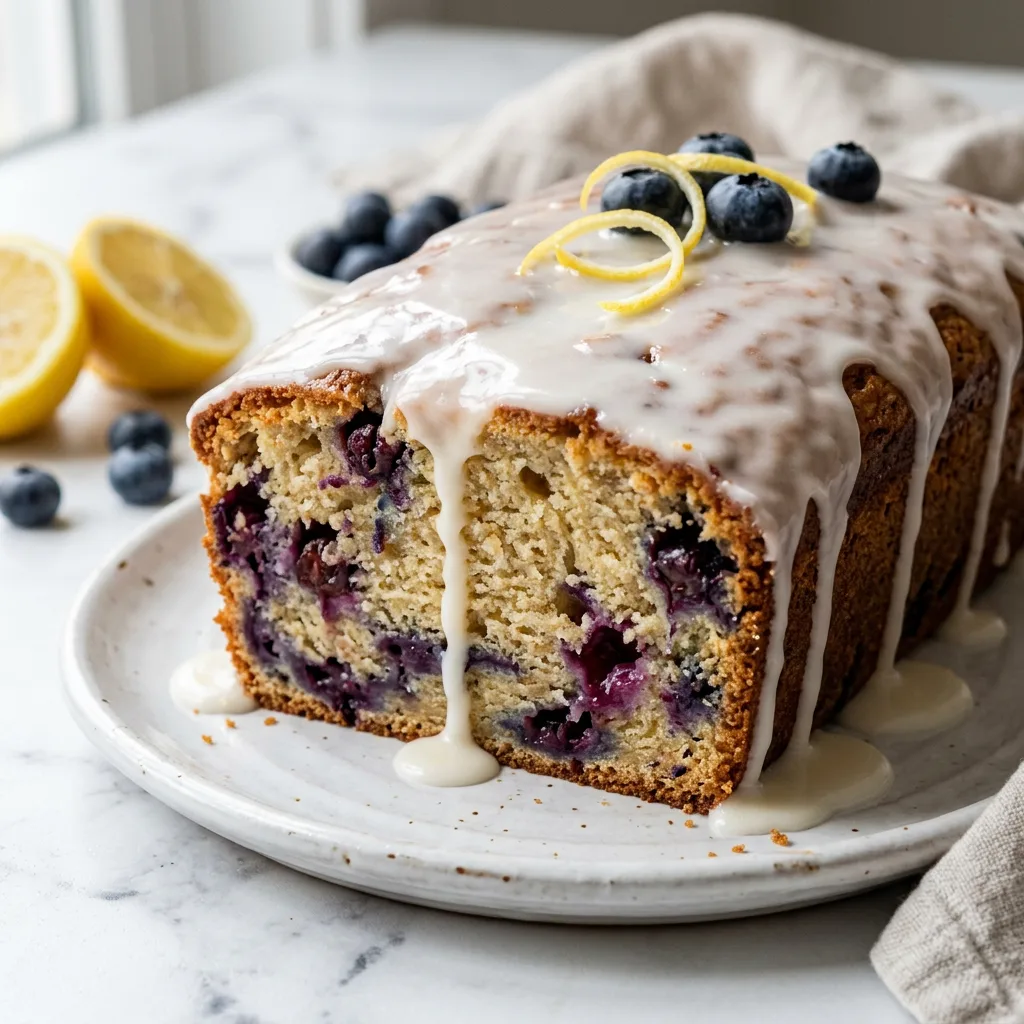
This lemon blueberry loaf cake is a bright, refreshing summer dessert combining tart citrus with sweet bursts of fresh blueberries. The moist crumb comes from Greek yogurt and melted coconut oil, while a tangy lemon glaze finishes the top with professional polish. This recipe delivers bakery-quality results at home without excessive sugar or complicated techniques.
| Metric | Details |
|---|---|
| Prep Time | 15 minutes |
| Cook Time | 52 minutes (average) |
| Total Time | 67 minutes plus cooling |
| Servings | 10-12 slices |
| Difficulty | Easy to Intermediate |
| Cuisine | American/Contemporary |
Why This Recipe Works
I developed this lemon blueberry loaf cake after testing dozens of variations to achieve the perfect balance of moisture, flavor, and structural integrity. The secret lies in using Greek yogurt instead of sour cream, which adds tanginess while reducing overall fat content. Greek yogurt also creates a tender crumb that stays moist for days, unlike traditional butter-based loaves that dry out quickly on the counter.
The combination of melted coconut oil and Greek yogurt produces superior moisture compared to butter alone. This pairing ensures the cake remains tender without becoming greasy or dense. Fresh lemon juice and zest appear twice in this recipe, anchoring the flavor profile throughout the cake and glaze. This double-lemon approach prevents the citrus flavor from fading during baking, which often happens with single-application lemon recipes.

Tossing blueberries in flour before folding them into the batter prevents sinking to the bottom during baking. This technique, which I’ve refined through multiple test batches, ensures every slice contains a generous distribution of berries. The flour coating creates micro-friction that keeps berries suspended as the batter rises and sets. You’ll notice the difference immediately when you cut your first slice and find berries throughout the cake rather than pooled at the base.
Ingredients
| Ingredient | Quantity | Notes and Alternatives |
|---|---|---|
| All-purpose flour | 1.5 cups | Spoon and level to measure accurately; can substitute cake flour for lighter crumb |
| Baking powder | 1 tsp | Use aluminum-free if available; check expiration date for potency |
| Salt | 1/4 tsp | Enhances lemon flavor; sea salt works equally well |
| Plain Greek yogurt | 1/2 cup | Non-fat or full-fat both work; avoid flavored varieties |
| Granulated sugar | 3/4 cup | Can reduce to 2/3 cup for less sweetness; avoid substituting with honey |
| Large eggs | 3 | Room temperature eggs mix more smoothly; cold eggs require longer beating |
| Lemon zest | 2 lemons | Microplane grater produces finest texture; use organic lemons when possible |
| Fresh lemon juice | 3 tbsp | Always use fresh-squeezed; bottled juice lacks complexity |
| Coconut oil, melted | 1/2 cup | Light olive oil or melted butter substitute; refined coconut oil avoids coconut flavor |
| Fresh blueberries | 1 cup | Frozen blueberries work but may bleed color; thaw and drain before using |
| All-purpose flour (for coating berries) | 1 tbsp | Same flour as above can be used; prevents berry sinking |
| Powdered sugar, sifted | 1 cup | Sifting removes lumps for smooth glaze; essential for professional finish |
| Fresh lemon juice (for glaze) | 3 tbsp | Adjust to 2-4 tbsp depending on desired glaze consistency |
Step-by-Step Instructions
Dry Ingredient Preparation
- Whisk together 1.5 cups all-purpose flour, 1 tsp baking powder, and 1/4 tsp salt in a medium bowl until evenly combined.
- Set the dry mixture aside and prepare your wet ingredients while the oven preheats.
Wet Ingredient Mixing
- Beat 1/2 cup plain Greek yogurt, 3/4 cup granulated sugar, 3 large eggs, zest of 2 lemons, and 3 tbsp fresh lemon juice together in a separate large bowl until the mixture becomes smooth and pale.
- Stream in 1/2 cup melted coconut oil slowly while continuing to beat until fully incorporated and emulsified.
Combining and Baking
- Fold the dry ingredients into the wet mixture using a rubber spatula, stirring until just combined without overmixing.
- Toss 1 cup fresh blueberries in 1 tbsp all-purpose flour in a small bowl to coat evenly.
- Gently fold the flour-coated blueberries into the batter, distributing them evenly while being careful not to crush them.
- Pour the batter into a greased loaf pan, smoothing the top with a spatula.
- Bake at 350°F for 50-55 minutes until a toothpick inserted into the center comes out clean or with just a few moist crumbs.
Cooling and Glazing
- Cool the loaf cake in the pan for 10 minutes before turning it out onto a wire cooling rack.
- Prepare the lemon glaze by whisking together 1 cup sifted powdered sugar and 3 tbsp fresh lemon juice until smooth.
- Drizzle the lemon glaze over the top of the loaf while still slightly warm, allowing it to drip down the sides naturally.
- Allow the glaze to set for 15-20 minutes before slicing and serving.
Chef Tips for Perfect Results
- Use a Microplane zester or fine grater for lemon zest, which produces the finest texture and releases maximum flavor oils compared to box graters that tear the skin unevenly.
- Bring eggs to room temperature before beating by removing them from the refrigerator 20 minutes prior to mixing; cold eggs require longer beating time and may not incorporate air properly, resulting in denser crumb.
- Measure flour accurately by spooning into your measuring cup and leveling with a knife rather than scooping directly, which packs flour and yields 20% more than needed, causing dry cake.
- Test doneness at 50 minutes rather than waiting until 55 minutes, as oven temperatures vary significantly; a toothpick should come out clean with no wet batter, though a few moist crumbs indicate perfect doneness.
- Glaze the loaf while still warm so the thin coating soaks slightly into the surface, anchoring the flavor and creating a tender, moist top layer that stays fresh longer than unglazed cake.
- Store fresh blueberries in a paper towel-lined container rather than plastic; the paper absorbs excess moisture that causes mold growth and accelerates spoilage.
Common Mistakes to Avoid
Overmixing the Batter
Overmixing develops gluten strands that toughen the crumb and create a dense, rubbery texture rather than tender and moist. When combining dry and wet ingredients, fold gently with a rubber spatula using broad, sweeping motions until you see no streaks of flour. Stop mixing immediately once the dry ingredients disappear; the batter should appear slightly lumpy.
Skipping the Flour Coat on Blueberries
Uncoated blueberries sink to the bottom during baking because they’re heavier than batter and lack friction to stay suspended. Tossing them in 1 tbsp flour creates surface texture that locks into the surrounding batter as it sets. Without this step, you’ll find a dense layer of berries at the base rather than distributed throughout.
Using Frozen Blueberries Directly Without Thawing
Frozen blueberries have ruptured cell walls that release excess water into the batter, making it too wet and causing color bleeding that turns the entire cake purple-gray. Thaw frozen berries completely and drain any accumulated liquid through a fine-mesh strainer before coating with flour. If using frozen berries, increase flour by 2 tablespoons to compensate for moisture.
Adding Cold Eggs or Oil
Cold eggs don’t emulsify properly with the Greek yogurt mixture, creating a separated batter that bakes unevenly with curdled-looking streaks. Similarly, cold coconut oil may seize and create lumps that won’t fully incorporate. Ensure both eggs and melted oil reach room temperature, which takes 20 minutes for eggs and just 5 minutes for oil in a measuring cup.
Baking in an Uncalibrated Oven
Most home ovens run 25-50 degrees hotter or cooler than their display indicates, which dramatically affects bake time and browning. Invest in an inexpensive oven thermometer and place it on the middle rack while preheating. Adjust your temperature accordingly before baking; a too-hot oven browns the exterior before the interior sets, while a too-cool oven extends baking and dries out the cake.
Variations and Substitutions
| Ingredient | Substitution | Impact on Flavor |
|---|---|---|
| Greek yogurt | Sour cream or plain yogurt | Sour cream produces tangier flavor; plain yogurt creates slightly less moist crumb but adds dairy richness |
| Coconut oil | Melted butter or light olive oil | Butter adds richness and darker browning; olive oil creates lighter, more delicate crumb with herbaceous undertones |
| Fresh blueberries | Raspberries, blackberries, or diced fresh strawberries | Raspberries add tartness; blackberries create earthy notes; strawberries reduce acidity and add sweetness |
| Lemon zest and juice | Lime zest and juice or orange zest and juice | Lime creates brighter, more tropical flavor; orange adds sweetness and deeper citrus notes |
| All-purpose flour | Cake flour or whole wheat flour | Cake flour produces lighter, more delicate crumb; whole wheat adds nuttiness and density |
| Granulated sugar | Coconut sugar or honey | Coconut sugar adds subtle caramel notes; honey increases moisture but reduces lift slightly |
| Powdered sugar glaze | Greek yogurt glaze with honey or cream cheese glaze | Yogurt glaze adds tanginess and reduces sweetness; cream cheese creates richer, more indulgent finish |
Serving Suggestions and Pairings
Serve slices of lemon blueberry loaf cake at summer brunch parties alongside fresh berries and whipped cream for an elegant presentation. This dessert pairs beautifully with afternoon tea or coffee as a light, refreshing treat that won’t feel heavy after a meal. For Father’s Day gatherings or special celebrations, pair this cake with sparkling lemonade or a crisp white wine like Sauvignon Blanc to complement the bright citrus notes.
Individual slices work perfectly for picnics and outdoor gatherings when wrapped in parchment paper and placed in a basket. Serve warm with a dollop of Greek yogurt or crème fraîche, which echoes the yogurt in the batter and adds creamy contrast. For bridal showers or garden parties, arrange thin slices on a tiered cake stand with fresh mint sprigs and additional fresh blueberries for visual impact.
This loaf cake also makes an excellent addition to potluck dessert tables because it stays moist and travels well without requiring refrigeration for several hours. Pair with other summer desserts featuring fresh fruit like strawberry shortcake or peach cobbler for a diversified spread. Consider serving alongside Father’s Day Dinner: French Onion Chicken Orzo Bake as a complete meal offering for family celebrations, providing a bright dessert contrast to savory dinner courses.
Storage and Reheating
| Method | Duration | Instructions |
|---|---|---|
| Room Temperature Storage | 2 days | Wrap loaf tightly in plastic wrap or parchment paper; place in an airtight container to prevent drying. Keep away from direct sunlight and heat sources. |
| Refrigerator Storage | 5 days | Wrap loaf in plastic wrap then foil; store in an airtight container. The cool temperature slows mold growth and preserves moisture longer than room temperature. |
| Freezer Storage | 3 months | Cool completely before wrapping in plastic wrap and foil; label with date. Thaw at room temperature for 2-3 hours before serving; do not thaw in microwave as it creates uneven texture. |
| Microwave Reheating | 30-45 seconds | Wrap individual slice in damp paper towel; microwave at 50% power to prevent drying. Check at 30 seconds; most slices need only 30-45 seconds total. |
| Oven Reheating | 10 minutes | Wrap loaf loosely in foil; heat at 300°F for 10 minutes. This method produces superior texture compared to microwave, restoring moisture and warmth without creating tough edges. |
| Room Temperature Thawing | 2-3 hours | Remove from freezer and place on counter wrapped; allows gentle thawing that preserves moisture and texture. Unwrap after thawing to prevent condensation buildup. |
Nutritional Information
The following nutritional values are approximate per serving, calculated for 11 servings without the glaze.
| Nutrient | Amount per Serving |
|---|---|
| Calories | 245 |
| Protein | 4.2g |
| Total Fat | 12.1g |
| Saturated Fat | 8.3g |
| Carbohydrates | 32.5g |
| Dietary Fiber | 0.6g |
| Sugars | 21.8g |
| Sodium | 138mg |
Greek yogurt provides approximately 4 grams of protein per serving, supporting satiety and muscle recovery. The use of coconut oil and Olive Oil Benefits offer healthier fat sources compared to traditional butter in conventional loaf cake recipes. Fresh blueberries contribute antioxidants and natural fiber without significant calorie increase, making this dessert more nutritionally balanced than typical baked goods. For dietary considerations regarding Salt Intake, this recipe contains minimal added sodium, making it suitable for those monitoring intake.
Frequently Asked Questions
Can I Make This Lemon Blueberry Loaf Cake Without Greek Yogurt?
Sour cream or regular plain yogurt work as direct substitutes in equal quantities, though sour cream produces a tangier flavor profile. Applesauce can replace half the yogurt, though this creates a denser crumb with less moisture retention. Greek yogurt is optimal because its thickness creates superior moisture without excess liquid, but the recipe remains successful with alternatives.
How Do I Know When the Lemon Blueberry Loaf Cake Is Fully Baked?
Insert a toothpick into the center of the loaf away from blueberries; it should come out clean or with just a few moist crumbs clinging to it. The cake will also pull slightly away from the pan sides, and the top should spring back when lightly touched. Bake for an additional 2-3 minutes if the toothpick shows wet batter, checking again after brief intervals.
Why Did My Blueberries Sink to the Bottom of the Cake?
Blueberries sink when not coated with flour because they’re denser than the batter and lack surface friction to stay suspended. Always toss fresh or thawed berries in 1 tbsp flour before folding into the batter; the flour coating locks into the surrounding batter as it sets. Ensure your batter has adequate structure by not overmixing, which weakens its ability to hold berries suspended.
Can I Prepare This Lemon Blueberry Loaf Cake the Night Before?
Mix all dry ingredients and store in an airtight container up to one day ahead; keep the wet ingredients separate until you’re ready to bake. Do not combine wet and dry ingredients more than 10 minutes before baking, as this allows baking powder to activate prematurely. The fully baked loaf actually improves overnight as flavors develop and moist crumb sets, making it perfect for next-day serving.
What Is the Best Serving Temperature for Lemon Blueberry Loaf Cake?
Serve slices at room temperature or slightly warm, between 65-75°F, which allows flavors to express fully without the muting effect of cold. Slightly warm slices, served within 10 minutes of cooling, showcase the tender crumb and allow the glaze to remain tacky and flavorful. Cold cake straight from the refrigerator suppresses lemon flavor intensity and creates denser texture; always allow 15-20 minutes room temperature warming before serving cold cake.
This summer dessert recipe delivers reliable, impressive results through proper technique and ingredient balance. The combination of Greek yogurt, fresh citrus, and bright blueberries creates a loaf cake that stays moist for days while delivering sophisticated flavor that transcends simple home baking. Whether you’re hosting garden parties or enjoying quiet afternoon slices, this lemon blueberry loaf cake brings fresh, tart-sweet brightness to every occasion.
Make this recipe your go-to summer dessert by mastering the core techniques, then exploring variations with different berries and citrus fruits. The bright lemon flavor and bursts of fresh blueberries ensure this cake becomes a seasonal favorite that guests request repeatedly.

Summer Desserts: Lemon Blueberry Loaf Cake
Ingredients
Method
- Whisk together 1.5 cups flour, 1 tsp baking powder, and 1/4 tsp salt in a medium bowl.
- Beat 1/2 cup Greek yogurt, 3/4 cup granulated sugar, 3 large eggs, zest of 2 lemons, and 3 tbsp fresh lemon juice until smooth.
- Stream in 1/2 cup melted coconut oil slowly while beating until fully incorporated.
- Fold the dry ingredients into the wet mixture until just combined.
- Toss 1 cup fresh blueberries in 1 tbsp flour to coat evenly.
- Gently fold the flour-coated blueberries into the batter.
- Pour batter into a greased loaf pan.
- Bake at 350°F for 50-55 minutes until a toothpick inserted in the center comes out clean.
- Cool in the pan for 10 minutes before turning out onto a wire rack.
- Whisk together 1 cup sifted powdered sugar and 3 tbsp fresh lemon juice for the glaze.
- Drizzle the lemon glaze over the warm loaf.
- Allow the glaze to set for 15-20 minutes before slicing.