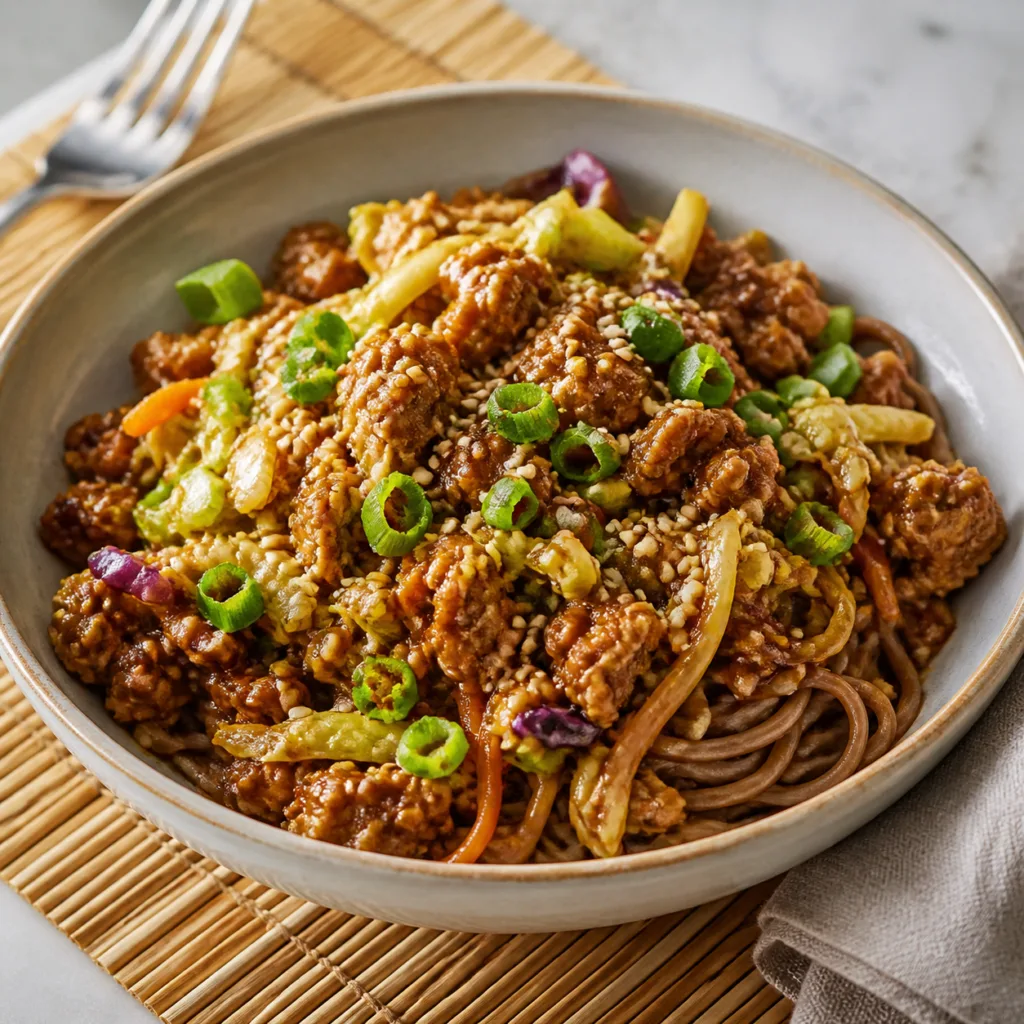
This turkey potsticker noodle bowl combines lean ground turkey with crispy vegetables and an aromatic Asian-inspired sauce for a nutritious weeknight meal. The dish delivers potsticker flavors without the fried wrapper, featuring tender ground turkey, vibrant coleslaw mix, and toasted sesame seeds over noodles. You get restaurant-quality taste in under 30 minutes with minimal cleanup and maximum nutrition.
| Detail | Value |
|---|---|
| Prep Time | 10 minutes |
| Cook Time | 15 minutes |
| Total Time | 25 minutes |
| Servings | 4 |
| Difficulty | Easy |
| Cuisine | Asian-Fusion |
Why This Recipe Works
I developed this turkey potsticker noodle bowl because I craved authentic potsticker flavors without the guilt of deep-fried wrappers. Ground turkey cooks quickly and absorbs the savory sauce beautifully, making it perfect for busy weeknights. The combination of minced garlic, fresh ginger, and sesame oil creates that signature potsticker aromatics that restaurants spend hours perfecting.
What makes this dish exceptional is the texture contrast: soft noodles, tender turkey, crispy coleslaw mix, and crunchy toasted sesame seeds all work together. The sauce balances sweet honey, umami-rich soy sauce, and a touch of sriracha heat for complexity. You can prepare everything in a single large skillet, making this a practical option for busy home cooks seeking restaurant-quality results without extra dishes.
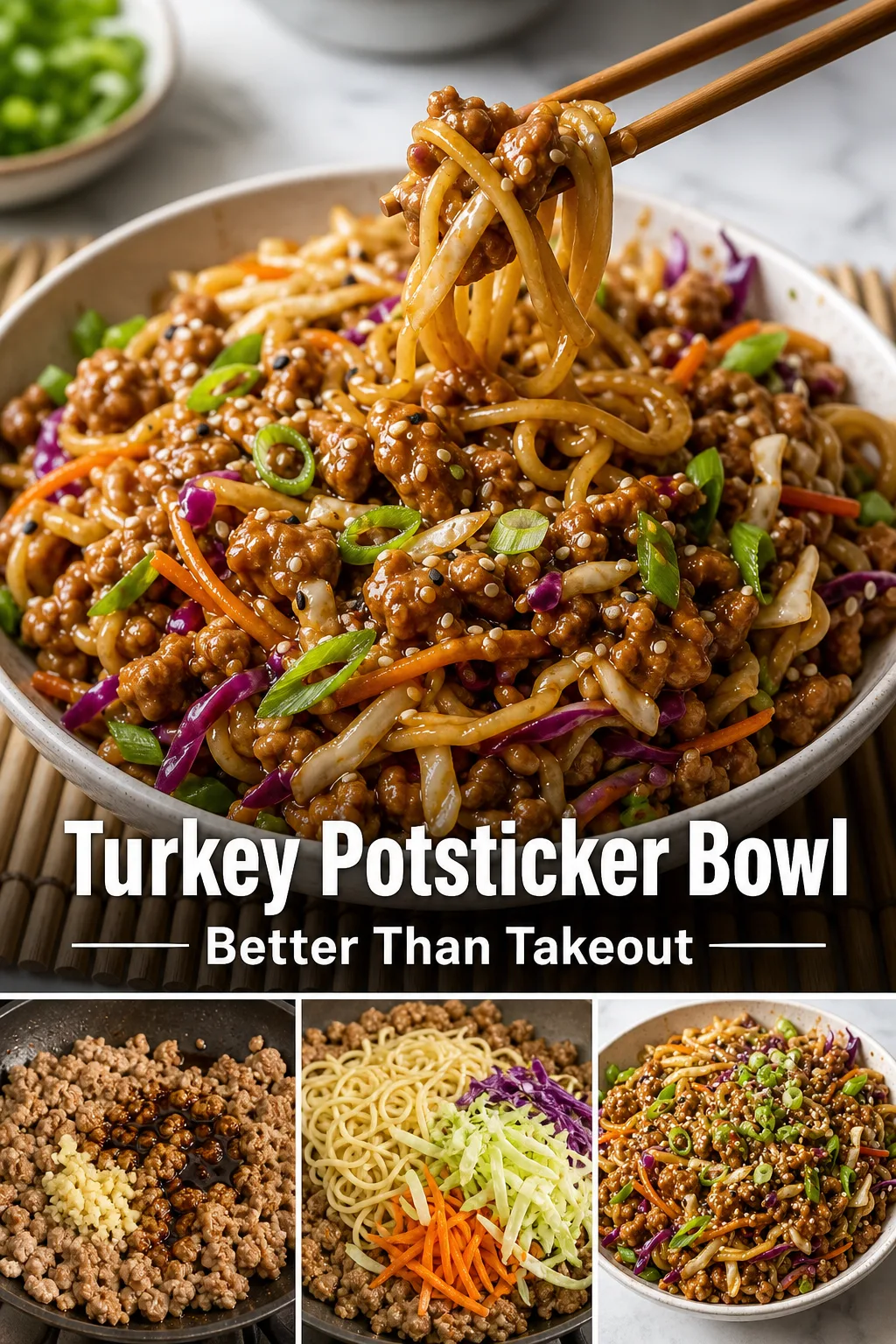
This recipe aligns with Heart Healthy Eating guidelines by using lean ground turkey instead of fattier protein options. The avocado oil provides heart-healthy monounsaturated fats, while the low-sodium soy sauce keeps sodium content controlled for those monitoring their intake.
Ingredients
| Ingredient | Quantity | Notes / Alternatives |
|---|---|---|
| Lean ground turkey | 1.5 lbs | 93% lean or higher; ground chicken breast works similarly |
| Rice noodles or soba noodles | 8 oz cooked | Use fresh or dried; egg noodles add richness if preferred |
| Coleslaw mix (shredded cabbage and carrot) | 3 cups | Pre-shredded saves time; use green or red cabbage |
| Garlic, minced | 3 cloves | Fresh only; 1/2 tsp garlic powder if unavailable |
| Fresh ginger, grated | 1 tbsp | Essential for potsticker flavor; crystallized ginger does not substitute |
| Low-sodium soy sauce | 3 tbsp | Regular soy sauce increases sodium by 40%; tamari for gluten-free |
| Sesame oil | 1 tbsp | Toasted version only; use at the end for maximum flavor |
| Rice vinegar | 1 tbsp | White vinegar works in a pinch; adds brightness |
| Fish sauce (optional) | 1 tsp | Adds authentic umami depth; skip if avoiding seafood |
| Honey | 1 tbsp | Balances salty and acidic elements; maple syrup substitutes |
| Sriracha | 1 tsp | Adjust to heat preference; omit for mild version |
| Avocado oil | 1 tbsp | High smoke point essential; vegetable oil alternative |
| Toasted sesame seeds | 2 tbsp | Buy pre-toasted for convenience; toast raw seeds 2 minutes in dry pan |
| Green onions, sliced | 3 stalks | Fresh only; adds brightness and color to finished dish |
| Wonton strips or crispy shallots | Optional | Adds textural contrast; store-bought versions work well |
Step-by-Step Instructions
Prepare Your Base
- Cook rice noodles or soba noodles according to package directions, drain well, and set aside in a large bowl.
- Whisk together low-sodium soy sauce, sesame oil, rice vinegar, fish sauce, honey, and sriracha in a small bowl until honey dissolves completely.
- Mince three garlic cloves finely and grate one tablespoon fresh ginger using a microplane for fine texture.
Cook the Turkey and Aromatics
- Heat one tablespoon avocado oil in a large skillet over medium-high heat until shimmering, about one minute.
- Add 1.5 pounds lean ground turkey to the hot skillet, breaking it into small pieces with a wooden spoon or spatula.
- Cook turkey for six to eight minutes, stirring frequently, until the meat browns completely with no pink remaining.
- Add minced garlic and grated ginger to the cooked turkey and stir constantly for exactly one minute until fragrant.
Finish with Vegetables and Sauce
- Pour three cups coleslaw mix (shredded cabbage and carrots) directly into the skillet with the cooked turkey.
- Cook the coleslaw mix for two minutes, stirring occasionally, until the vegetables soften slightly and begin to wilt.
- Pour the prepared sauce mixture over the turkey and vegetables, then toss everything together for one minute.
- Divide cooked noodles evenly among four bowls and top each with the turkey-vegetable mixture.
- Garnish each bowl with two tablespoons toasted sesame seeds total, sliced green onions, and optional wonton strips or crispy shallots.
Chef Tips for Perfect Results
- Break turkey into small, uniform pieces while cooking to maximize browning surface area and ensure faster cooking throughout the meat.
- Toast raw sesame seeds yourself in a dry skillet over medium heat for exactly two minutes, shaking constantly to prevent burning and maximize flavor intensity.
- Whisk the sauce components completely before adding to the skillet so honey dissolves evenly and sriracha distributes uniformly throughout.
- Cook noodles al dente according to package directions, then immediately rinse with cold water to stop carryover cooking and prevent mushiness.
- Use a meat thermometer to confirm turkey reaches 165 degrees Fahrenheit for food safety, even though ground turkey typically shows no pink when fully cooked.
- Add coleslaw mix in the last two minutes to preserve crunch and retain more vitamins; overcooked vegetables lose both texture and nutritional value.
Common Mistakes to Avoid
Overcooking the coleslaw mix: Raw or barely-cooked coleslaw provides crunch and preserves vitamins C and K. WHY this matters: overcooked cabbage becomes mushy and loses nutritional density. FIX: Add coleslaw in the final two minutes and stir for exactly two minutes before adding sauce.
Using regular soy sauce instead of low-sodium: Standard soy sauce contains 960 mg sodium per tablespoon versus 640 mg in low-sodium versions. WHY this matters: excessive sodium increases blood pressure and bloating. FIX: Read labels carefully and purchase low-sodium specifically labeled versions.
Skipping the ginger-garlic fragrance step: Cooking garlic and ginger alone for one minute activates their aromatic compounds and prevents raw harsh flavors. WHY this matters: this creates the authentic potsticker aroma that defines the dish. FIX: Set a timer and resist the urge to immediately add vegetables; one minute makes the critical difference.
Not breaking turkey into small pieces: Large clumps of ground turkey cook unevenly with tough edges and undercooked centers. WHY this matters: small pieces brown rapidly, absorb sauce efficiently, and create better texture. FIX: Use two wooden spoons or a meat spatula to constantly break apart the turkey while cooking.
Mixing hot noodles with cold sauce immediately: Temperature shock can make noodles clump together and sauce becomes separated. WHY this matters: proper emulsification creates smooth, cohesive coating. FIX: Keep noodles warm, add sauce to warm turkey mixture first, then combine everything together.
Variations and Substitutions
| Ingredient | Substitution | Impact on Flavor |
|---|---|---|
| Ground turkey | Ground chicken breast or lean ground pork | Lighter, milder taste; pork adds slight sweetness and richness |
| Rice noodles | Soba, ramen, or egg noodles | Soba adds nutty earthiness; ramen becomes chewier; egg noodles add richness |
| Coleslaw mix | Fresh spinach, bok choy, or shredded broccoli | Spinach adds iron; bok choy provides mild cabbage flavor; broccoli adds texture |
| Avocado oil | Coconut oil or vegetable oil | Coconut oil adds subtle sweetness; vegetable oil remains neutral |
| Honey | Maple syrup or agave nectar | Maple adds deeper molasses notes; agave remains cleaner and lighter |
| Sriracha | Gochujang, jalapeño paste, or chili flakes | Gochujang adds fermented depth; jalapeño provides fresher heat; flakes give speckled appearance |
| Fish sauce | Worcestershire sauce or soy sauce (increase by 1 tsp) | Worcestershire adds tanginess; extra soy deepens umami without fishiness |
| Sesame oil | Peanut oil or walnut oil | Peanut oil adds nuttiness but less distinctive; walnut oil adds earthiness |
Serving Suggestions and Pairings
Serve this turkey potsticker noodle bowl at casual weeknight dinners, meal prep sessions, or when hosting friends who appreciate Asian-fusion cuisine. Pair the dish with cucumber-ginger water or jasmine green tea for complementary refreshment. For a cold version, prepare the noodles and turkey mixture ahead, chill completely, then serve over ice-cold noodles topped with fresh cilantro and diced cucumbers.
This recipe works beautifully alongside Healthy Summer Dinner: Ground Turkey Teriyaki and Broccoli for a protein-focused meal plan featuring lean ground turkey preparations. For vegetarian guests at the same meal, offer High-Protein Lunch: Mediterranean Tuna Garbanzo Salad as an equally satisfying alternative.
Serve in individual bowls for elegant presentation or family-style for casual gatherings. Add a simple side of steamed edamame or cucumber slices for additional vegetables. For meal prep lunches, portion the turkey mixture and noodles separately, then combine with fresh sauce just before eating to maintain optimal texture and flavor.
Storage and Reheating
| Method | Duration | Instructions |
|---|---|---|
| Refrigerator (assembled) | 2 days | Store in airtight container; reheat gently in microwave at 50% power for 2 minutes, stirring halfway through to prevent drying |
| Refrigerator (components separate) | 4 days | Store turkey mixture, noodles, and vegetables in separate airtight containers; combine and warm just before serving for maximum freshness |
| Freezer (turkey mixture only) | 3 months | Freeze in flat freezer bags for space efficiency; thaw overnight in refrigerator, then reheat on stovetop over medium heat for 5 minutes |
| Stovetop reheating | 5 minutes | Place turkey mixture in skillet over medium heat with one tablespoon water or broth, stirring occasionally until heated through |
| Microwave reheating | 2 minutes | Transfer to microwave-safe bowl, cover loosely, heat at 50% power to prevent explosive splatter from sauce |
| Do not freeze | N/A | Coleslaw mix becomes mushy when frozen; prepare fresh vegetables when reheating for best texture |
Nutritional Information
The following nutritional values reflect one serving of four total servings with all ingredients included. Approximate values based on USDA nutrient database calculations.
| Nutrient | Amount per Serving |
|---|---|
| Calories | 485 |
| Protein | 42g |
| Total Fat | 16g |
| Saturated Fat | 3g |
| Carbohydrates | 48g |
| Dietary Fiber | 3g |
| Sugars | 6g |
| Sodium | 620mg |
This turkey potsticker noodle bowl provides substantial protein from lean ground turkey, making it ideal for muscle recovery and satiety. The balance of complex carbohydrates from noodles and vegetables supports steady energy levels throughout the afternoon. Learn more about Olive Oil Benefits and healthy cooking fats to optimize your overall nutrition strategy.
Frequently Asked Questions
Can I Use Ground Chicken Instead of Ground Turkey?
Yes, ground chicken breast works perfectly as a one-to-one substitution for ground turkey with identical cooking times and temperatures. Ground chicken has slightly milder poultry flavor than turkey but remains lean and absorbs the Asian-inspired sauce equally well. Cook until the meat reaches 165 degrees Fahrenheit internal temperature with no pink remaining.
How Do I Know When the Ground Turkey is Fully Cooked?
Ground turkey is fully cooked when the meat no longer shows any pink color and reaches 165 degrees Fahrenheit on an instant-read meat thermometer. Lean ground turkey typically browns completely at the same time it reaches safe internal temperature. Stir frequently during cooking to ensure all pieces reach the safe temperature uniformly throughout.
What If I Don’t Have Rice Vinegar on Hand?
White vinegar or apple cider vinegar substitute for rice vinegar at a one-to-one ratio, though they provide slightly sharper acidity. Rice vinegar offers subtle sweetness and mild flavor, while white vinegar tastes more astringent. Use whatever vinegar you have available; the final dish will remain delicious with minor flavor variation.
Can I Make This Dish Ahead for Meal Prep?
Prepare the turkey mixture and noodles in separate containers up to four days ahead for optimal quality and texture. Keep coleslaw mix fresh and uncooked until just before serving or eating, as raw vegetables retain better nutrition and crunch than pre-cooked versions. Assemble the bowls with fresh vegetables when ready to eat for maximum flavor and texture contrast.
Is This Recipe Suitable for Low-Carb Diets?
Traditional rice noodles contain significant carbohydrates, but you can substitute zucchini noodles, shirataki noodles, or cauliflower rice to reduce carb content substantially. The turkey, vegetables, and sauce remain low-carb naturally, making those substitutions easy modifications. For context, this dish pairs well with Low-Carb Dinner: Creamy Garlic Chicken Broccoli Casserole for low-carb meal planning strategies.
Conclusion
This healthy turkey potsticker noodle bowl delivers authentic potsticker flavors with minimal cooking time and maximum nutritional value. The combination of lean ground turkey, aromatic ginger and garlic, and tangy-sweet sauce creates a restaurant-quality meal you can prepare at home in just 25 minutes. Serve this dish confidently knowing you’ve chosen a protein-rich, vegetable-forward dinner that your family will request repeatedly. The signature umami depth from sesame oil, soy sauce, and optional fish sauce proves that healthy eating never means sacrificing bold, satisfying flavor.

Healthy Dinner: Turkey Potsticker Noodle Bowl
Ingredients
Method
- Cook rice or soba noodles according to package directions and set aside in a large bowl.
- Whisk together low-sodium soy sauce, sesame oil, rice vinegar, fish sauce, honey, and sriracha in a small bowl until honey dissolves completely.
- Mince three garlic cloves finely and grate one tablespoon fresh ginger using a microplane.
- Heat one tablespoon avocado oil in a large skillet over medium-high heat until shimmering, about one minute.
- Add 1.5 pounds lean ground turkey to the hot skillet, breaking it into small pieces with a wooden spoon or spatula.
- Cook turkey for six to eight minutes, stirring frequently, until the meat browns completely with no pink remaining.
- Add minced garlic and grated ginger to the cooked turkey and stir constantly for exactly one minute until fragrant.
- Pour three cups coleslaw mix directly into the skillet with the cooked turkey.
- Cook the coleslaw mix for two minutes, stirring occasionally, until the vegetables soften slightly and begin to wilt.
- Pour the prepared sauce mixture over the turkey and vegetables, then toss everything together for one minute.
- Divide cooked noodles evenly among four bowls and top each with the turkey-vegetable mixture.
- Garnish each bowl with toasted sesame seeds, sliced green onions, and optional wonton strips or crispy shallots.