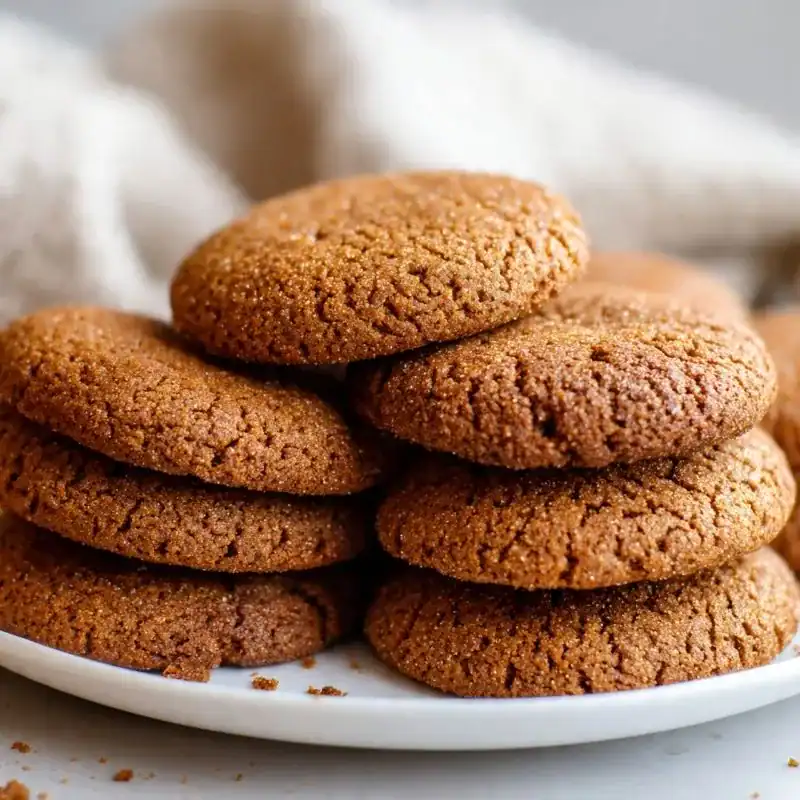
We need to have an honest conversation about holiday baking. Somewhere along the way, “Gingerbread” became synonymous with “Construction Material.” We spend hours mixing, rolling, and baking, only to end up with cookies that are structurally sound enough to frame a house but sturdy enough to crack a molar.
That ends today.
As a pastry chef with over 20 years of experience in professional kitchens, I have dedicated my career to understanding the physics of baking. I don’t want a cookie that functions as drywall; I want a cookie that offers a sensory experience. I want a deep, spicy warmth that hits the back of your palate. I want a surface that offers the slightest resistance before giving way to a tender, melt-in-your-mouth center.
This recipe for the Best Soft and Chewy Gingerbread Cookies is the result of years of testing. It isn’t just about tossing spices into flour; it is about balancing the ratio of hygroscopic sweeteners (sugars that attract water) to flour proteins. It is about understanding how acid reacts with leavening agents to create lift without dryness.
If you are absolutely obsessed with these warming winter flavors but prefer a creamy texture over a cookie, you should absolutely try our Gingerbread Cheesecake Bites for Menopause. They pack that same ginger-clove punch in a luscious, bite-sized cheesecake format. But for those of you ready to master the ultimate holiday cookie, tie on your apron. We are going to school.
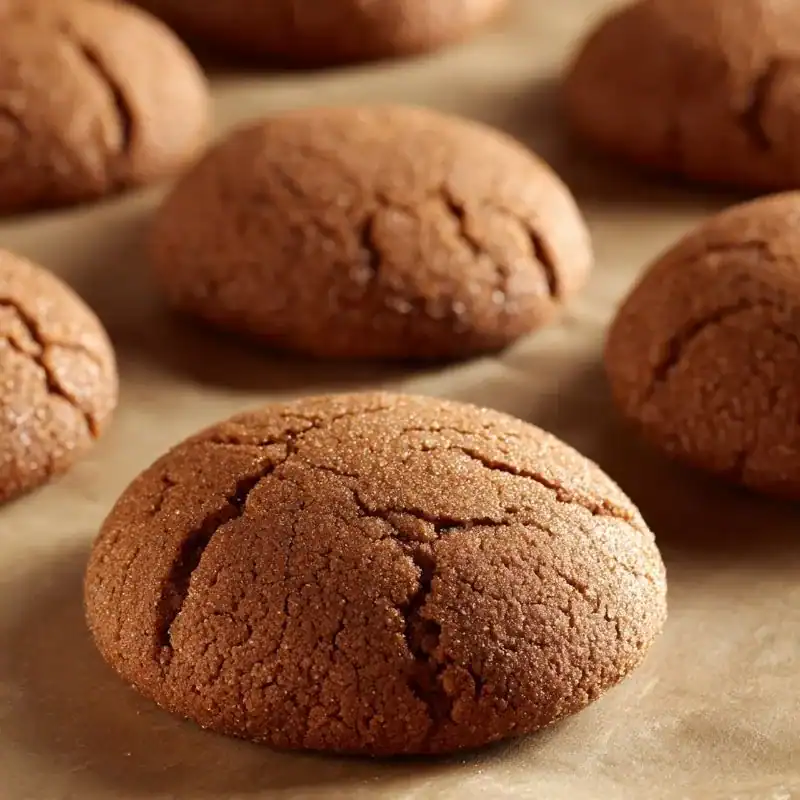
Best Soft & Chewy Gingerbread Cookies (No-Spread, Bakery-Style)
Ingredients
Method
- Mix the Dry Ingredients
- Whisk the flour, ginger, cinnamon, cloves, pepper, baking soda, and salt in a large bowl until evenly combined.
- Cream the Butter & Sugar
- Using a hand mixer or stand mixer, beat the softened butter, dark brown sugar, and molasses for about 2 minutes until creamy. Add the egg and vanilla; mix again.
- Bring the Dough Together
- Slowly add the dry ingredients to the wet mixture. Mix until just combined—don’t overmix or the cookies will become tough.
- Chill the Dough
- Divide the dough into two discs, wrap tightly in plastic wrap, and refrigerate for at least 3 hours. This step prevents spreading and deepens flavor.
- Roll & Bake
- Roll dough to ¼-inch thickness. Cut into shapes using your favorite cookie cutters.
- Bake at 350°F for 8–10 minutes.
- Let cool on the baking sheet for 5 minutes before transferring.
Notes
✨ Chill overnight for even deeper flavor
✨ Dust cutters with flour to avoid sticking
✨ Freeze the dough for up to 2 months Nutrition (Per Cookie) 145 calories | 6g fat | 22g carbs | 12g sugar | 2g protein
The Science Behind the Best Soft and Chewy Gingerbread Cookies
Why do some cookies turn out like rocks while others stay soft for days? It isn’t magic; it is chemistry. To achieve the Best Soft and Chewy Gingerbread Cookies, we have to manipulate three specific variables: Moisture Retention, pH Balance, and Fat Structure.
1. Hygroscopy and The Molasses Factor
The secret to a chewy cookie lies in hygroscopy. This is a scientific term for a substance’s ability to attract and hold water molecules from the surrounding environment. White granulated sugar is not very hygroscopic. Brown sugar and molasses, however, are powerhouse humectants.
In this recipe, we increase the ratio of brown sugar and molasses significantly. Unlike “structural” gingerbread, which often uses corn syrup (which dries harder), molasses ensures the crumb remains moist long after the cookie has cooled.
2. The Leavening: Soda vs. Powder
You will notice this recipe calls exclusively for Baking Soda (Sodium Bicarbonate), not Baking Powder. This is intentional. Molasses is acidic (pH roughly 5.5). When baking soda hits that acid, it creates carbon dioxide gas instantly. This provides a rapid lift, creating a porous, tender crumb. If we used baking powder (which contains its own acid), the pH balance would be off, resulting in a cakey texture rather than a chewy one.
3. Fat: The Butter vs. Shortening Debate
In the commercial bakery world, we often use shortening because it has a higher melting point, meaning cookies spread less. However, shortening leaves a waxy coating in the mouth and lacks flavor. For the Best Soft and Chewy Gingerbread Cookies, we use unsalted butter.
The Trade-off: Butter melts faster, which can lead to spreading. To combat this, we use a mandatory chilling period to solidify the saturated fats before they hit the oven heat. This gives us the flavor of butter with the structural integrity of shortening.
Essential Ingredients for the Best Soft and Chewy Gingerbread Cookies
You cannot build a masterpiece with poor materials. Here is a deep dive into exactly what you need to source for this recipe.
The Molasses: Grandmas vs. Blackstrap
I cannot stress this enough: Do NOT use Blackstrap Molasses.
-
Unsulphured Molasses (e.g., Grandma’s Original): This is made from the first or second boiling of the sugar cane. It is sweet, balanced, and has a moisture content that promotes chewiness.
-
Blackstrap Molasses: This is the product of the third boiling. It is stripped of most sugar and is incredibly high in iron and minerals. It is bitter, savory, and very dry. If you use this, your cookies will taste metallic and burnt.
The Spice Blend
Pre-ground spices lose their volatile oils after about six months. If your jar of ground cloves has been in the pantry since 2018, throw it out. For the Best Soft and Chewy Gingerbread Cookies, we use a heavy hand with:
-
Ground Ginger: For the heat.
-
Cinnamon: For warmth and sweetness.
-
Cloves: For that numbing, aromatic depth.
-
White Pepper (The Secret Weapon): A tiny pinch of white pepper adds a lingering heat that makes the cookie addictive.
The Flour
We stick to All-Purpose Flour here. Bread flour has too much protein (too much gluten formation = tough cookie), and Cake flour has too little (cookie falls apart).
-
Measurement Matters: The number one reason home bakers fail is over-measuring flour. If you scoop your cup directly into the bag, you are compacting the flour and adding up to 20% extra weight. This dries out the dough. I recommend using the “Spoon and Sweep” method or, better yet, a digital scale. For a visual guide, King Arthur Baking has an excellent tutorial on measuring flour correctly.
How to Bake the Best Soft and Chewy Gingerbread Cookies Step-by-Step
[IMAGE: A stand mixer bowl with dark, rich gingerbread dough being mixed | Alt Text: Mixing dough for the Best Soft and Chewy Gingerbread Cookies]
Step 1: The Gentle Creaming
In the bowl of your stand mixer fitted with the paddle attachment, beat the softened butter, brown sugar, and molasses.
-
Chef’s Tip: Unlike a cake, where we want to beat air into the fat for fluffiness, here we just want to combine them. Beat on medium speed for 2 minutes only. If you over-aerate the butter, the cookies will collapse in the oven. Add the egg and vanilla extract—I recommend Nielsen-Massey Vanilla for the purest flavor profile—and mix until glossy.
Step 2: The Dry Incorporation
Whisk your flour, baking soda, salt, and spices in a separate bowl. With the mixer on low, slowly add the dry ingredients. Stop mixing the second you see the last streak of flour disappear. Overmixing develops gluten, and gluten is the enemy of tenderness.
Step 3: The Critical Chill
Divide the dough in half and flatten into discs wrapped in plastic wrap. Place in the refrigerator for a minimum of 3 hours, or up to 3 days.
Why? This hydration period allows the flour to absorb the liquid from the molasses fully. It also re-solidifies the butter. If you skip this, your cookies will spread into puddles.
Step 4: Rolling for Texture
Preheat your oven to 350°F (175°C).
Remove one disc of dough. Let it sit for 5-10 minutes just so it is pliable. Roll it out on a lightly floured surface.
-
The Thickness Rule: For the Best Soft and Chewy Gingerbread Cookies, roll your dough to 1/4-inch thick. Do not go thinner. A thick cookie ensures the center stays underbaked while the edges set. Cut out your shapes.
Step 5: The Bake (Timing is Everything)
Place cookies on a parchment-lined baking sheet, spaced 1 inch apart.
Bake for 8 to 10 minutes.
-
The Doneness Test: The edges should look set, but the centers should still look slightly underdone and matte (not shiny/wet, but soft). They will continue to cook on the hot baking sheet for 5 minutes after you pull them out. If they look completely firm in the oven, you have overbaked them, and they will be hard.
Decorating Your Best Soft and Chewy Gingerbread Cookies
While you bake, you need to manage your time. Since your oven is occupied, this is the perfect time to prep the rest of your holiday spread. If you are hosting a party, use this baking time to whip up a savory appetizer like our Easy Make-Ahead Pineapple Cranberry Cheese Log. The savory, nutty cheese log pairs beautifully with the sweet, spiced scent filling your kitchen.
Once the cookies are cool, we need icing. For soft cookies, I prefer a simple Royal Icing that sets hard enough to stack but isn’t rock-like.
Quick Royal Icing Recipe:
-
4 cups Powdered Sugar
-
3 tbsp Meringue Powder (safer and more stable than raw egg whites)
-
1/2 cup Warm Water (plus more to thin)
Whisk the sugar and meringue powder. Add water slowly while whipping until stiff peaks form. Pipe onto your cooled cookies. Let them dry for at least 2 hours before stacking.
Storing the Best Soft and Chewy Gingerbread Cookies
You have done the work; do not let the air ruin them. Air dries out the moisture we worked so hard to trap.
The “Bread Slice” Trick:
Store your cookies in an airtight container. Place a slice of standard white sandwich bread in the container with them.
-
The Science: The bread has higher moisture content than the cookies. In a sealed environment, moisture migrates to equilibrium. The bread will give up its moisture to the cookies, keeping them soft, while the bread itself turns hard as a crouton.
Serving Suggestions:
These cookies are rich. When building a dessert table, I like to balance the heavy spice and molasses flavor with something bright, acidic, and fruit-forward. Serve these spiced cookies alongside a dessert like our Hot Flash Frozen Cranberry Pavlova. The airy meringue and tart cranberries provide a perfect textural and flavor contrast to the dense, chewy gingerbread.
FAQ: Troubleshooting Your Gingerbread
Q: Why did my gingerbread men spread and lose their shape?
A: This is almost always due to temperature. If the dough got too warm while you were rolling it, the butter melted too fast in the oven. Next time, freeze your cut-out shapes on the baking sheet for 10 minutes before putting them in the oven. This “flash freeze” locks the shape in.
Q: Can I freeze the dough?
A: Yes! This dough freezes beautifully for up to 3 months. Wrap the discs tightly in plastic, then in foil. Thaw in the fridge overnight before rolling.
Q: I actually want hard cookies for a Gingerbread House. Can I use this?
A: You can, but you need to modify the bake. Roll them slightly thinner (1/8 inch) and bake them for 14-16 minutes until they are crisp all the way through. However, for structural houses, I usually recommend a recipe without leavening agents (baking soda) so the walls don’t puff up.
Q: Can I substitute honey for molasses?
A: You can, but they won’t be “Gingerbread.” They will be honey spice cookies. Molasses provides a distinct acidity and mineral flavor that honey lacks. Honey will also result in a lighter-colored cookie.