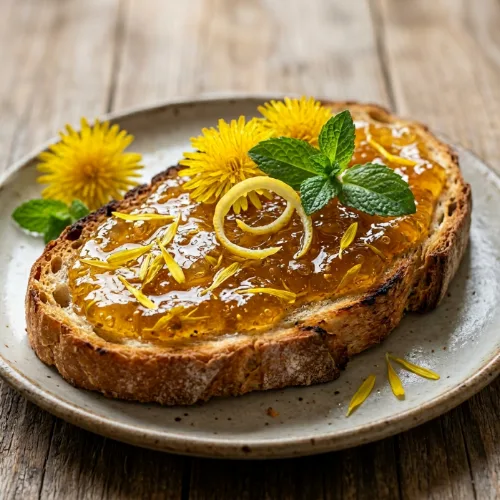
Dandelion jelly is a golden, delicate preserve made from fresh dandelion petals steeped into fragrant tea, combined with sugar and pectin to create a jewel-toned spread. This anti-inflammatory jelly harnesses the natural wellness properties of dandelions while delivering sophisticated floral notes perfect for toast, pastries, and elegant entertaining. Unlike commercial jams laden with additives, homemade dandelion jelly lets you control every ingredient while capturing the essence of spring in a jar.
| Attribute | Value |
|---|---|
| Prep Time | 20 minutes |
| Cook Time | 30 minutes |
| Total Time | 50 minutes |
| Servings | 6 jars (approximately 48 servings) |
| Difficulty | Intermediate |
| Cuisine | American Farmhouse |
Why This Recipe Works
I first discovered the magic of dandelion jelly during a spring visit to a heritage farmers market, where an elderly herbalist was selling small amber jars of this unusual preserve. The moment I tasted that first spoonful on warm bread, I understood why this recipe has endured for generations. The delicate floral profile combined with bright citrus undertones creates a preserve that transcends typical fruit jams, offering complexity that elevates everything from morning toast to dessert applications.
This anti-inflammatory preserve works because dandelion petals contain natural compounds including taraxacin and inulin, which have been studied for their potential wellness benefits. When you steep the petals gently in water, you extract maximum flavor and beneficial properties without destroying the delicate plant compounds through excessive heat. The addition of lemon juice balances the subtle floral notes while the pectin ensures a proper gel set, creating a preserve that’s both delicious and functionally valuable.
The recipe’s success hinges on respecting the dandelion’s gentle character. I’ve learned that a 10-minute simmer is the sweet spot: long enough to extract full flavor and color, but brief enough to preserve the nutritional integrity. The golden tea you create becomes the foundation for everything that follows. When combined with sugar and pectin at a rolling boil, this base transforms into a luxurious preserve that sets perfectly with that one crucial minute of hard boiling, no more and no less.
Ingredients
| Ingredient | Quantity | Notes with Alternatives |
|---|---|---|
| Fresh dandelion petals | 4 cups | Harvest from pesticide-free areas in spring; each petal should be fully open. Avoid gray or bruised petals. No substitution preserves authenticity. |
| Water | 4 cups | Filtered water produces cleaner flavor than tap water; temperature should be cool before adding petals. |
| Lemon juice | 2 tbsp | Freshly squeezed lemon juice is superior to bottled; provides natural pectin and brightness. Lime juice creates a more tropical variation. |
| Granulated sugar | 4 cups | Standard white sugar ensures proper gel formation. Honey reduces set firmness; use only 3 cups if substituting half the sugar with honey. |
| Liquid pectin | 3 oz | Powdered pectin requires different cooking methods and timing. Liquid pectin added at end produces superior texture and translucency. |
Step-by-Step Instructions
Preparation Phase
- Harvest 4 cups of fresh dandelion petals from pesticide-free areas during peak bloom when flowers are fully open and dry.
- Rinse the petals gently under cool water and pat dry with clean kitchen towels to remove any soil or insects.
- Prepare six sterilized glass jars by running them through a hot dishwasher cycle or boiling them for 10 minutes; have jar lids and bands ready.
- Set up a water bath canner with a rack on the bottom and fill with water to within 2 inches of jar rims.
Steeping Phase
- Pour 4 cups of cool filtered water into a large stainless steel pot and bring to a gentle simmer over medium heat.
- Add the prepared dandelion petals and reduce heat to maintain a gentle simmer without boiling aggressively.
- Simmer the petals for exactly 10 minutes, stirring occasionally with a wooden spoon to ensure even extraction.
- Remove from heat and allow the mixture to cool for 5 minutes before straining through multiple layers of cheesecloth into a clean bowl.
- Gather the cheesecloth corners and squeeze gently to extract every drop of golden dandelion tea; discard the spent petals.
Cooking and Setting Phase
- Measure your golden dandelion tea and return it to the cleaned pot; you should have approximately 3.5 to 4 cups of liquid.
- Add 2 tablespoons of freshly squeezed lemon juice and stir well to incorporate the citrus brightness throughout.
- Add 4 cups of granulated sugar to the pot and stir constantly over medium heat until the sugar completely dissolves.
- Increase heat to medium-high and bring the mixture to a rolling boil, stirring frequently to prevent sticking and ensure even heating.
- Once the mixture reaches a full rolling boil that cannot be stirred down, add the 3 oz of liquid pectin in one continuous stream.
- Stir the pectin in thoroughly and return the mixture to a hard rolling boil for exactly 1 minute, no more and no less.
- Remove from heat immediately after the 1-minute boil time and skim off any foam that has formed on the surface with a clean spoon.
Jarring and Processing Phase
- Ladle the hot dandelion jelly into the sterilized jars, leaving exactly 1/4 inch of headspace at the top of each jar.
- Wipe the rim of each jar with a clean, damp cloth to remove any sticky residue that would prevent proper sealing.
- Place prepared lids on top of jars and screw the bands on firmly until just snug; do not over-tighten.
- Carefully place the filled jars onto the rack inside your prepared water bath canner, ensuring they do not touch each other.
- Ensure jars are covered by at least 1 inch of boiling water; add more water if necessary and bring to a rolling boil.
- Process the jars in the boiling water bath for exactly 10 minutes to achieve a proper vacuum seal.
- Remove jars using a jar lifter and place on a clean kitchen towel to cool completely at room temperature for 12 to 24 hours.
- Check seals by pressing down on the center of each lid; properly sealed lids will not flex or pop. Store any unsealed jars in the refrigerator.
Chef Tips for Perfect Results
- Harvest dandelion petals only from areas you know are free of pesticides, herbicides, and chemical treatments; roadsides and chemically treated lawns should be avoided entirely. Peak flavor occurs in late spring when flowers are fully open and bright yellow.
- The 10-minute steeping duration is non-negotiable for extracting maximum color and beneficial compounds without degrading the delicate floral profile. Shorter steeping produces pale, weak tea; longer steeping risks turning the tea bitter or muddy-colored.
- Invest in a reliable candy thermometer and aim for exactly 220 degrees Fahrenheit at the end of the 1-minute boil time. This temperature indicates proper gel formation and ensures your jelly will set correctly within 24 hours without becoming too firm.
- Use liquid pectin rather than powdered for superior results and transparency. Liquid pectin is added at the final moment and requires no prior hydration, producing a clearer, more jewel-toned preserve than powdered varieties.
- Sterilize your jars using an active heat method such as running them through a dishwasher’s hot cycle or submerging them in boiling water for 10 full minutes. Dry them immediately before filling to prevent thermal shock when you add the hot jelly.
- If you live at high altitude above 1,000 feet, increase your water bath processing time by 1 minute for every 1,000 feet of elevation to ensure proper preservation and safety.
Common Mistakes to Avoid
Mistake 1: Over-steeping the Dandelion Petals
Steeping dandelion petals longer than 10 minutes causes the floral notes to become bitter and the color to shift from golden amber to dull brown. The remedy is simple: set a timer and stick to exactly 10 minutes of simmering. If you’ve over-steeped, your jelly will still be edible but will lack the delicate, pleasant flavor that makes this preserve special.
Mistake 2: Skipping the Cheesecloth Straining Step
Attempting to force petals through a fine-mesh strainer or skipping the straining entirely results in cloudy jelly with petal fragments that create an unpleasant grainy texture. Always strain through cheesecloth and squeeze the bundle gently to extract every drop of liquid without forcing solids through. This extra step makes the difference between a professionally smooth preserve and an amateur-looking one.
Mistake 3: Boiling the Pectin Longer Than One Minute
The pectin’s gelling power diminishes significantly if boiled longer than 1 minute; boiling for 2-3 minutes results in jelly that never sets properly and remains syrupy even after days of cooling. Use a timer and remove from heat immediately when the minute is complete. If your jelly doesn’t set, you’ve likely over-boiled the pectin mixture.
Mistake 4: Leaving Excessive Headspace in Jars
Filling jars with more than 1/4 inch of headspace creates problems during processing because the jelly can boil up into the lid space, preventing a proper seal. Conversely, leaving less than 1/8 inch creates too much pressure and can cause lid failure. Measure carefully using a headspace measuring tool or mark a pen line on your ladle to ensure consistency.
Mistake 5: Not Allowing Proper Cooling Time Before Testing Seals
Testing jar seals before the jelly has cooled completely leads to false positives and potential spoilage. The jelly needs 12 to 24 hours at room temperature to set fully and for the lids to achieve a proper vacuum seal. Only then should you press the lid center to verify the seal is secure.
Variations and Substitutions
| Ingredient | Substitution | Impact on Flavor |
|---|---|---|
| Fresh dandelion petals | Dried dandelion petals (2 cups) steeped for 15 minutes | More concentrated floral intensity; slightly less fresh character but maintains anti-inflammatory properties |
| Lemon juice | Fresh orange juice (2 tbsp) | Warmer citrus notes; slightly sweeter profile that softens the floral character |
| Granulated sugar | Honey (2 cups) plus 2 cups sugar | Deeper, richer sweetness with subtle caramel notes; jelly will be slightly softer and require 30 minutes cooling before jarring |
| Liquid pectin | Powdered pectin (3 tbsp mixed with 3 tbsp water) | Same set firmness but requires stirring mixture into boiling jelly 5 minutes before pectin addition; slightly cloudier appearance |
| Plain dandelion jelly | Add 1/2 cup fresh mint leaves during steeping phase | Herbaceous complexity; cooling and refreshing character that bridges toward tea-like complexity |
| Plain dandelion jelly | Add 1 tbsp rose water after straining but before sugar | Enhanced floral elegance; more sophisticated and perfume-like; use sparingly as rose water is potent |
Serving Suggestions and Pairings
Dandelion jelly elevates simple breakfast preparations into something memorable and worthy of your effort. Spread it generously over warm buttered toast for an elegant breakfast, or swirl a spoonful into plain Greek yogurt alongside granola for textural contrast and visual appeal. The jelly pairs beautifully with sharp aged cheddar on a cheese board, where its floral sweetness contrasts wonderfully with the cheese’s complexity.
For entertaining, use this preserve as a sophisticated glaze for roasted duck or chicken, where its delicate sweetness complements rich poultry without overpowering. Layer it into vanilla panna cotta or atop cheesecake for a spring-inspired dessert that impresses without requiring last-minute preparation. Professional pastry chefs often use dandelion jelly as a filling for thumbprint cookies or as a tart topping when paired with fresh whipped cream.
This anti-inflammatory preserve works remarkably well in savory applications, particularly with foie gras, pâté, or terrines where its floral character doesn’t compete but rather enhances the richness. During afternoon tea service, offer it alongside warm scones and clotted cream for an authentically British experience. The jelly also complements whole grain breads and seeded crackers better than white bread, as the nutty grains echo the subtle earthy notes in the dandelion base.
Consider pairing dandelion jelly with your Anti-Inflammatory Golden Chicken Stew for a complete wellness-focused meal, or present it alongside your High-Protein Cranberry Cottage Cheese Cheese Ball Recipe at gatherings where guests appreciate thoughtfully crafted preserves.
Storage and Reheating
| Method | Duration | Instructions |
|---|---|---|
| Sealed jars at room temperature | Up to 2 years | Store in a cool, dark pantry away from direct sunlight. Check seals annually and discard if bulging appears. |
| Opened jar in refrigerator | Up to 4 weeks | Transfer jelly to a clean, airtight container. Mold growth indicates spoilage; discard immediately. |
| Unsealed or failed seal in refrigerator | Up to 2 weeks | Store in an airtight container and consume within 2 weeks. Do not attempt to reprocess. |
| Freezer storage | Up to 1 year | Freeze in ice cube trays, then transfer cubes to freezer bags. Thaw at room temperature before serving. |
| As serving condiment | Room temperature optimal | Remove jelly from refrigerator 30 minutes before serving to restore optimal spreading consistency and flavor expression. |
Nutritional Information
Approximate values per 1-tablespoon serving based on 48 total servings per recipe batch.
| Nutrient | Amount per Serving |
|---|---|
| Calories | 52 kcal |
| Protein | 0.1 g |
| Total Fat | 0.0 g |
| Carbohydrates | 13.2 g |
| Dietary Fiber | 0.0 g |
| Sugar | 12.8 g |
| Sodium | 2 mg |
Dandelion jelly contains naturally occurring bioactive compounds including polyphenols and inulin that support anti-inflammatory wellness goals. The lemon juice adds natural vitamin C, approximately 0.3 mg per serving. While this preserve is primarily a source of carbohydrates and sugar, the dandelion base offers phytonutrients absent from conventional fruit jams. Moderation is recommended for those monitoring Sugar Health Effects, as each tablespoon contains approximately 12.8 grams of sugar. For optimal health, pair with foods containing protein and fiber to stabilize blood sugar response.
Frequently Asked Questions
Can I substitute regular petals for dandelion petals in this anti-inflammatory preserve recipe?
No, dandelion petals are essential for achieving both the authentic flavor profile and the anti-inflammatory properties that make this recipe worthwhile. Rose petals, violets, or calendula petals create entirely different preserves with different flavor characteristics and wellness profiles. If you cannot access dandelion petals, consider making a different preserve rather than attempting substitutions that would fundamentally alter the recipe’s purpose.
How do I know when dandelion jelly is fully set and ready to store?
Properly set dandelion jelly should wrinkle slightly when you push your finger across a cold plate, similar to traditional jam texture testing. The jelly requires 12 to 24 hours at room temperature to reach its final set consistency; testing before this time produces inaccurate results. If after 24 hours your jelly remains syrupy and runny, you over-boiled the pectin mixture, and the batch cannot be salvaged except for use as a syrup.
What causes cloudy appearance in my finished dandelion jelly?
Cloudiness typically results from inadequate straining through cheesecloth or from petal fragments forcing through during the squeezing process. Always strain through multiple layers of cheesecloth and squeeze gently rather than aggressively. Over-boiling the pectin mixture can also create crystallization that appears cloudy; maintaining exactly 1 minute of boiling prevents this issue.
Can I make dandelion jelly ahead and store it for months before gifting?
Yes, properly sealed dandelion jelly stores safely at room temperature in a cool, dark place for up to 2 years without quality degradation. Check the seal annually by pressing the lid center; if it flexes or pops, the seal has failed and the jelly should be refrigerated and consumed within 2 weeks. Room temperature storage is ideal for gift-giving as it requires no special handling instructions for recipients.
Is dandelion jelly safe for people with certain medical conditions or medications?
Dandelion has mild diuretic properties and can interact with certain medications including blood thinners and diabetes medications; individuals taking these medications should consult their healthcare provider before consuming dandelion preparations. The jelly contains high sugar content, so people managing diabetes or following restricted carbohydrate diets should limit portions. Ensure adequate Water Intake when consuming diuretic-rich foods like dandelion jelly.
Conclusion
Dandelion jelly represents a meaningful connection to heritage food preservation while delivering functional wellness benefits in every spoonful. This anti-inflammatory preserve transforms simple spring petals into a sophisticated condiment worthy of gift-giving and special occasions. The delicate golden color and subtle floral character make this preserve instantly recognizable, impressing everyone from casual toast-eaters to refined culinary professionals who appreciate its sophisticated complexity.

Dandelion Jelly Recipe: Anti-Inflammatory Preserve
Ingredients
Method
- Harvest 4 cups of fresh dandelion petals from pesticide-free areas during peak bloom when flowers are fully open and dry.
- Rinse the petals gently under cool water and pat dry with clean kitchen towels to remove any soil or insects.
- Prepare six sterilized glass jars by running them through a hot dishwasher cycle or boiling them for 10 minutes; have jar lids and bands ready.
- Set up a water bath canner with a rack on the bottom and fill with water to within 2 inches of jar rims.
- Pour 4 cups of cool filtered water into a large stainless steel pot and bring to a gentle simmer over medium heat.
- Add the prepared dandelion petals and reduce heat to maintain a gentle simmer without boiling aggressively.
- Simmer the petals for exactly 10 minutes, stirring occasionally with a wooden spoon to ensure even extraction.
- Remove from heat and allow the mixture to cool for 5 minutes before straining through multiple layers of cheesecloth into a clean bowl.
- Gather the cheesecloth corners and squeeze gently to extract every drop of golden dandelion tea; discard the spent petals.
- Measure your golden dandelion tea and return it to the cleaned pot; you should have approximately 3.5 to 4 cups of liquid.
- Add 2 tablespoons of freshly squeezed lemon juice and stir well to incorporate the citrus brightness throughout.
- Add 4 cups of granulated sugar to the pot and stir constantly over medium heat until the sugar completely dissolves.
- Increase heat to medium-high and bring the mixture to a rolling boil, stirring frequently to prevent sticking and ensure even heating.
- Once the mixture reaches a full rolling boil that cannot be stirred down, add the 3 oz of liquid pectin in one continuous stream.
- Stir the pectin in thoroughly and return the mixture to a hard rolling boil for exactly 1 minute, no more and no less.
- Remove from heat immediately after the 1-minute boil time and skim off any foam that has formed on the surface with a clean spoon.
- Ladle the hot dandelion jelly into the sterilized jars, leaving exactly 1/4 inch of headspace at the top of each jar.
- Wipe the rim of each jar with a clean, damp cloth to remove any sticky residue that would prevent proper sealing.
- Place prepared lids on top of jars and screw the bands on firmly until just snug; do not over-tighten.
- Carefully place the filled jars onto the rack inside your prepared water bath canner, ensuring they do not touch each other.
- Ensure jars are covered by at least 1 inch of boiling water; add more water if necessary and bring to a rolling boil.
- Process the jars in the boiling water bath for exactly 10 minutes to achieve a proper vacuum seal.
- Remove jars using a jar lifter and place on a clean kitchen towel to cool completely at room temperature for 12 to 24 hours.
- Check seals by pressing down on the center of each lid; properly sealed lids will not flex or pop. Store any unsealed jars in the refrigerator.