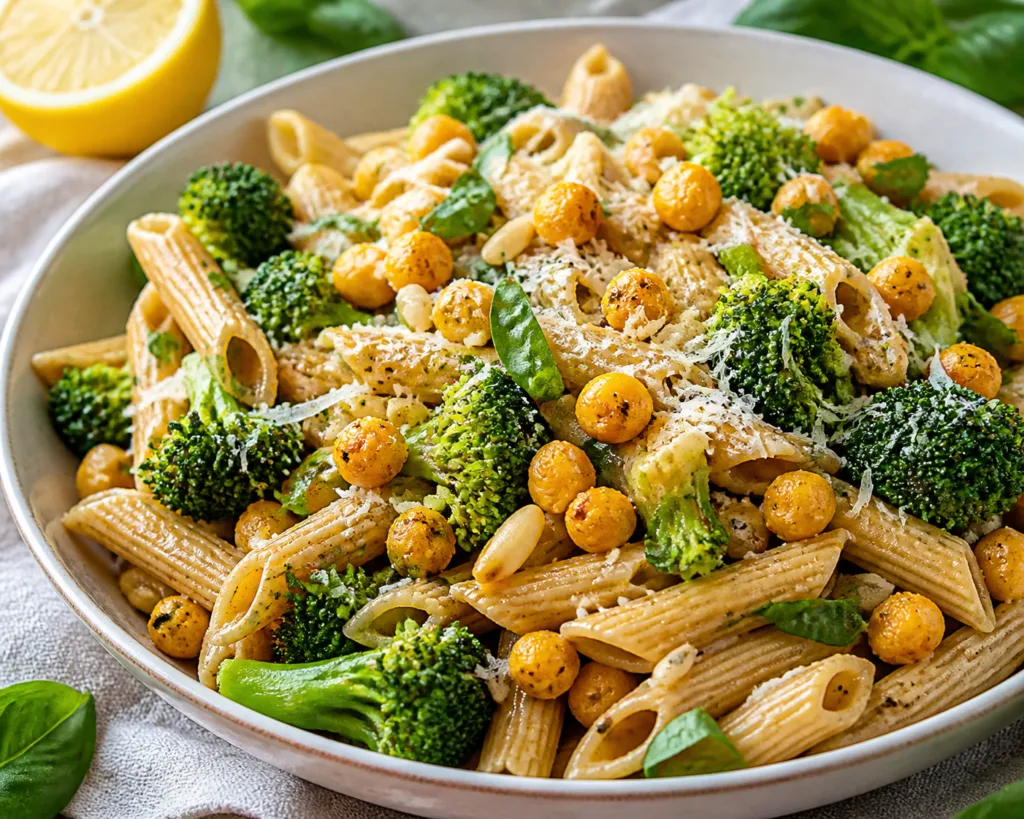
Hormone-balancing dinner broccoli chickpea lemon pasta combines whole grains, plant-based protein, and cruciferous vegetables to support endocrine health naturally. This one-skillet pasta dish delivers anti-inflammatory turmeric, detoxifying broccoli, and hormone-supporting legumes in every satisfying bite. The bright lemon brightness and crispy chickpeas create restaurant-quality texture while the silky olive oil sauce requires minimal effort. You’ll have a nutritious dinner that addresses hormonal wellness without sacrifice or complexity.
| Attribute | Details |
|---|---|
| Prep Time | 15 minutes |
| Cook Time | 20 minutes |
| Total Time | 35 minutes |
| Servings | 4 servings |
| Difficulty | Easy |
| Cuisine | Mediterranean |
Why This Recipe Works
This hormone-balancing pasta dish succeeds because it addresses nutritional foundations for endocrine support through intentional ingredient selection. I’ve built this recipe around cruciferous vegetables like broccoli, which contain sulforaphane and indole-3-carbinol that support estrogen metabolism. Chickpeas provide plant-based protein and resistant starch, promoting stable blood sugar and sustained energy without hormonal disruption.
The turmeric and lemon combination does heavy lifting beyond flavor. Curcumin in turmeric demonstrates anti-inflammatory properties that support hormonal balance, while citric acid enhances mineral absorption essential for hormone production. The whole wheat pasta provides B vitamins crucial for hormone synthesis, and the olive oil delivers polyphenols that combat oxidative stress affecting hormone regulation.
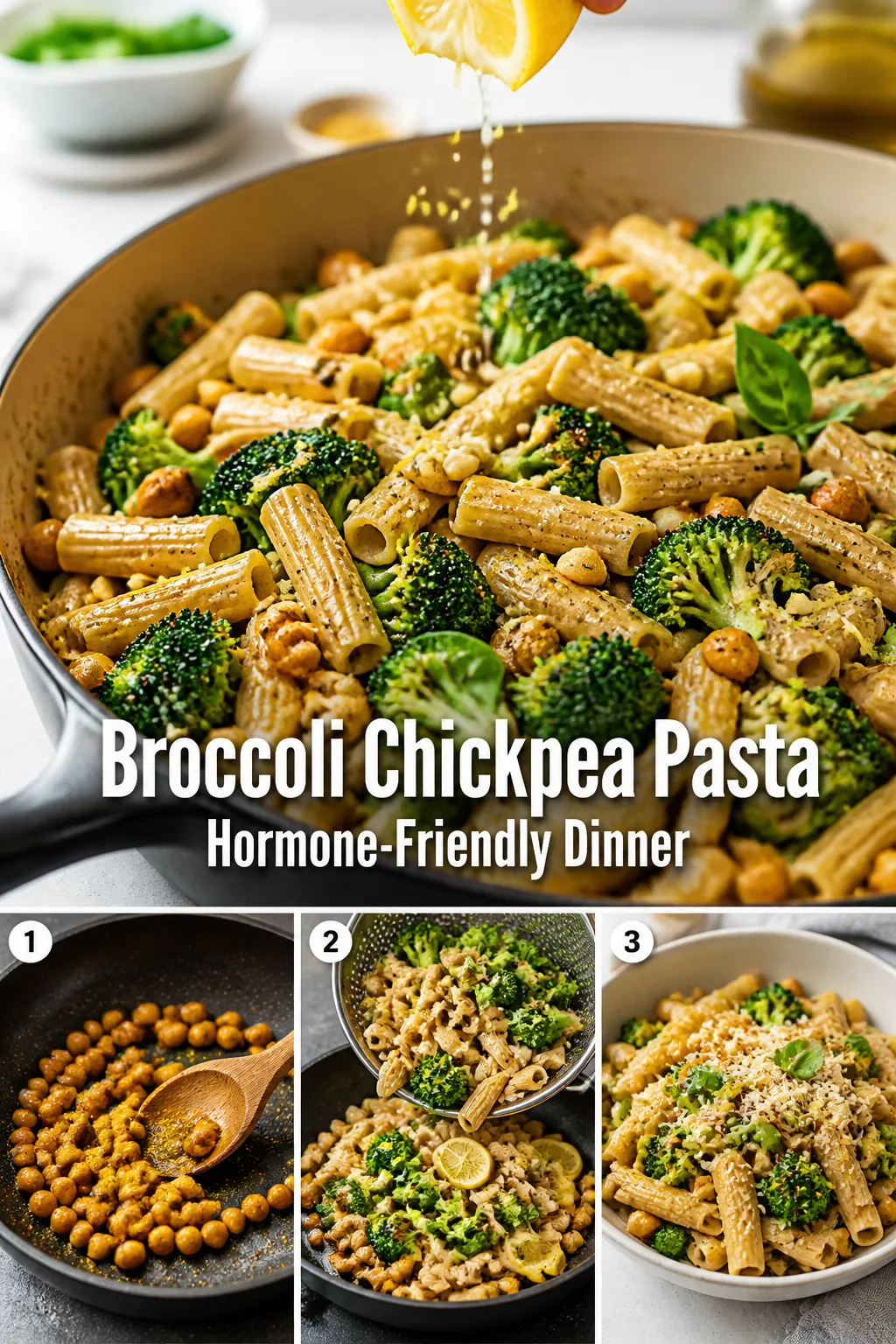
I’ve specifically designed this as a complete meal requiring one skillet and minimal cleanup. The pasta water creates a natural emulsion with the olive oil, forming a silky sauce that feels indulgent while remaining nutrient-dense. This approach teaches sustainable eating habits where hormone-supporting foods taste genuinely delicious without deprivation.
Ingredients
| Ingredient | Quantity | Notes with Alternatives |
|---|---|---|
| Whole wheat pasta (penne or rigatoni) | 12 oz | Use chickpea pasta for higher protein, or brown rice pasta for gluten-free option |
| Chickpeas, drained and rinsed | 2 cans | Use 3 cups cooked fresh chickpeas; white beans work as mild substitute |
| Broccoli florets | 3 cups | Substitute with cauliflower, kale, or Brussels sprouts for variety |
| Garlic, minced | 4 cloves | Use 1 tsp garlic powder if fresh unavailable; adjust to taste preference |
| Lemon, juiced and zested | 1 whole | Use fresh juice only, zest adds essential aromatic oils; substitute lime for variation |
| Extra virgin olive oil | 1/3 cup | Quality matters here; use cold-pressed; avocado oil acceptable substitute |
| Parmesan cheese, grated | 1/2 cup | Use nutritional yeast for vegan version; pecorino Romano adds saltiness |
| Red pepper flakes | 1/2 tsp | Adjust for heat preference; omit if sensitive to spice |
| Turmeric powder | 1 tsp | Essential for hormone balance; always pair with black pepper for absorption |
| Dried oregano | 1 tsp | Use fresh oregano at 1 tbsp; Mediterranean herbs blend works similarly |
| Salt and pepper | To taste | Taste before final seasoning; Salt Intake guidelines recommend restraint |
| Fresh basil | 1/4 cup | Torn by hand before serving; parsley acceptable if unavailable |
| Toasted pine nuts | 2 tbsp | Toast from raw in dry skillet for 2-3 minutes; walnuts or sunflower seeds substitute |
Step-by-Step Instructions
Phase One: Prepare Components
- Drain and rinse two cans of chickpeas under cool running water, patting dry with paper towels to remove excess moisture.
- Chop broccoli into uniformly-sized florets approximately 1.5 inches in diameter for even cooking.
- Mince four garlic cloves finely, or press through garlic mincer for maximum flavor release.
- Juice one lemon completely, capturing all liquid, then zest the skin using microplane grater to collect fragrant oils.
- Measure all spices, oils, and pasta water into separate small bowls for efficient cooking.
Phase Two: Cook Pasta and Broccoli
- Fill large pot with salted water, bringing to rolling boil over high heat.
- Add twelve ounces whole wheat pasta, stirring occasionally to prevent sticking as it cooks.
- Cook pasta for nine minutes (three minutes less than package directions), maintaining gentle boil.
- Add three cups broccoli florets directly to boiling pasta water, stirring gently.
- Continue cooking for exactly three minutes until broccoli becomes bright green and tender-crisp.
- Reserve one cup pasta water in measuring cup before draining pasta and broccoli in colander.
Phase Three: Build the Sauce
- Warm one-third cup extra virgin olive oil in large skillet over medium heat for one minute.
- Add minced garlic to warm oil, stirring constantly for thirty seconds until fragrant but not browned.
- Add drained chickpeas and one teaspoon turmeric to the skillet, stirring to coat evenly with oil.
- Cook chickpea mixture for three to four minutes, stirring occasionally, until chickpeas develop light golden crust.
- Add drained pasta and broccoli to the skillet, tossing gently to combine with chickpea mixture.
- Pour lemon juice over pasta, sprinkle lemon zest across surface, and add one-half teaspoon red pepper flakes.
- Toss pasta mixture continuously while gradually adding reserved pasta water until silky emulsified sauce coats all ingredients.
- Remove skillet from heat before sauce becomes overly thick; carryover heat will continue thickening.
Phase Four: Finish and Serve
- Add one teaspoon dried oregano and freshly cracked black pepper to taste, tossing thoroughly.
- Sprinkle one-half cup grated Parmesan cheese over pasta, tossing gently until cheese melts into sauce.
- Divide pasta into four serving bowls, ensuring equal distribution of chickpeas and broccoli.
- Top each bowl with fresh basil torn by hand and two tablespoons toasted pine nuts divided equally.
- Serve immediately while sauce maintains silky consistency and flavors remain bright.
Chef Tips for Perfect Results
- Reserve pasta water before draining; starch-laden water creates the silky sauce this dish requires. Save at least one-quarter cup extra in case you need additional emulsifier during cooking.
- Toast pine nuts yourself in a dry skillet over medium heat for two to three minutes, shaking frequently. This brings out nutty oils that amplify texture contrast against creamy sauce.
- Add pasta to boiling water without breaking it; hold bundle vertically and let it naturally soften into the water. This prevents overcrowding and ensures even cooking throughout.
- Zest the lemon before juicing it; once cut, the skin dries quickly and becomes difficult to zest. Fresh zest contains essential oils that dried lemon zest cannot replicate.
- Don’t skip the turmeric pairing with black pepper; piperine in black pepper increases curcumin bioavailability by up to 2000 percent, maximizing hormone-supporting benefits.
- Taste the sauce at every stage; pasta water starch affects saltiness and balance differently than expected. Add salt gradually in final minutes only.
Common Mistakes to Avoid
Overcooking the broccoli destroys its glucosinolates, the compounds providing hormone-supporting benefits. Fix this by adding broccoli only in the final three minutes of pasta cooking, timing it to finish simultaneously with the pasta. The florets should yield slightly to tooth pressure without becoming mushy or gray-green.
Draining chickpeas completely but not patting them dry introduces excess water that dilutes your sauce. Wet chickpeas also won’t crisp properly during cooking, resulting in mealy texture rather than golden crunch. Always use paper towels to remove surface moisture after rinsing, which takes thirty seconds but transforms the final dish.
Using bottled lemon juice instead of fresh lemon eliminates the volatile aromatics that define this recipe’s brightness. Bottled juice adds only acidity without the complex flavor profile fresh lemon provides. Fresh lemons cost less than pre-bottled juice over time and deliver superior hormone-balancing benefits.
Adding all pasta water at once creates watery sauce that never achieves the proper silky consistency. Gradually add reserved pasta water while tossing constantly, allowing the starch to emulsify with oil slowly. This gives you control to stop adding water once sauce reaches desired thickness.
Failing to reserve pasta water before draining means attempting to recreate a creamy sauce from oil alone, which separates immediately. This water is not wasted cooking liquid; it’s an essential ingredient for proper sauce formation. Begin draining pasta while holding back just one cup in the pot.
Variations and Substitutions
| Ingredient | Substitution | Impact on Flavor |
|---|---|---|
| Whole wheat pasta | Chickpea pasta or lentil pasta | Increases protein content and creates earthier, nuttier flavor profile while maintaining structural integrity |
| Chickpeas | White beans, cannellini, or lentils | White beans offer milder flavor; lentils add earthy complexity; all maintain hormone-supporting legume benefits |
| Broccoli | Cauliflower, kale, Brussels sprouts, or cabbage | Cauliflower stays mild; kale adds slight bitterness; Brussels sprouts contribute nutty sweetness when halved and roasted separately |
| Parmesan cheese | Nutritional yeast (vegan) or pecorino Romano | Nutritional yeast adds savory umami without dairy; pecorino Romano intensifies saltiness and tang |
| Olive oil | Avocado oil or walnut oil | Avocado oil maintains neutral flavor; walnut oil adds subtle nuttiness that complements pine nuts |
| Fresh basil | Flat-leaf parsley, arugula, or fresh mint | Parsley adds subtle onion notes; arugula introduces peppery bite; mint creates unexpected Mediterranean freshness |
| Pine nuts | Walnuts, almonds, sunflower seeds, or pumpkin seeds | Walnuts add earthy bitterness; almonds stay delicate; seeds provide budget-friendly crunch with similar nutritional profile |
| Turmeric | Ginger powder or curry powder | Ginger adds warmth and digestive support; curry powder introduces complex spice notes but masks individual flavors |
Serving Suggestions and Pairings
Serve this hormone-balancing pasta as a main course for weeknight dinners, pairing with a simple green salad dressed with balsamic vinegar and shallots. The acidity in salad dressing complements the lemon brightness without competing. Add grilled chicken breast for additional protein if desired, though the chickpeas already provide substantial amino acids.
This pasta works beautifully as part of a Mediterranean-inspired dinner spread alongside roasted vegetables and whole grain bread. Consider preparing the Mediterranean Summer Pasta Salad: Anti-Inflammatory as a chilled side dish, creating textural contrast between warm and cold elements.
For entertaining, portion pasta into individual shallow bowls for restaurant presentation that impresses without requiring a separate sauce boat. Garnish tableside with additional fresh basil and lemon zest just before serving, allowing guests to experience the full aromatic impact.
Pair this dinner with hormone-supporting beverages like the Herbal Sun Tea Recipe for Hormone Balance served chilled, or simply offer sparkling water with fresh lemon slices to extend the bright citrus theme throughout the meal.
For lighter appetites, serve this pasta in smaller portions as a side dish alongside roasted salmon or white fish. The hormone-supporting ingredients make this flexible enough for buffet-style entertaining where guests can choose portion sizes.
Storage and Reheating
| Method | Duration | Instructions |
|---|---|---|
| Refrigerator Storage | 3-4 days | Allow pasta to cool completely before transferring to airtight container. Store sauce and pasta together; they separate slightly but recombine during reheating |
| Freezer Storage | 2-3 months | Freeze in portion-sized containers, leaving one-inch headspace for expansion. Thaw overnight in refrigerator before reheating; frozen pasta maintains texture better than fresh-made |
| Stovetop Reheating | 5-7 minutes | Transfer to skillet over medium heat, adding two to three tablespoons water or chicken broth to restore silky sauce consistency. Stir occasionally until heated through; avoid high heat that breaks emulsion |
| Microwave Reheating | 3-4 minutes | Place in microwave-safe bowl, draping loosely with damp paper towel to prevent drying. Heat in thirty-second intervals, stirring between each, until steaming throughout. Add water if sauce appears too thick |
| Cold Serving | Immediate | This pasta transforms beautifully into a cold salad when chilled completely. Toss with additional lemon juice and olive oil before serving; top with fresh greens for light lunch option |
Nutritional Information
| Nutrient | Amount per Serving |
|---|---|
| Calories | 485 |
| Protein | 18g |
| Fat | 19g |
| Carbohydrates | 62g |
| Dietary Fiber | 14g |
| Sugars | 2g |
| Sodium | 420mg |
| Iron | 6mg |
| Calcium | 180mg |
| Folate | 185mcg |
Approximate values based on USDA FoodData Central for whole wheat pasta, canned chickpeas, fresh broccoli, and standard measurements. Broccoli Nutrition provides additional micronutrient details including vitamin C, vitamin K, and glucosinolates supporting hormone metabolism. Individual values may vary based on specific brands and preparation methods used.
This dish provides exceptional nutritional density with 14 grams dietary fiber per serving, supporting healthy hormone-regulating gut microbiota. The iron content demonstrates why legume-based dinners benefit plant-based eaters seeking sustainable protein sources without animal products. Folate content supports methylation pathways essential for hormone clearance and balance.
Frequently Asked Questions
Can I make this broccoli chickpea lemon pasta ahead of time for meal prep?
Yes, prepare this hormone-balancing pasta up to four days in advance, storing in airtight containers in the refrigerator. The sauce continues developing flavor during storage, actually improving taste quality. Simply reheat gently on the stovetop with a splash of water to restore the silky consistency before serving.
What’s the best way to crisp the chickpeas in this pasta recipe?
Pat dry chickpeas thoroughly with paper towels after rinsing, then cook in warm olive oil over medium heat for three to four minutes while stirring frequently. The dry surface allows the outer skin to develop a golden, crispy exterior through gentle browning rather than steaming. High heat will burn chickpeas rather than crisping them, so maintain consistent medium temperature throughout cooking.
How do I know when the broccoli is cooked properly in this dish?
Broccoli reaches perfect doneness when it turns bright green and yields slightly to tooth pressure while maintaining firm texture. This takes exactly three minutes when added to boiling pasta water in the final cooking stage. Overcooked broccoli becomes dull, soft, and loses the glucosinolates responsible for hormone-supporting benefits, so precise timing matters significantly.
Is this hormone-balancing pasta recipe suitable for individuals with gluten sensitivity?
The standard recipe contains gluten in whole wheat pasta, but substituting with certified gluten-free pasta or chickpea-based pasta makes this dish accessible to those avoiding gluten. Ensure all other ingredients, especially the oregano and spices, carry gluten-free certification since cross-contamination can occur during processing. The recipe’s structure remains unchanged; cooking times may vary slightly with alternative pasta varieties.
What can I serve alongside this lemon pasta for a complete hormone-supporting meal?
Pair this pasta with a simple arugula salad dressed with lemon vinaigrette, roasted root vegetables like sweet potatoes or beets, and whole grain bread for balanced macronutrients. Add grilled salmon or white fish for additional omega-3 fatty acids supporting hormone production, or keep the meal vegetarian by serving with fermented foods like sauerkraut for probiotic gut support. Consider the Dandelion Jelly Recipe: Anti-Inflammatory Preserve as an unconventional condiment that extends anti-inflammatory benefits.
Conclusion
Hormone-balancing dinner broccoli chickpea lemon pasta delivers complete nutritional support for endocrine health in a single, satisfying skillet meal. This Mediterranean-inspired dish combines whole grains, plant-based protein, and cruciferous vegetables proven to support hormone metabolism naturally. The bright lemon flavor, crispy chickpeas, and silky olive oil sauce prove that hormone-supporting nutrition tastes genuinely delicious without compromise or complexity required for preparation.
“`

Hormone-Balancing Dinner: Broccoli Chickpea Lemon Pasta
Ingredients
Method
- Drain and rinse two cans of chickpeas under cool running water, patting dry with paper towels to remove excess moisture.
- Chop broccoli into uniformly-sized florets approximately 1.5 inches in diameter for even cooking.
- Mince four garlic cloves finely, or press through garlic mincer for maximum flavor release.
- Juice one lemon completely and zest the skin using microplane grater to collect fragrant oils.
- Fill large pot with salted water, bringing to rolling boil over high heat.
- Add twelve ounces whole wheat pasta, stirring occasionally to prevent sticking as it cooks.
- Cook pasta for nine minutes, maintaining gentle boil.
- Add three cups broccoli florets directly to boiling pasta water, stirring gently.
- Continue cooking for exactly three minutes until broccoli becomes bright green and tender-crisp.
- Reserve one cup pasta water in measuring cup before draining pasta and broccoli in colander.
- Warm one-third cup extra virgin olive oil in large skillet over medium heat for one minute.
- Add minced garlic to warm oil, stirring constantly for thirty seconds until fragrant but not browned.
- Add drained chickpeas and one teaspoon turmeric to the skillet, stirring to coat evenly with oil.
- Cook chickpea mixture for three to four minutes, stirring occasionally, until chickpeas develop light golden crust.
- Add drained pasta and broccoli to the skillet, tossing gently to combine with chickpea mixture.
- Pour lemon juice over pasta, sprinkle lemon zest across surface, and add one-half teaspoon red pepper flakes.
- Toss pasta mixture continuously while gradually adding reserved pasta water until silky emulsified sauce coats all ingredients.
- Remove skillet from heat before sauce becomes overly thick; carryover heat will continue thickening.
- Add one teaspoon dried oregano and freshly cracked black pepper to taste, tossing thoroughly.
- Sprinkle one-half cup grated Parmesan cheese over pasta, tossing gently until cheese melts into sauce.
- Divide pasta into four serving bowls, ensuring equal distribution of chickpeas and broccoli.
- Top each bowl with fresh basil torn by hand and two tablespoons toasted pine nuts divided equally.
- Serve immediately while sauce maintains silky consistency and flavors remain bright.