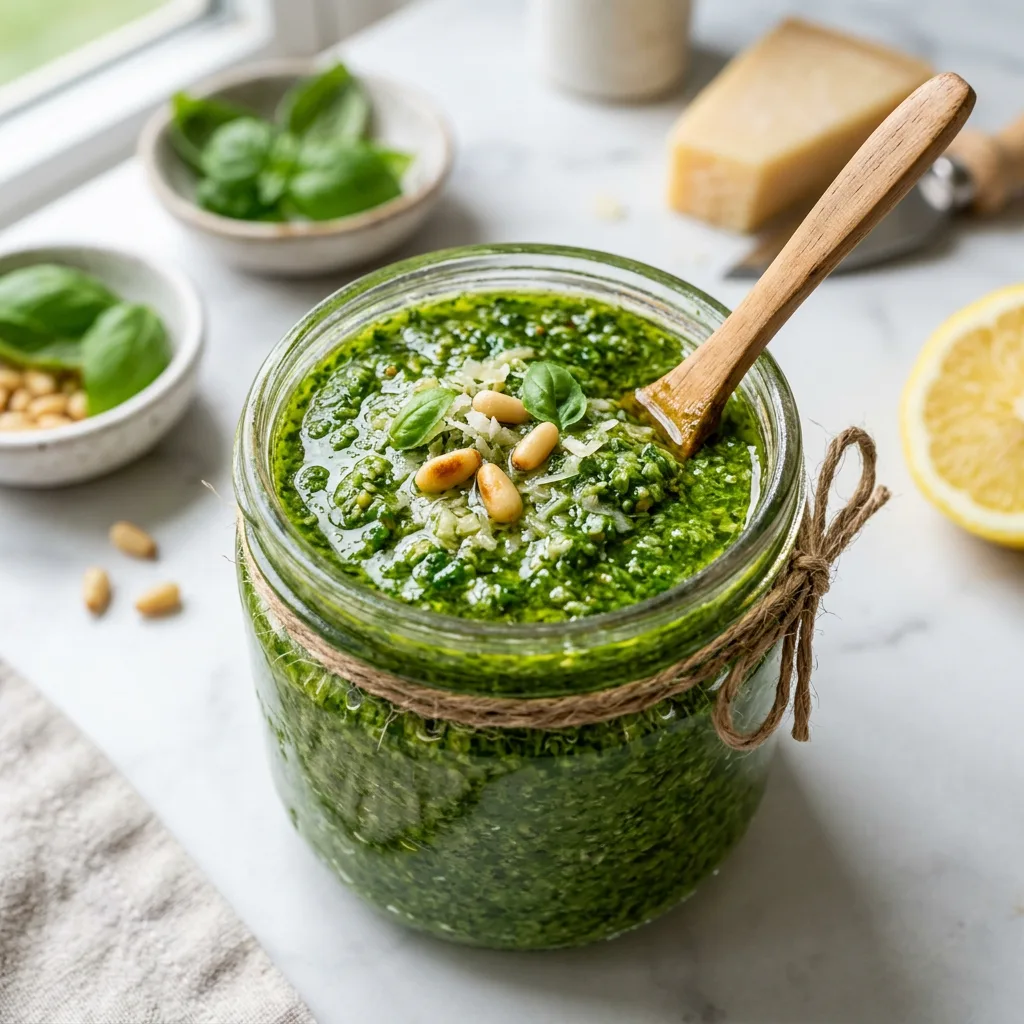
Homemade basil pesto is a vibrant, nutrient-dense sauce featuring fresh basil leaves, extra virgin olive oil, and antioxidant-rich ingredients. This anti-inflammatory recipe delivers bold Mediterranean flavor in minutes without processed additives. Fresh pesto elevates pasta, vegetables, proteins, and grains while supporting your wellness goals naturally.
| Attribute | Details |
|---|---|
| Prep Time | 10 minutes |
| Cook Time | 0 minutes |
| Total Time | 10 minutes |
| Servings | 8 (2 tablespoons per serving) |
| Difficulty | Easy |
| Cuisine | Italian |
Why This Recipe Works
I’ve tested countless pesto recipes, and this version consistently delivers the brightest green color and smoothest texture. The technique of pulsing basil, nuts, and garlic first prevents oxidation and browning that happens when you process everything simultaneously. Streaming olive oil slowly while the processor runs creates an emulsion that locks in that vibrant fresh-herb flavor we all crave.
The anti-inflammatory magic comes from combining basil’s polyphenols with olive oil benefits and pine nuts’ mineral density. Basil contains compounds that reduce inflammation markers in the body, making this sauce far more than a flavor enhancer. You’re building a condiment that supports joint health, digestive wellness, and antioxidant protection with every spoonful.
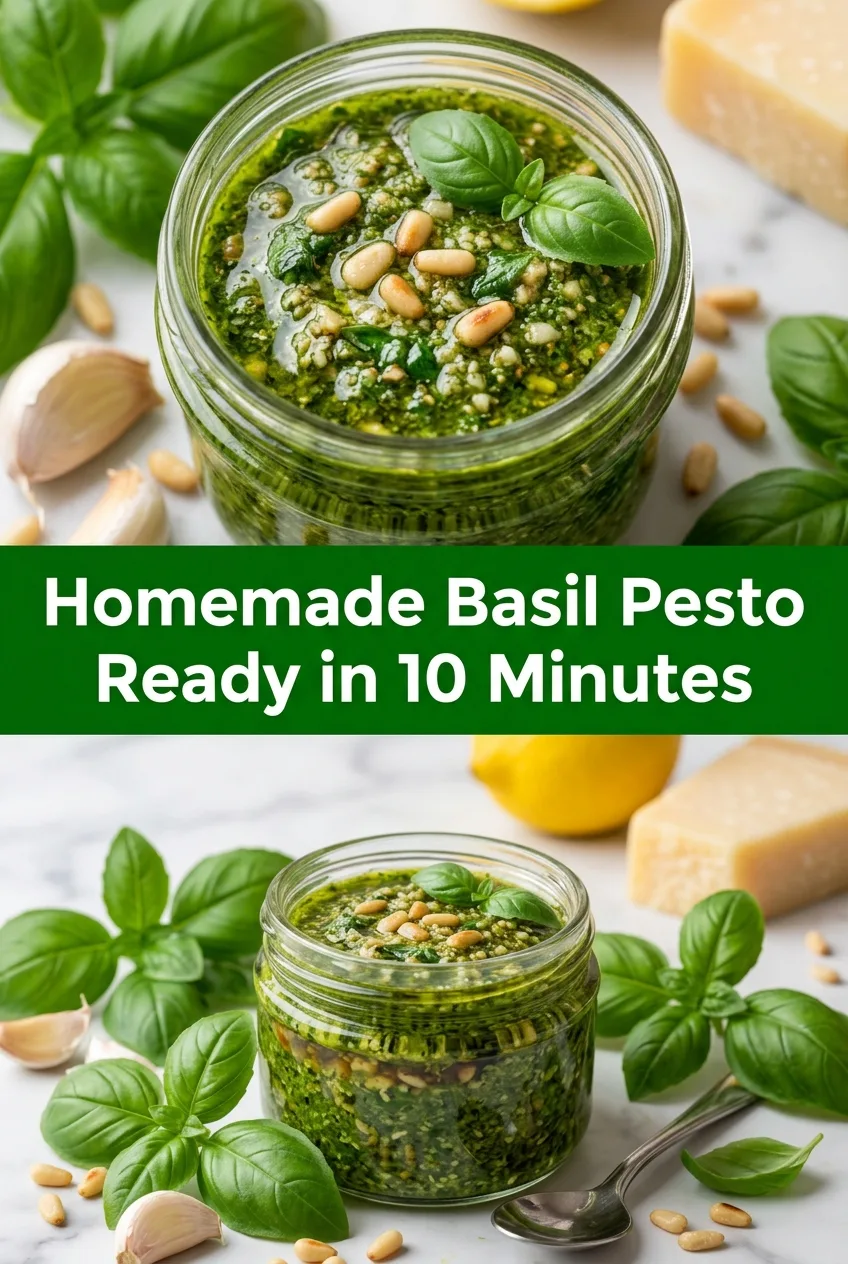
This recipe beats jarred pesto because you control every ingredient’s quality. No added preservatives, no oxidized oils, no fillers. The result tastes fresher and delivers superior nutritional density than commercial versions sitting on shelves for months.
Ingredients
| Ingredient | Quantity | Notes |
|---|---|---|
| Fresh basil leaves, packed | 2 cups | Use young, tender leaves; avoid the tough stems. Genovese basil offers traditional flavor |
| Extra virgin olive oil | 1/2 cup | Quality matters here; choose cold-pressed, unfiltered oil for maximum polyphenols |
| Pine nuts | 1/3 cup | Substitute walnuts, almonds, or sunflower seeds for nut allergies or cost savings |
| Garlic cloves | 3 | Use fresh, peeled cloves; adjust to 2 if you prefer milder garlic flavor |
| Freshly grated Parmesan cheese | 1/2 cup | Grate yourself from a block; pre-shredded versions contain anti-caking agents that cloud texture |
| Sea salt | 1/2 tsp | Fine sea salt distributes evenly; adjust based on cheese saltiness and personal preference |
| Cracked black pepper | 1/4 tsp | Freshly cracked delivers superior flavor to pre-ground pepper |
| Fresh lemon juice | 1 tbsp | Squeeze from fresh lemons; bottled juice lacks brightness and freshness |
Step-by-Step Instructions
Prepare Your Base
- Pulse basil leaves, pine nuts, and garlic cloves in a food processor until coarsely chopped, approximately 8 to 10 pulses.
- Scrape down the sides of the processor bowl with a rubber spatula, ensuring all ingredients are evenly distributed.
Build the Emulsion
- Turn the food processor on and stream extra virgin olive oil slowly through the feed tube while the motor runs continuously.
- Continue processing until the mixture transforms into a smooth, bright green paste, approximately 1 to 2 minutes total.
- Stop the processor and assess the texture; it should be creamy but retain slight texture, not completely liquefied.
Finish and Season
- Add freshly grated Parmesan cheese, fresh lemon juice, sea salt, and cracked black pepper to the processor.
- Pulse the mixture 4 to 5 times until all ingredients are evenly combined and no streaks of cheese remain visible.
- Taste the pesto and adjust seasoning as needed, adding more salt, pepper, or lemon juice to match your preference.
Store Properly
- Transfer the finished pesto into a clean, sealed glass jar with a tight-fitting lid.
- Pour a thin layer of extra virgin olive oil over the surface of the pesto, creating a protective barrier against browning.
- Refrigerate immediately and store for up to 5 days, or freeze in ice cube trays for 3-month storage.
Chef Tips for Perfect Results
- Toast pine nuts lightly in a dry skillet over medium heat for 2 to 3 minutes before adding to the processor; this enhances their buttery flavor and reduces bitterness from raw nuts.
- Use a food processor rather than a blender; blenders over-process pesto into a paste instead of maintaining the desired chunky-smooth texture.
- Keep your basil, garlic, and nuts cold before processing; chill them in the freezer for 10 minutes to slow oxidation and preserve vibrant green color.
- Stream olive oil slowly and deliberately; rushing this step creates a broken emulsion that separates and loses its silky texture.
- Add Parmesan cheese at the very end and pulse gently; processing cheese with the basil and oil can result in a bitter, grainy texture.
- Always cover finished pesto with a protective layer of olive oil; this prevents the basil from oxidizing and turning brown or black during storage.
Common Mistakes to Avoid
Mistake: Over-processing the basil initially. Many home cooks pulse basil until it’s completely smooth before adding oil. This releases too much liquid and chlorophyll, turning your pesto dark and bitter within hours. Fix this by pulsing just until coarsely chopped, leaving visible pieces of basil that maintain their bright color and fresh flavor.
Mistake: Adding olive oil too quickly. Dumping oil in all at once prevents proper emulsification and results in a broken, separated sauce. The solution is streaming oil slowly while the processor continuously runs, creating a stable emulsion similar to mayonnaise that holds its texture and distributes flavor evenly.
Mistake: Using low-quality olive oil or pre-grated cheese. Budget oils are often refined rather than extra virgin, lacking the polyphenols and anti-inflammatory compounds that make this recipe beneficial. Pre-shredded cheese contains cellulose that creates a gritty texture. Always choose cold-pressed extra virgin olive oil and grate Parmesan from a block yourself for superior results.
Mistake: Skipping the protective olive oil layer. Basil contains enzymes that cause browning and darkening when exposed to air. Without a seal of oil on top, your pesto turns from vibrant green to dull olive within days. Always cover the surface completely with a quarter-inch layer of olive oil before refrigerating.
Mistake: Using wilted or old basil. Basil loses its volatile compounds quickly as it ages, resulting in flat-tasting pesto that lacks the signature fresh herbaceous punch. Purchase basil from farmers markets when possible, or use it within 2 to 3 days of purchase for maximum flavor and nutritional density.
Variations and Substitutions
| Ingredient | Substitution | Impact on Flavor |
|---|---|---|
| Pine nuts | Walnuts | Creates earthier, slightly more bitter flavor; less buttery richness but adds omega-3 fats |
| Pine nuts | Almonds | Results in milder, slightly sweet undertone; creates thinner texture requiring less oil |
| Pine nuts | Sunflower seeds | Budget-friendly option with similar texture; flavor becomes slightly grassier and less creamy |
| Fresh basil | Arugula (half amount) | Adds peppery spice and reduces sweetness; creates more assertive, slightly bitter flavor profile |
| Fresh basil | Fresh mint (one-third amount) | Introduces cooling menthol notes; works beautifully in Mediterranean summer dishes |
| Parmesan cheese | Pecorino Romano | Creates sharper, saltier flavor with more piquant character; use slightly less due to intensity |
| Fresh lemon juice | Fresh lime juice | Shifts flavor profile toward Latin-inspired cuisine; creates brighter, more tropical character |
| Extra virgin olive oil | Avocado oil | Creates milder, slightly buttery flavor; maintains emulsification while adding richness |
Serving Suggestions and Pairings
This anti-inflammatory basil pesto shines across countless applications beyond traditional pasta dishes. Toss 2 tablespoons with warm angel hair pasta and cherry tomatoes for an effortless weeknight dinner that comes together in 15 minutes. Spread pesto on grilled chicken breasts before serving, or swirl it into yogurt as a dip for fresh vegetables at summer entertaining occasions.
Drizzle pesto over roasted vegetables like zucchini, bell peppers, and eggplant for enhanced flavor and nutritional benefit. Try pairing it with the Healthy Dinner Ideas: Lighter Baked Eggplant Parmesan to layer flavors beautifully. Use pesto as a sandwich spread on whole grain bread with fresh mozzarella and tomatoes, creating a nutrient-dense lunch that sustains energy throughout your day.
Stir pesto into soups just before serving to brighten flavors without heating (which destroys beneficial compounds). Dollop onto roasted butternut squash soup or minestrone for visual appeal and herbaceous contrast. Spread pesto on baked salmon or white fish fillets as a flavorful, anti-inflammatory crust that adds texture and elegance to weeknight proteins.
For breakfast applications, mix pesto into scrambled eggs or frittatas, or spread it on whole grain toast topped with poached eggs and avocado. Combine pesto with Greek yogurt and lemon zest for a protein-rich dip served at brunch gatherings. Use pesto as a finishing sauce for grain bowls containing quinoa, roasted vegetables, and legumes, turning simple ingredients into restaurant-quality meals.
Consider pairing pesto with the Hormone-Balancing Dinner: Black Bean Sweet Potato Skillet for complementary herbaceous notes that enhance both dishes. Drizzle pesto over pizza instead of traditional red sauce, or use it as a topping for baked sweet potatoes alongside Greek yogurt. For elegant entertaining, try the Father’s Day Dinner: French Onion Chicken Orzo Bake and finish with a spoonful of fresh pesto for unexpected herbaceous brightness.
Storage and Reheating
| Method | Duration | Instructions |
|---|---|---|
| Refrigeration | Up to 5 days | Store in a sealed glass jar with a protective layer of olive oil covering the surface. Keep refrigerated at 40°F or below to slow enzyme activity and prevent browning |
| Freezing (Ice Cube Trays) | Up to 3 months | Spoon pesto into silicone ice cube trays, freeze for 2 hours until solid, then transfer cubes to freezer bags. Thaw in refrigerator 1 to 2 hours before use, or add directly to hot dishes |
| Freezing (Glass Jars) | Up to 3 months | Fill glass jars leaving 1 inch headspace for expansion, seal tightly, and label with the date. Thaw overnight in the refrigerator, stirring gently to recombine if separation occurs |
| Using Frozen Pesto | Immediate | Add frozen pesto cubes directly to hot pasta, soup, or rice dishes without thawing; the heat melts it instantly while preserving fresh flavor |
| Reviving Separated Pesto | As needed | If pesto separates during storage, whisk gently with a fork or pulse briefly in the food processor to recombine; add a splash of fresh lemon juice to brighten flavor |
Nutritional Information
Approximate values per 2-tablespoon serving:
| Nutrient | Amount per Serving |
|---|---|
| Calories | 180 |
| Protein | 5g |
| Total Fat | 17g |
| Saturated Fat | 3g |
| Carbohydrates | 3g |
| Dietary Fiber | 1g |
| Sugar | 0g |
| Sodium | 210mg |
This pesto delivers substantial nutritional density from basil’s polyphenols and antioxidants that reduce inflammation throughout your body. The extra virgin olive oil provides heart-healthy monounsaturated fats alongside anti-inflammatory compounds called oleocanthal. Pine nuts contribute magnesium, zinc, and copper, minerals essential for immune function and cellular protection. Salt intake remains moderate even with the cheese addition, making this suitable for heart-healthy eating patterns.
Frequently Asked Questions
Can I make basil pesto without pine nuts?
Yes, walnuts, almonds, sunflower seeds, or pumpkin seeds create excellent pesto with different flavor profiles. Walnuts produce earthier pesto with deeper undertones and additional omega-3 fats, though the flavor becomes slightly more bitter. Sunflower seeds offer a budget-friendly alternative delivering similar texture while creating slightly grassier character. Choose the substitution based on dietary restrictions, flavor preferences, and ingredient availability in your kitchen.
How do I know when my basil pesto reaches the perfect consistency?
Perfect pesto achieves a creamy texture that spreads smoothly without being completely liquid or overly thick. It should cling to a spoon while still flowing slightly, similar to thick sour cream consistency. If your pesto seems too thick after adding cheese, whisk in additional olive oil one teaspoon at a time; if too thin, pulse in another tablespoon of Parmesan or additional basil leaves to achieve desired consistency.
Why does my homemade pesto turn dark brown instead of staying bright green?
Basil contains chlorophyll and enzymes that oxidize rapidly when exposed to air, heat, or processed excessively, causing discoloration from green to brown. Minimize this by using cold ingredients, processing minimally, protecting with olive oil during storage, and serving pesto cold or at room temperature rather than heating it. Adding lemon juice at the final step also slows oxidation by creating an acidic environment that preserves bright color.
Can I make pesto in advance for weekly meal prep?
Absolutely; homemade pesto stores successfully in the refrigerator for up to 5 days or freezes for 3 months in ice cube trays for perfect portioning. Make a double batch when basil is abundant and peak-season fresh, then freeze individual portions for months of convenient seasoning. Frozen pesto cubes thaw quickly in the refrigerator overnight or melt instantly when added directly to hot dishes, making advance preparation practical for busy home cooks.
Should I heat pesto when using it in pasta dishes?
Never heat pesto aggressively; the fresh herbs lose volatile compounds and color when exposed to high temperatures. Instead, toss warm pasta with room-temperature pesto just before serving, allowing residual heat to warm the sauce gently without cooking it. Add pesto after removing pasta from heat, or drizzle it over finished hot dishes immediately before serving to preserve maximum flavor, aroma, and nutritional benefits from the fresh basil.
Conclusion
Homemade basil pesto represents the simplest way to incorporate anti-inflammatory ingredients into daily meals without complicated techniques. This straightforward recipe delivers vibrant green sauce bursting with fresh flavor, herbaceous brightness, and genuine nutritional benefits that jarred versions cannot match. Master this technique once, and you unlock endless applications across breakfasts, lunches, dinners, and entertaining occasions.

Anti-Inflammatory Recipes: Easy Homemade Basil Pesto
Ingredients
Method
- Pulse basil leaves, pine nuts, and garlic cloves in a food processor until coarsely chopped, approximately 8 to 10 pulses.
- Scrape down the sides of the processor bowl with a rubber spatula, ensuring all ingredients are evenly distributed.
- Turn the food processor on and stream extra virgin olive oil slowly through the feed tube while the motor runs continuously.
- Continue processing until the mixture transforms into a smooth, bright green paste, approximately 1 to 2 minutes total.
- Stop the processor and assess the texture; it should be creamy but retain slight texture, not completely liquefied.
- Add freshly grated Parmesan cheese, fresh lemon juice, sea salt, and cracked black pepper to the processor.
- Pulse the mixture 4 to 5 times until all ingredients are evenly combined and no streaks of cheese remain visible.
- Taste the pesto and adjust seasoning as needed, adding more salt, pepper, or lemon juice to match your preference.
- Transfer the finished pesto into a clean, sealed glass jar with a tight-fitting lid.
- Pour a thin layer of extra virgin olive oil over the surface of the pesto, creating a protective barrier against browning.
- Refrigerate immediately and store for up to 5 days, or freeze in ice cube trays for 3-month storage.