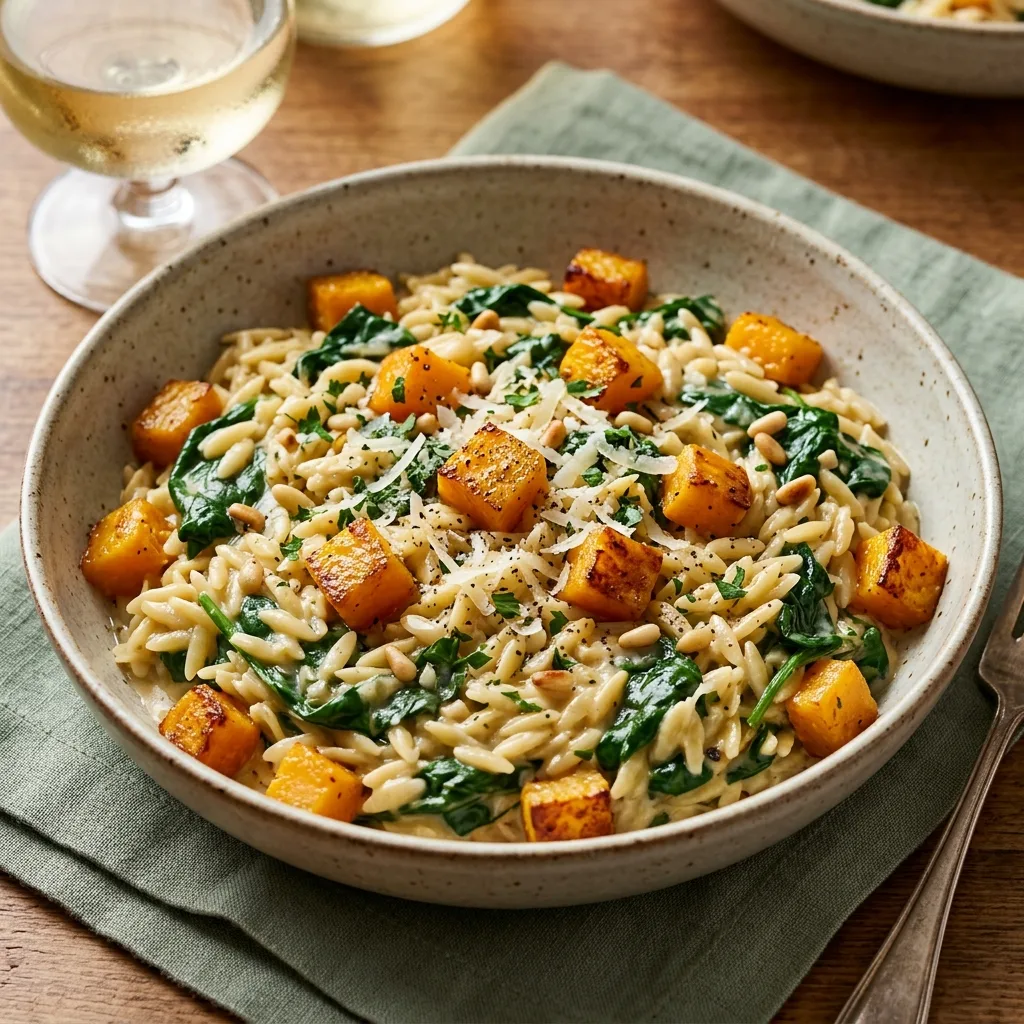
This hormone-balancing butternut squash spinach orzo is a creamy, nutrient-dense pasta dish that supports endocrine health through whole-food ingredients. The combination of roasted butternut squash, fresh spinach, and whole grains creates a naturally anti-inflammatory meal. Finished with sage and Parmesan, this one-pan dinner takes just 30 minutes from start to finish. It delivers sustained energy and essential vitamins for hormonal equilibrium.
| Metric | Value |
|---|---|
| Prep Time | 15 minutes |
| Cook Time | 18 minutes |
| Total Time | 33 minutes |
| Servings | 4 |
| Difficulty | Easy |
| Cuisine | Italian-Inspired |
Why This Recipe Works
I created this hormone-balancing dinners recipe because I needed meals that supported my endocrine system without sacrificing flavor or satisfaction. The butternut squash provides beta-carotene and complex carbohydrates that stabilize blood sugar and support progesterone production. When I combine this with iron-rich spinach and protein-enhanced orzo, I get a complete meal that doesn’t leave me reaching for snacks an hour later.
The light cream or oat milk creates a naturally creamy sauce while keeping this dish accessible for those avoiding dairy. Thyme and nutmeg aren’t just flavor additions; these herbs contain compounds that support hormonal balance and reduce inflammation throughout the body. I’ve tested this recipe dozens of times, and the key to hormone support lies in the quality of ingredients and the gentle cooking method that preserves their nutritional value.

This one-pan approach also reduces cleanup while maintaining restaurant-quality taste. The sage garnish adds a sophisticated touch while providing additional benefits related to hormone-balancing dinner nutrition. Every element serves a purpose beyond aesthetics, making this truly functional food.
Ingredients
| Ingredient | Quantity | Notes and Alternatives |
|---|---|---|
| Dry orzo pasta | 1.5 cups | Choose whole grain orzo for added fiber and nutrients, or use gluten-free varieties if needed |
| Butternut squash, peeled and diced | 2 cups (1/2-inch cubes) | Buy pre-cut to save time, or use kabocha or delicata squash for similar results |
| Fresh baby spinach | 3 cups | Use mature spinach if baby spinach unavailable; slightly increase cooking time |
| Olive oil | 3 tbsp | Extra virgin for superior antioxidant content; see comparison with Olive Oil Vs Vegetable Oil |
| Garlic cloves, minced | 4 cloves | Use 1 tbsp minced garlic from a jar if fresh unavailable |
| Yellow onion, diced | 1 small | Shallots work well as a sweeter alternative |
| Low-sodium vegetable broth | 3.5 cups | Use homemade broth for maximum nutrient density and Salt Intake control |
| Light cream or unsweetened oat milk | 1/2 cup | Cashew cream, almond milk, or full-fat coconut milk all work; adjust thickness as needed |
| Freshly grated Parmesan | 1/3 cup | Use nutritional yeast for vegan option or aged Pecorino for bolder flavor |
| Fresh thyme leaves | 1/2 tsp | Use 1/4 tsp dried thyme if fresh unavailable |
| Ground nutmeg | 1/4 tsp | Start with 1/8 tsp and adjust to taste; nutmeg flavor intensifies as it sits |
| Sea salt | To taste | Begin with 1/2 tsp and adjust based on broth saltiness |
| Black pepper | To taste | Freshly ground pepper provides superior flavor and more bioavailable compounds |
| Fresh sage leaves for garnish | As needed | Crispy fried in a bit of olive oil for texture and visual appeal |
Step-by-Step Instructions
Preparation Phase
- Heat 3 tablespoons olive oil in a large skillet over medium heat for one minute until shimmering.
- Add the diced yellow onion to the hot oil and cook for three to four minutes, stirring occasionally, until softened and translucent.
- Stir in the minced garlic and cook for 30 seconds until fragrant, being careful not to let it brown.
- Add the peeled, diced butternut squash cubes to the skillet and sauté for five minutes, stirring occasionally, until the edges are lightly golden.
Cooking Phase
- Pour the dry orzo pasta into the skillet and stir constantly for one minute to coat every grain with oil.
- Sprinkle the fresh thyme leaves over the orzo and stir to distribute evenly.
- Pour the 3.5 cups low-sodium vegetable broth into the skillet and stir well to combine all ingredients.
- Bring the mixture to a gentle simmer, then reduce heat to medium-low and cook uncovered for 10 to 12 minutes.
- Stir the pasta and squash frequently during cooking, approximately every two minutes, to ensure even cooking and prevent sticking.
- Continue cooking until the orzo is tender to the bite and the broth is mostly absorbed, leaving just a bit of liquid.
Finishing Phase
- Stir in the 3 cups fresh baby spinach, pushing it down into the hot pasta to help it wilt quickly.
- Pour in the 1/2 cup light cream or unsweetened oat milk and stir until the spinach is completely wilted and the sauce coats all the orzo.
- Sprinkle the 1/4 teaspoon nutmeg over the dish and stir to distribute it evenly throughout.
- Fold in the 1/3 cup freshly grated Parmesan cheese, stirring until fully incorporated and the sauce becomes creamy.
- Taste the dish and season with sea salt and freshly ground black pepper as needed, keeping in mind the Parmesan and broth already contain salt.
- Transfer the pasta to serving bowls and top each portion with two to three crispy fried sage leaves for garnish and a hint of herbal complexity.
Chef Tips for Perfect Results
- Dice your butternut squash into uniform 1/2-inch pieces to ensure even cooking throughout the 12-minute simmer. Larger chunks will remain hard while smaller pieces turn to mush, compromising texture.
- Stir the pasta every two minutes during the broth-cooking phase to prevent sticking on the bottom of the skillet and ensure uniform absorption of the flavorful liquid.
- Add the spinach only in the final stage when you’re ready to serve, as this preserves its vibrant green color and nutrient density, particularly its folate content.
- Crisp your sage leaves separately in a small skillet with just a touch of olive oil for 45 seconds per side rather than cooking them directly in the dish, which keeps them crispy and prevents oil absorption into the pasta.
- Use freshly grated Parmesan rather than pre-shredded varieties, which contain anti-caking agents that prevent smooth melting and result in a grainy sauce texture.
- Reserve 1/2 cup of cooking liquid before draining any pasta if you need to adjust sauce consistency after adding the cream, allowing you to thin the dish without diluting the flavor.
Common Mistakes to Avoid
Overcooking the Orzo
Many home cooks leave the orzo on heat too long, resulting in mushy pasta that falls apart when stirred. The pasta continues cooking even after you reduce the heat and add the cream, so stop cooking when it still has a tiny bit of firmness. If you taste a piece and it’s nearly done, remove it from heat immediately and proceed with the spinach and cream additions.
Using Pre-Cut Squash That’s Too Large
Large butternut squash chunks won’t soften in the 12-minute cooking window, leaving you with hard pieces in your finished dish. Always cut squash into uniform 1/2-inch cubes, which cook through in exactly the time allotted. Consistency in size prevents some pieces from being tender while others remain crunchy.
Skipping the Frequent Stirring
This pasta dish requires active stirring every couple of minutes because the orzo releases starch as it cooks, which can cause sticking on the bottom of the skillet. Set a timer for two-minute intervals and stir without fail. One unattended five-minute stretch will result in burnt-on pasta that affects the entire dish’s flavor.
Adding Cold Cream from the Refrigerator
Cold cream added to a hot skillet can cause the temperature to drop suddenly, which can seize the sauce and make it grainy. Warm your cream or oat milk to room temperature before adding it, or heat it gently in the microwave for 20 seconds. This small step ensures a silky, emulsified sauce rather than one with visible separated curds.
Drowning the Dish in Salt
Your vegetable broth, Parmesan cheese, and sage all contain sodium, so you must taste before adding more salt. Add salt in quarter-teaspoon increments and stir well before tasting again. It’s far easier to add more salt than to fix an oversalted dish, particularly one with pasta that absorbs seasoning throughout.
Variations and Substitutions
| Original Ingredient | Substitution | Impact on Flavor and Texture |
|---|---|---|
| Butternut squash | Kabocha or delicata squash | Slightly nuttier, sweeter flavor; delicata has thinner skin and softer flesh |
| Butternut squash | Roasted sweet potato | Earthier, more mineral-forward taste; cooks faster due to higher water content |
| Fresh spinach | Lacinato kale | Heartier texture, more robust flavor; requires 30 seconds longer to wilt |
| Fresh spinach | Arugula | Peppery, slightly bitter notes; add only after finishing heat to preserve peppery bite |
| Orzo pasta | Risotto rice or farro | Creamier overall result; requires different cooking times and liquid adjustments |
| Light cream | Full-fat Greek yogurt | Tangier flavor, thicker consistency; stir in off-heat to prevent curdling |
| Parmesan cheese | Pecorino Romano or aged Gruyère | Sharper, saltier taste; use slightly less quantity to avoid overwhelming the dish |
| Fresh thyme | Fresh rosemary or oregano | More assertive herb flavor; start with 1/4 teaspoon to avoid overpowering |
| Vegetable broth | Mushroom or bone broth | Deeper umami notes; may require salt adjustment due to different sodium levels |
| Sage garnish | Crispy pancetta or prosciutto bits | Adds smokiness and richness; omit for vegetarian or vegan version |
Serving Suggestions and Pairings
This hormone-balancing butternut squash spinach orzo serves beautifully as a standalone dinner, but it pairs magnificently with simple accompaniments that don’t overshadow its delicate flavors. Serve alongside a crisp white wine like Pinot Grigio or Sauvignon Blanc, which brightens the dish’s rich, creamy sauce while complementing the nutmeg’s warmth.
For a complete meal, pair this orzo with a light green salad dressed in lemon vinaigrette, which adds acidity and balances the creamy pasta without making you feel overstuffed. Try a simple arugula salad with shaved Parmesan, lemon juice, and extra virgin olive oil for maximum nutritional benefit and flavor contrast.
This dish works wonderfully at dinner parties where you need an impressive yet simple vegetarian option that doesn’t require last-minute plating. Serve it family-style in a large shallow bowl, allowing guests to serve themselves while the pasta stays warm. For weeknight dinners, pair it with crusty whole grain bread for soaking up the remaining sauce, making the meal feel more substantial and satisfying.
Consider serving this before lighter protein options like grilled fish or roasted chicken breast if you’re feeding mixed dietary preferences. It stands equally well alone for vegetarian nights or as a side course in a multi-course meal. The recipe also adapts beautifully to lunch containers, holding up well for next-day office meals when stored properly.
For special occasions, this pasta rivals the elegance of Father’s Day Dinner: French Onion Chicken Orzo Bake while remaining entirely plant-forward. Its creamy sauce and thoughtful herb choices make it suitable for holiday dinners or date-night cooking when you want to impress someone with your culinary skills and nutritional awareness.
Storage and Reheating
| Storage Method | Duration | Instructions |
|---|---|---|
| Refrigerator in airtight container | 3-4 days | Cool to room temperature before transferring to glass containers. Separate fresh sage garnish and store in paper towel to prevent sogginess. Reheat gently on stovetop over medium-low heat with a splash of vegetable broth or water to restore creaminess. |
| Freezer in freezer bags or containers | 2-3 months | Cool completely and divide into portion-sized containers, leaving 1/2 inch headspace for expansion. Freeze flat in bags for easier storage. Thaw overnight in refrigerator before reheating. Texture becomes slightly softer; add broth while reheating to revive sauce consistency. |
| Microwave reheating from refrigerated | 2-3 minutes | Transfer to microwave-safe bowl and add 2 tablespoons vegetable broth or water. Cover loosely with paper towel and heat on 50% power, stirring halfway through. Check temperature after 2 minutes; full reheating typically takes 3 minutes. |
| Stovetop reheating from refrigerated | 5-7 minutes | Place in skillet over medium-low heat and add 3-4 tablespoons vegetable broth or water. Stir frequently for 5-7 minutes until heated through. Taste and adjust seasonings as the cream can separate slightly during storage. |
| Freezer to table with direct heating | 12-15 minutes | Do not thaw; transfer directly to skillet over medium-low heat with 1/4 cup added broth. Stir constantly for 12-15 minutes until completely heated through. Frozen pasta requires longer heating to avoid uneven temperature distribution. |
Nutritional Information
The following nutritional values represent approximate amounts per serving based on a four-serving yield. Individual values may vary slightly depending on specific brand choices for broth, cream, and cheese. These calculations assume homemade preparation using the exact ingredient quantities listed in the recipe without modifications.
| Nutrient | Amount per Serving |
|---|---|
| Calories | 485 |
| Protein | 16g |
| Fat | 18g |
| Saturated Fat | 6g |
| Carbohydrates | 62g |
| Dietary Fiber | 6g |
| Sugar | 5g |
| Sodium | 720mg |
| Vitamin A | 245% DV |
| Vitamin C | 18% DV |
| Iron | 28% DV |
| Calcium | 22% DV |
This hormone-balancing dinner delivers substantial nutrients that support endocrine function and overall wellness. The butternut squash provides 245% of your daily vitamin A requirement, which supports hormone receptor function and reproductive health. Iron content from spinach comprises 28% of the daily value, critical for menstruating individuals and overall energy production.
The combination offers a favorable macronutrient ratio with complex carbohydrates comprising about 51% of calories, supporting stable blood sugar and consistent cortisol patterns throughout the day. The 16 grams of protein per serving comes from Parmesan, oat milk, and pasta, providing all essential amino acids needed for hormone synthesis. This balanced composition makes it an ideal choice for those managing PCOS, irregular cycles, or general hormonal optimization.
Frequently Asked Questions
Can I Make This Dish Dairy-Free?
Yes, this recipe is naturally dairy-free when you use unsweetened oat milk instead of light cream and nutritional yeast instead of Parmesan cheese. Oat milk creates an equally creamy sauce while providing additional beta-glucans that support hormonal balance. Nutritional yeast offers a savory, cheesy flavor without any animal products, making this meal suitable for vegan diets while maintaining all hormone-supporting nutrients.
How Do I Know When the Orzo Is Done Cooking?
Taste a piece of pasta at the 10-minute mark to check doneness, looking for a tender texture with just the slightest firmness in the center when you bite it. The pasta should not be crunchy or chalky, nor should it be soft enough to fall apart when stirred. Most orzo reaches perfect doneness between 10 and 12 minutes, depending on your specific brand and your stovetop’s heat output.
What Should I Do if My Sauce Is Too Thick or Too Thin?
If your sauce is too thick, add vegetable broth one tablespoon at a time while stirring until you reach your desired consistency, which should coat the pasta but still flow slightly when moved on the plate. If your sauce is too thin, simmer the finished dish uncovered over medium heat for two to three minutes, stirring constantly, allowing excess liquid to evaporate without drying out the pasta. Remember that the pasta continues absorbing liquid as it cools and sits, so err on the side of slightly loose rather than too thick.
Can I Prepare This Recipe Ahead of Time?
You can prepare all ingredients in advance up to the cooking stage, keeping the diced squash, minced garlic, and chopped onion in separate refrigerated containers for up to two days. However, do not cook the complete dish more than two hours before serving, as the pasta texture degrades significantly with extended standing time. If you want to prepare it ahead, cook through step 10, then finish with the spinach, cream, and Parmesan just before serving for best results.
How Many Servings Does This Recipe Make?
This recipe yields four generous servings at approximately 1.5 cups per person, making it perfect for a family dinner or meal-prepping for two people with leftovers. Each serving contains 485 calories and substantial protein, making it satisfying as a complete meal without additional sides. If you’re feeding six people, increase all ingredient quantities by 50% and add three to four minutes to the broth-cooking phase to ensure the additional orzo cooks through properly.
Conclusion
This hormone-balancing butternut squash spinach orzo delivers restaurant-quality flavor while nourishing your endocrine system with nutrient-dense whole foods. The combination of creamy butternut squash, iron-rich spinach, and warming spices creates a meal that supports hormonal equilibrium and satisfies cravings for comfort food. Within 33 minutes, you have an elegant dinner that rivals more complicated recipes, making hormone-supportive eating accessible to busy households. Prepare this tonight and experience how thoughtfully chosen ingredients create dishes that taste as good as they make you feel.

Hormone-Balancing Dinners: Butternut Squash Spinach Orzo
Ingredients
Method
- Heat olive oil in a large skillet over medium heat for one minute until shimmering.
- Add diced yellow onion and cook for 3-4 minutes, stirring occasionally, until softened and translucent.
- Stir in minced garlic and cook for 30 seconds until fragrant.
- Add peeled, diced butternut squash cubes and sauté for 5 minutes, stirring occasionally, until edges are lightly golden.
- Pour dry orzo pasta into the skillet and stir constantly for one minute to coat every grain with oil.
- Sprinkle fresh thyme leaves over the orzo and stir to distribute evenly.
- Pour low-sodium vegetable broth into the skillet and stir well to combine.
- Bring the mixture to a gentle simmer, then reduce heat to medium-low and cook uncovered for 10-12 minutes.
- Stir the pasta and squash frequently during cooking, approximately every two minutes, to ensure even cooking.
- Continue cooking until orzo is tender and broth is mostly absorbed.
- Stir in fresh baby spinach, pushing it down into the hot pasta to help it wilt.
- Pour in light cream or oat milk and stir until spinach is completely wilted and sauce coats all orzo.
- Sprinkle nutmeg over the dish and stir to distribute evenly.
- Fold in freshly grated Parmesan cheese, stirring until fully incorporated.
- Taste and season with sea salt and black pepper as needed.
- Transfer pasta to serving bowls and top each portion with crispy fried sage leaves for garnish.