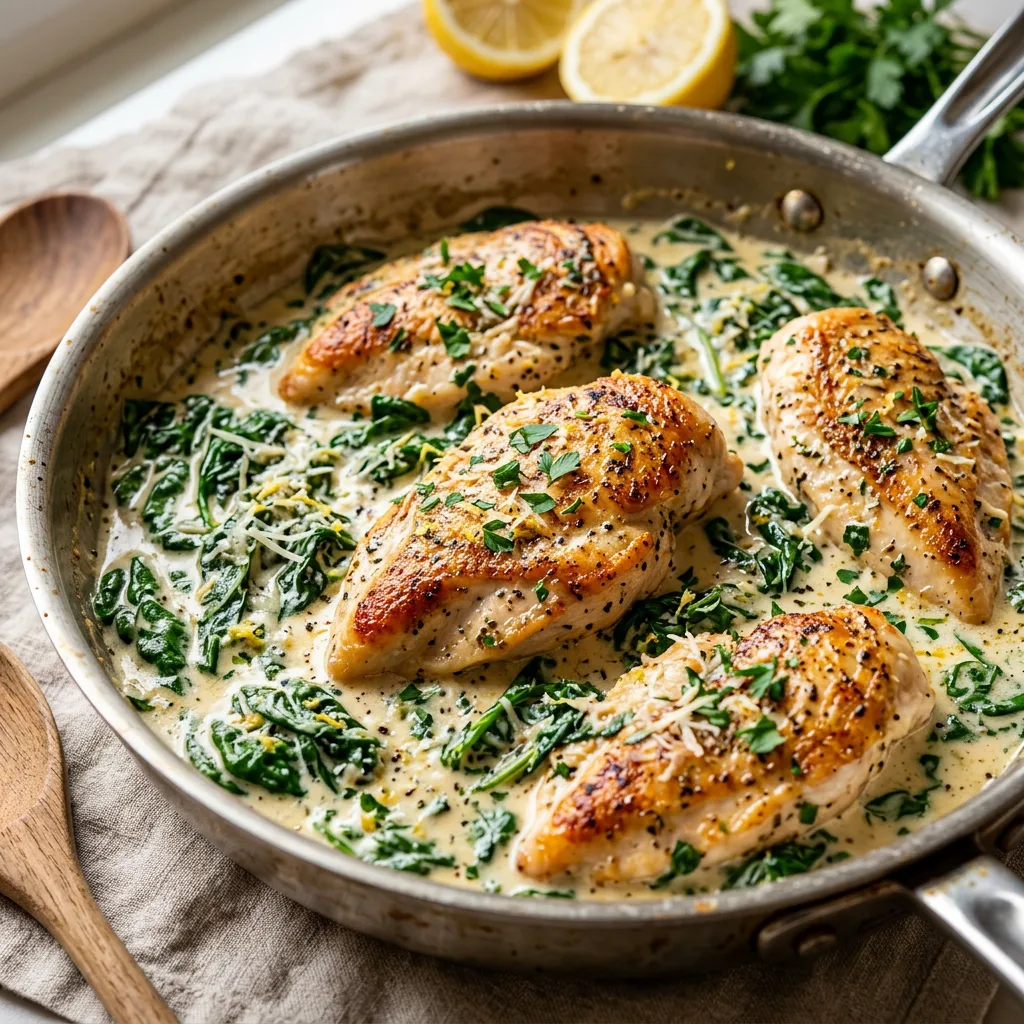
Skillet Chicken Florentine with Spinach is a restaurant-quality healthy dinner that combines tender chicken breasts with a creamy Parmesan sauce and wilted baby spinach in one elegant skillet. This Italian-inspired dish delivers impressive flavors while keeping calories and fat content moderate through smart ingredient choices. The one-pan cooking method makes weeknight dinners effortless, requiring just 25 minutes from start to finish. Tender, juicy chicken pairs beautifully with rich, herbed sauce and nutrient-dense spinach for a balanced, satisfying meal.
| Metric | Value |
|---|---|
| Prep Time | 10 minutes |
| Cook Time | 20 minutes |
| Total Time | 30 minutes |
| Servings | 4 servings |
| Difficulty | Easy to Intermediate |
| Cuisine | Italian |
Why This Recipe Works
This Skillet Chicken Florentine recipe became my go-to weeknight dinner because it delivers restaurant-quality results without requiring culinary expertise or complicated techniques. The beauty of this dish lies in its simplicity: each ingredient serves a purpose, working together to create a cohesive, flavorful meal. I appreciate how the light cream creates a silky sauce without excessive calories, while the Parmesan adds depth and umami satisfaction that makes you feel like you’re eating something indulgent.
What makes healthy dinner recipes truly successful is the balance between nutrition and taste, and this skillet chicken achieves that perfectly. The baby spinach wilts directly into the sauce, incorporating naturally without requiring separate cooking, which saves time and reduces cleanup. The chicken breasts remain moist when seared properly and then simmered gently in the sauce, preventing the dry texture that many people associate with lean poultry. I’ve found that using both olive oil and butter creates a superior sear compared to oil alone, while the combination of thyme, Italian seasoning, and nutmeg creates complexity that tastes like hours of simmering but requires only minutes.

The nutritional profile impressed me immediately when I started tracking macros more carefully. With approximately 280 calories per serving and substantial protein from the chicken, this meal supports muscle maintenance and satiety. The low-sodium broth option means you control sodium content, addressing dietary concerns outlined in Salt Intake guidelines. This recipe makes healthy eating enjoyable rather than restrictive, which is the real secret to maintaining consistent eating habits.
Ingredients
| Ingredient | Quantity | Notes & Alternatives |
|---|---|---|
| Boneless skinless chicken breasts | 4 | Pound to even thickness for uniform cooking. Or substitute with chicken tenders for faster cooking. |
| Baby spinach | 5 oz | Fresh preferred for tender texture. Can substitute mature spinach, though flavor is earthier. |
| Garlic cloves, minced | 3 | Use fresh minced garlic for best flavor. Avoid pre-minced jars which lack pungency. |
| Small onion, diced | 1/2 | Yellow or white onion works best. Shallots provide milder, sweeter flavor if preferred. |
| Dry white wine or chicken broth | 1/2 cup | Pinot Grigio or Sauvignon Blanc recommended. Substitute with additional broth if avoiding alcohol. |
| Low-sodium chicken broth | 1 cup | Use homemade if possible for superior flavor. Standard broth acceptable but contains more sodium. |
| Light cream or evaporated milk | 1/2 cup | Half-and-half reduces calories compared to heavy cream. Evaporated milk provides richness with fewer calories. |
| Grated Parmesan cheese | 1/4 cup | Freshly grated preferred for smoother sauce. Avoid pre-shredded varieties containing anti-caking agents. |
| Olive oil | 1 tbsp | Extra virgin olive oil imparts better flavor than light varieties. |
| Butter | 1 tbsp | Salted or unsalted both work; accounts for about 0.2g sodium per serving if salted. |
| Dried thyme | 1/2 tsp | Fresh thyme (1.5 tsp) provides brighter flavor but dries out quickly when cooked. |
| Italian seasoning | 1/2 tsp | Substitute with dried oregano, basil, or marjoram if Italian seasoning unavailable. |
| Red pepper flakes | 1/4 tsp | Adjust to taste preference. Omit entirely if serving to sensitive palates. |
| Ground nutmeg | 1/4 tsp | Essential for authentic Florentine character. Freshly grated provides superior flavor to pre-ground. |
| Salt and pepper | To taste | Season in stages to prevent over-salting. Taste after each addition. |
| Fresh parsley, chopped | For garnish | Italian flat-leaf parsley preferred for cleaner appearance and flavor. |
| Lemon zest | For finishing | Microplane zester produces finest texture. Brightens dish with citrus notes. |
Step-by-Step Instructions
Preparing the Chicken
- Pat chicken breasts dry with paper towels to remove surface moisture, which promotes better browning and crust formation.
- Season both sides generously with salt, pepper, and Italian seasoning, distributing spices evenly across each breast.
- Pound chicken breasts to consistent 3/4-inch thickness using a meat mallet, ensuring uniform cooking throughout.
Searing and Cooking the Chicken
- Heat olive oil and butter together in a large skillet over medium-high heat until butter foams and fat shimmers, about 1 minute.
- Place seasoned chicken breasts in the hot skillet without moving them, allowing undisturbed cooking for 4-5 minutes until golden brown.
- Flip chicken carefully and cook the second side for 4-5 minutes until golden and internal temperature reaches 165°F, verified with an instant-read thermometer.
- Transfer cooked chicken to a clean plate and cover loosely with foil, allowing residual heat to complete cooking while resting.
Building the Sauce
- In the same skillet with reserved chicken fat, add diced onion and sauté over medium heat for 2-3 minutes until softened and translucent.
- Add minced garlic to the skillet and cook for 30 seconds until fragrant, stirring constantly to prevent burning.
- Pour white wine into the skillet, scraping the bottom with a wooden spoon to release browned bits, and simmer for 2 minutes until reduced slightly.
- Add low-sodium chicken broth, light cream, grated Parmesan cheese, thyme, red pepper flakes, and nutmeg, stirring to combine thoroughly.
- Simmer the sauce over medium heat for 4-5 minutes, stirring occasionally, until slightly thickened and flavors meld together.
Finishing with Spinach
- Add baby spinach to the simmering sauce gradually, stirring constantly as leaves wilt and incorporate into the sauce.
- Return chicken breasts to the skillet nestled into the sauce, spooning sauce over each breast to coat thoroughly.
- Cook for 1-2 minutes to heat chicken through and marry flavors, ensuring sauce coats the chicken evenly.
- Garnish with fresh parsley and lemon zest immediately before serving, adding brightness and visual appeal.
Chef Tips for Perfect Results
- Pound chicken breasts to uniform thickness before cooking to ensure even cooking times and prevent dry edges. Use a meat mallet with gentle, deliberate strikes rather than aggressive pounding, which damages meat structure and reduces moisture retention.
- Verify chicken doneness with an instant-read thermometer inserted into the thickest part, confirming 165°F internal temperature. This prevents both undercooked chicken and overcooking that results in tough, dry texture, following proper techniques outlined in How To Cook Chicken.
- Allow chicken to rest after searing before returning to sauce, as this distributes juices throughout the meat rather than losing them to the pan. Resting for just 3-5 minutes makes a noticeable difference in the final tenderness.
- Use freshly grated Parmesan cheese rather than pre-shredded varieties, which contain anti-caking agents that create grainy, unpleasant texture in creamy sauces. Grate directly over the simmering sauce to incorporate smoothly.
- Add spinach gradually in batches rather than dumping all five ounces at once, which prevents the pan from cooling dramatically and stops the sauce from boiling over. Stir constantly as leaves wilt to ensure even incorporation.
- Taste the sauce before adding salt, as chicken broth and Parmesan contribute significant sodium. Adjust seasoning only after tasting, preventing over-salting that masks other flavors.
Common Mistakes to Avoid
Overcrowding the pan while searing: Adding cold chicken directly from the refrigerator to the pan drops oil temperature and creates steam instead of a flavorful crust. Solution: Allow chicken to reach room temperature for 15 minutes before cooking, ensuring oil temperature remains hot enough for proper browning.
Moving chicken constantly while searing: Frequent flipping prevents crust formation and increases cooking time, leaving chicken dry. Solution: Resist the urge to flip until the 4-5 minute mark, allowing uninterrupted contact with the hot pan surface to develop golden color and flavor.
Adding spinach before the sauce finishes thickening: This cools the sauce temperature and prevents proper thickening with the starch. Solution: Ensure sauce simmers for the full 4-5 minutes and shows visible thickening before adding spinach, maintaining proper consistency for coating chicken.
Using pre-shredded Parmesan that contains cellulose: These anti-caking agents create grainy, unpleasant texture rather than smooth, silky sauce. Solution: Block Parmesan grated fresh on a microplane dissolves smoothly into hot sauce, creating the intended velvety finish.
Skipping the lemon zest finish: This garnish balances the rich sauce with bright, acidic notes that make the dish taste more vibrant and restaurant-quality. Solution: Zest fresh lemon immediately before serving, scattering it over the plated dish where its citrus aroma influences flavor perception.
Variations and Substitutions
| Ingredient | Substitution | Impact on Flavor |
|---|---|---|
| Chicken breasts | Turkey breasts or pork tenderloin | Turkey provides similar texture; pork adds richness and slightly sweeter notes without changing overall balance. |
| Baby spinach | Fresh kale, Swiss chard, or arugula | Kale and chard provide earthier, more robust flavors; arugula adds peppery bite that complements the sauce differently. |
| Light cream | Greek yogurt or mascarpone thinned with broth | Greek yogurt reduces calories and fat but creates tangier sauce; mascarpone adds richness similar to cream. |
| White wine | Dry vermouth or additional chicken broth | Vermouth adds botanical notes; extra broth maintains body but loses wine’s acidity and complexity. |
| Parmesan cheese | Asiago, Pecorino Romano, or Gruyere | Asiago provides similar creamy quality; Pecorino adds sharpness; Gruyere creates richer, nuttier sauce. |
| Dried thyme | Fresh rosemary or sage | Rosemary becomes more pronounced and piney; sage adds earthy, slightly peppery character different from thyme’s subtlety. |
| Red pepper flakes | Freshly cracked black pepper or cayenne | Black pepper provides subtle warmth; cayenne delivers more intense, lingering heat compared to red pepper flakes. |
| Low-sodium broth | Homemade bone broth or vegetable broth | Bone broth adds deeper, savory notes; vegetable broth creates lighter version suitable for vegetarian adaptation. |
Serving Suggestions and Pairings
Skillet Chicken Florentine shines when paired thoughtfully with complementary sides and beverages that enhance its Italian character. Serve over creamy polenta, which echoes the sauce’s richness while providing satisfying texture contrast. Egg noodles work beautifully for soaking up every drop of the silky Parmesan sauce, making this pairing especially popular with families. For a lighter option, serve alongside roasted vegetables like zucchini, bell peppers, or asparagus, which balance the richness without overwhelming the palate.
Bread becomes essential when serving this dish, as it allows guests to capture sauce that remains on the plate. Crusty Italian bread or focaccia brushed with olive oil and garlic complements the flavors while serving a functional purpose. For wine pairing, choose the same white wine used in the recipe, such as Pinot Grigio or Sauvignon Blanc, which brightens the rich sauce and aids digestion. Prosecco offers a festive alternative when serving for special occasions or entertaining guests.
This recipe works beautifully for elegant weeknight dinners or more formal entertaining, as the elegant presentation belies its simple preparation. The one-pan aspect means minimal table settings and cleanup, freeing mental energy for conversation. Serve directly from the skillet for rustic charm, or plate individually with sauce spooned over chicken and vegetables arranged attractively. Pair this with Healthy Soup Recipes: Instant Pot Chicken Pot Pie Soup for a comforting lunch menu, or follow with lighter desserts like lemon sorbet or fresh berries.
Storage and Reheating
| Method | Duration | Instructions |
|---|---|---|
| Refrigerator | 3-4 days | Cool completely, transfer to airtight container, and refrigerate. Store sauce and chicken together to prevent drying. |
| Freezer | 2-3 months | Cool completely, transfer to freezer-safe container, leaving 1/2-inch headspace. Label with date. Thaw overnight in refrigerator before reheating. |
| Stovetop reheating | 10-15 minutes | Place in skillet over medium heat, stirring occasionally and adding 2-3 tbsp broth if sauce has thickened during storage. Heat through until steaming, approximately 10 minutes. |
| Microwave reheating | 3-5 minutes | Transfer portion to microwave-safe dish, cover loosely with paper towel, and heat at 50% power for 3-5 minutes, stirring halfway through. Results in slightly uneven heating compared to stovetop. |
| Oven reheating | 15-20 minutes | Transfer to oven-safe dish covered with foil, reheat at 350°F for 15-20 minutes until heated through. Add splash of broth if sauce seems thick. |
Nutritional Information
| Nutrient | Amount per Serving |
|---|---|
| Calories | 280 |
| Total Fat | 12g |
| Saturated Fat | 5g |
| Cholesterol | 85mg |
| Sodium | 420mg |
| Total Carbohydrates | 8g |
| Dietary Fiber | 2g |
| Sugars | 2g |
| Protein | 35g |
Approximate values based on standard ingredients. Actual nutrition varies based on specific brands selected and exact portion sizes. These figures represent one serving of the complete recipe divided into four portions, not including accompanying sides or beverages. Using low-sodium broth reduces sodium to approximately 350mg per serving. The protein content makes this recipe particularly suitable for muscle recovery and satiety, supporting weight management goals while providing sustained energy.
Frequently Asked Questions
Can I use frozen spinach instead of fresh baby spinach?
Yes, frozen spinach works well but requires thawing and squeezing dry before adding to prevent excess water diluting the sauce. Thaw spinach overnight in the refrigerator, then squeeze in clean kitchen towels or cheese cloth until nearly all moisture releases. Add the drained spinach at the same stage, stirring it in gradually as with fresh spinach. The flavor changes slightly as frozen spinach becomes more concentrated and loses the delicate quality of baby spinach, but the overall dish remains delicious and convenient.
How do I know when chicken is cooked through without a thermometer?
Pierce the thickest part of the largest chicken breast with a knife and observe the juices: clear juices indicate doneness, while any pink tint means continue cooking. The meat should have changed from translucent pink to completely opaque white throughout when fully cooked. Feel also provides information: fully cooked chicken feels firmer to the touch than raw chicken and does not yield to gentle pressure. For most reliable results, use an instant-read thermometer confirming 165°F as the safe internal temperature recommended by food safety standards.
What do I do if the sauce breaks or becomes grainy?
Remove the skillet from heat immediately and whisk in 1-2 tablespoons of cold broth or cream slowly, stirring constantly to smooth out the texture. Broken sauces typically result from overheating, which causes proteins to seize and separate from fat, creating graininess. Return to medium-low heat, whisking constantly, and gradually reincorporate the ingredients until the sauce achieves smooth, silky consistency again. Prevent this issue by maintaining medium heat rather than high heat and avoiding rapid temperature changes after adding cream.
Can I prepare this recipe ahead and cook it later?
Yes, prepare all ingredients up to 8 hours ahead: season and pound chicken, dice onion and garlic, measure spices, and store each component separately in sealed containers in the refrigerator. Cook the dish using the same method when ready, adding only 1-2 minutes to cooking time since ingredients emerge cold from refrigeration. Do not assemble the complete sauce ahead, as this reduces quality and allows flavors to mellow unpleasantly. The preparation method makes this exceptionally convenient for busy weeknights when time constraints prevent cooking from scratch.
Is Skillet Chicken Florentine suitable for meal prep and batch cooking?
This recipe stores beautifully for 3-4 days refrigerated, making it excellent for meal prep despite containing a cream-based sauce that some fear won’t keep well. Store sauce and chicken together rather than separately to maintain moisture, and reheat gently on the stovetop with a splash of additional broth if the sauce thickens during refrigeration. The flavors actually improve during storage as ingredients continue mingling, making this one of the best healthy dinner recipes for meal planning. Freeze portions in individual containers for grab-and-go lunches throughout the month, thawing overnight before reheating.
Conclusion
Healthy Dinner Recipes featuring Skillet Chicken Florentine with Spinach transform weeknight cooking by delivering restaurant-quality Italian flavors without complicated techniques or excessive calories. This one-pan meal combines tender chicken, silky Parmesan sauce, and nutrient-rich spinach in just 30 minutes, proving that healthy eating needs not sacrifice satisfaction or elegance. The balanced nutrition profile, versatile adaptability, and impressive presentation make this skillet chicken a reliable choice for families, meal preppers, and anyone seeking flavorful dinners that support their wellness goals. Finish each plate with fresh lemon zest and parsley, letting those bright garnishes complete the sophisticated, nourishing experience.

Healthy Dinner Recipes: Skillet Chicken Florentine with Spinach
Ingredients
Method
- Pat chicken breasts dry with paper towels to remove surface moisture, which promotes better browning and crust formation.
- Season both sides generously with salt, pepper, and Italian seasoning, distributing spices evenly across each breast.
- Pound chicken breasts to consistent 3/4-inch thickness using a meat mallet, ensuring uniform cooking throughout.
- Heat olive oil and butter together in a large skillet over medium-high heat until butter foams and fat shimmers, about 1 minute.
- Place seasoned chicken breasts in the hot skillet without moving them, allowing undisturbed cooking for 4-5 minutes until golden brown.
- Flip chicken carefully and cook the second side for 4-5 minutes until golden and internal temperature reaches 165°F, verified with an instant-read thermometer.
- Transfer cooked chicken to a clean plate and cover loosely with foil, allowing residual heat to complete cooking while resting.
- In the same skillet with reserved chicken fat, add diced onion and sauté over medium heat for 2-3 minutes until softened and translucent.
- Add minced garlic to the skillet and cook for 30 seconds until fragrant, stirring constantly to prevent burning.
- Pour white wine into the skillet, scraping the bottom with a wooden spoon to release browned bits, and simmer for 2 minutes until reduced slightly.
- Add low-sodium chicken broth, light cream, grated Parmesan cheese, thyme, red pepper flakes, and nutmeg, stirring to combine thoroughly.
- Simmer the sauce over medium heat for 4-5 minutes, stirring occasionally, until slightly thickened and flavors meld together.
- Add baby spinach to the simmering sauce gradually, stirring constantly as leaves wilt and incorporate into the sauce.
- Return chicken breasts to the skillet nestled into the sauce, spooning sauce over each breast to coat thoroughly.
- Cook for 1-2 minutes to heat chicken through and marry flavors, ensuring sauce coats the chicken evenly.
- Garnish with fresh parsley and lemon zest immediately before serving, adding brightness and visual appeal.